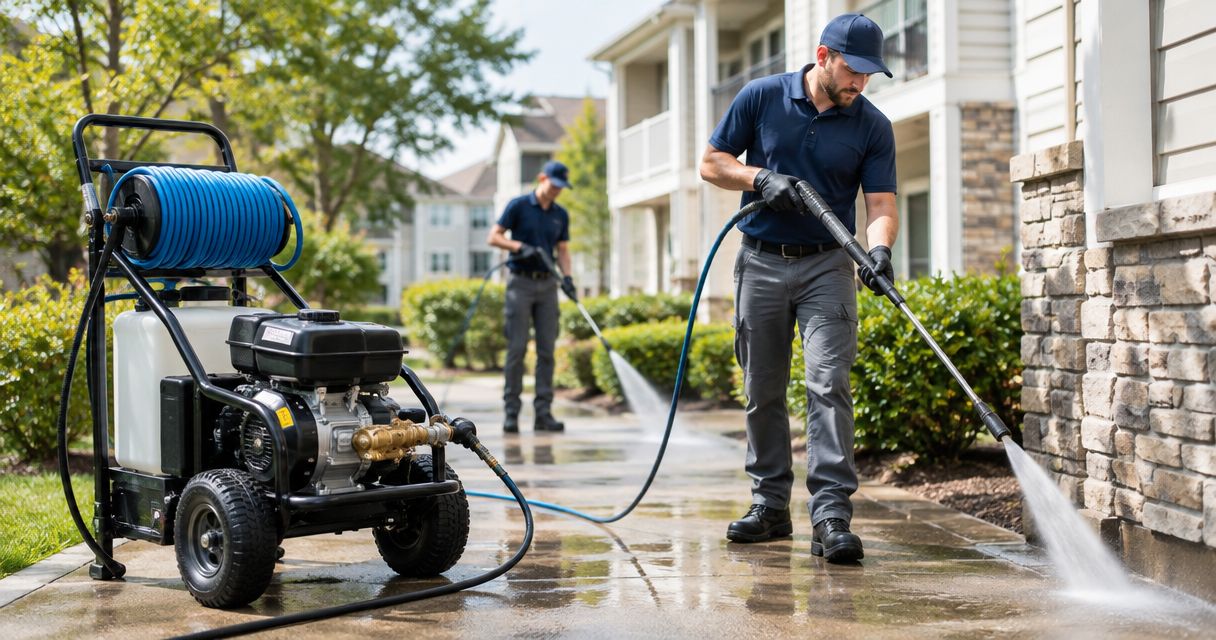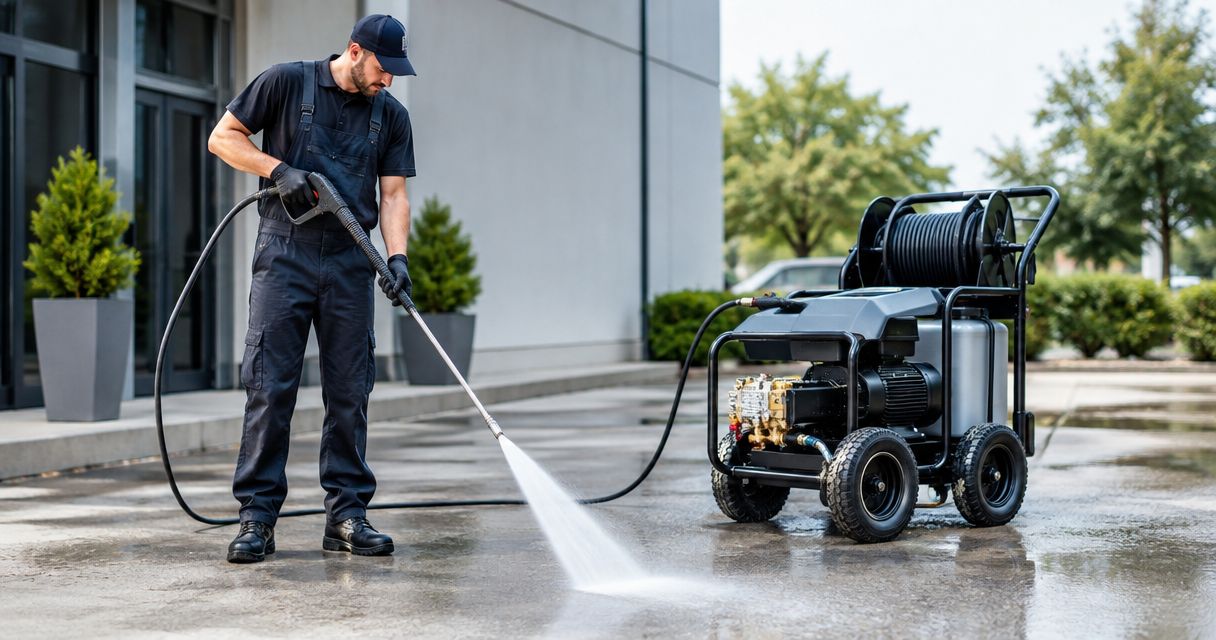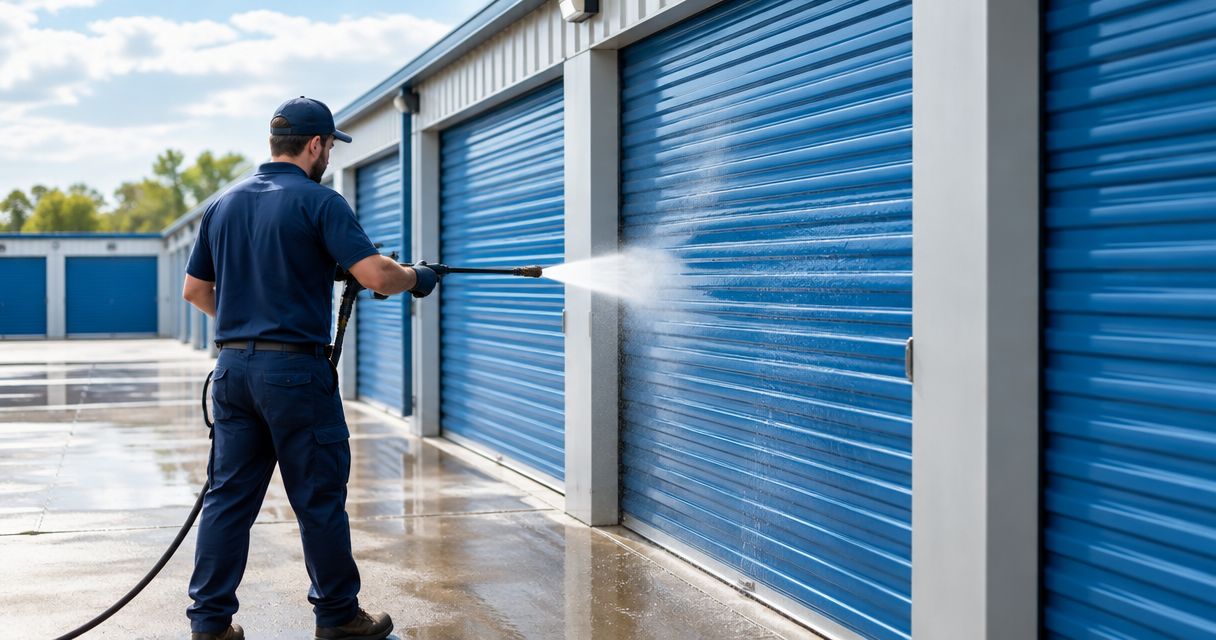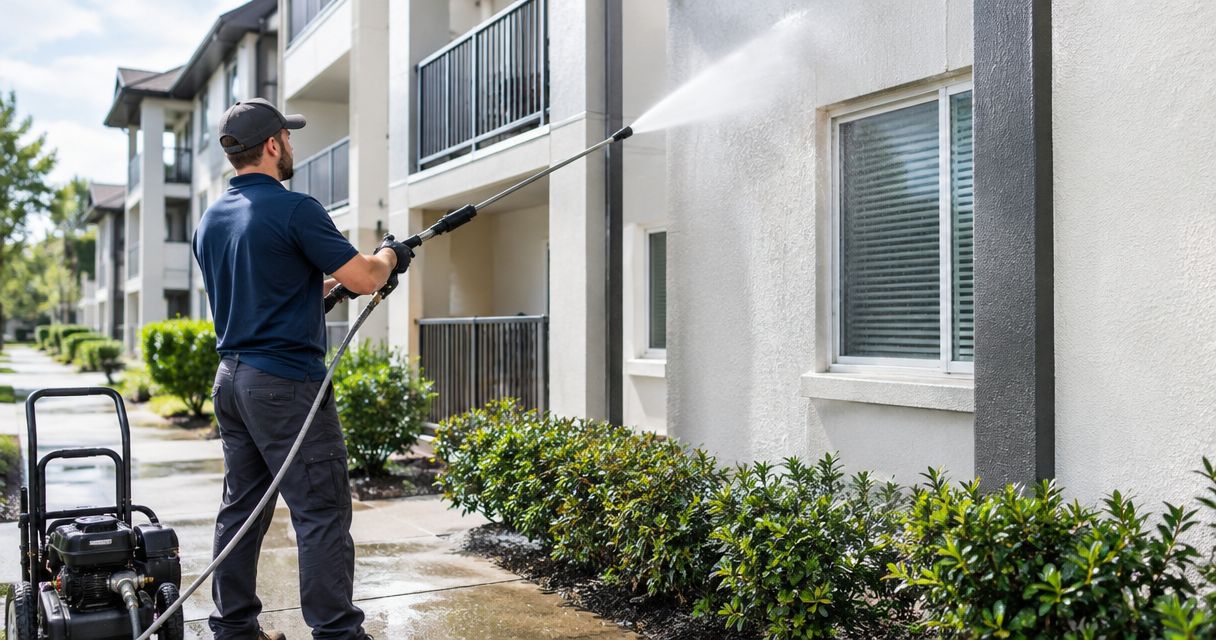
Property managers’ pressure washing is planned exterior cleaning with the aim of maintaining usable entrances, presentable buildings, and consistent maintenance records across managed properties. This 2026 guide to pressure washing for property managers explains how to match cleaning methods to surfaces while coordinating tenants, protecting landscaping, and setting realistic expectations for stains.
- Pressure washing for property managers requires surface-specific methods, tenant coordination, and documented expectations—not maximum pressure.
- Southern Style Soft Wash serves local owners needing house, roof, concrete, and specialty stain cleaning.
- Use low-pressure soft washing for suitable building surfaces; reserve pressure washing for materials that tolerate it.
- Separate routine exterior cleaning from specialty stain treatment, and document defects before work begins.
Why exterior cleaning matters for property managers
You manage more than dirty surfaces. Cleaning work affects tenant access, storefront operations, maintenance budgets, and the condition of materials you are responsible for preserving. A clean entrance does not justify damaged mortar or water pushed behind siding.
For properties in Troup and Coweta counties, Southern Style Soft Wash offers residential and commercial exterior cleaning, including houses, roofs, concrete, and specialty stains. That range matters when a portfolio includes rental homes, commercial buildings, and shared outdoor areas rather than one uniform surface.
Your 2026 cleaning scope should describe the surface, the contamination, and the intended result—not just request pressure washing. Roof algae, dirty siding, oily concrete, and red clay staining need different decisions. Treating them as one task makes estimates harder to compare and leaves expectations unclear.
The practical goal is straightforward: clean what can be cleaned appropriately, identify defects that need repair, and record stains that improve without disappearing. No responsible contractor can promise zero risk or complete removal of every mark.
Build a surface-specific cleaning plan
Identify each surface and its condition
Start with a walking inspection and a simple property worksheet. Record the material, location, visible contamination, and existing defects before choosing equipment or asking for a scope.
Organize your inspection into 4 surface groups: building exteriors, roofs, concrete, and specialty stains. This keeps house washing, roof cleaning, hardscape cleaning, and stain treatment equally visible instead of allowing the largest driveway to define the entire job.
Look closely at peeling paint, loose siding, deteriorated mortar, cracked concrete, exposed wiring, and damaged seals. Cleaning is not a substitute for repairing these conditions. Flag uncertain materials for assessment rather than assigning them a pressure setting yourself.
For commercial sites, also identify public routes, loading areas, outdoor merchandise, and drains. For rental homes, include porches, garden beds, and belongings near the building.
- Record siding, masonry, roofing, and concrete separately.
- Photograph visible defects before requesting treatment.
- Distinguish surface dirt from algae, oil, rust, and red clay.
- Mark access routes, drainage points, and sensitive fixtures.
Match the method to the material
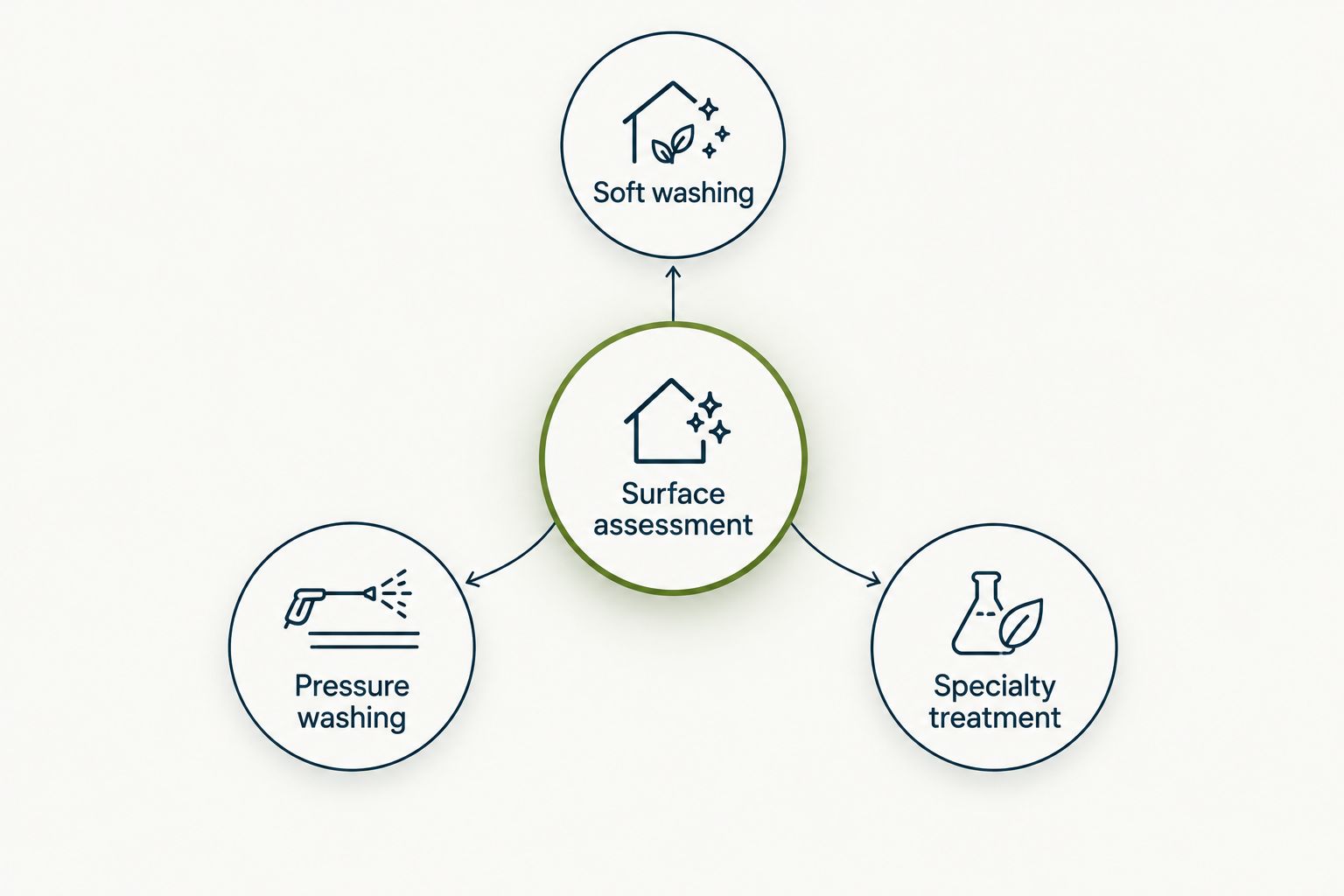
Compare 3 cleaning methods: low-pressure soft washing, suitable pressure washing, and specialty stain treatment. They solve different problems. Neither the largest machine nor the strongest chemical is a universal answer.
Soft washing uses cleaning solution and low-pressure application to address suitable exterior contamination. Sodium hypochlorite is an ingredient used in some exterior-cleaning solutions for organic growth; its suitability depends on the material, product directions, and protection plan. It is not a catch-all stain remover.
Pressure washing uses water force to clean surfaces that can tolerate it. Concrete condition still matters: damaged areas, joints, edges, and nearby materials require attention. A surface cleaner attachment helps cover flat areas, but it does not make excessive pressure appropriate.
Specialty treatment targets a particular stain, such as rust or oil, with compatible chemistry. Never combine cleaners casually. Product labels and safety information govern use, handling, and compatibility.
- Specify low-pressure methods for suitable siding and roof applications.
- Confirm pressure suitability before cleaning concrete or masonry.
- Separate oil, rust, and red clay from routine organic-growth cleaning.
- Require a test area where material or stain response is uncertain.
Write a scope before choosing who does the work
Build the scope manually with a worksheet, inspection photographs, and a marked site plan. List the included surfaces, excluded areas, access restrictions, and stains that need separate evaluation. This is the basis for comparing contractors without assuming every estimate covers identical work.
In-house cleaning gives you direct scheduling control, but your team also takes responsibility for equipment selection, chemical handling, site protection, and cleanup. Professional exterior cleaning is the alternative when you want a service provider to handle the cleaning work rather than assigning it to maintenance staff.
Southern Style Soft Wash is best for local property owners seeking residential and commercial exterior cleaning across houses, roofs, concrete, and specialty stains. Confirm the proposed treatment, exclusions, and protection steps for your property; the service range alone does not establish the details of a particular job.
- Name each building face, roof area, walkway, and stain location.
- Separate included cleaning from repairs and excluded surfaces.
- Request written treatment and property-protection details.
- Confirm insurance documentation and site-specific access requirements.
- Record the acceptance standard without promising complete stain removal.
Choose an operating model that fits your team
Use your 2026 inspection notes to decide which tasks belong with maintenance staff and which need specialist assessment. Equipment ownership is not the same as having a suitable method for every material.
The comparison below addresses who performs the work. It does not rank machines by power or assume that outsourcing removes your responsibility to coordinate tenants and access.
| Option | Best for | Main advantage | Key limitation |
|---|---|---|---|
| Manual spot cleaning | Small, reachable areas with compatible cleaning instructions | Lets staff address isolated dirt without powered equipment | Requires labor and does not replace roof or broad-area cleaning |
| In-house powered cleaning | Managers with trained staff and recurring suitable hardscape tasks | Gives direct control over work scheduling | Requires equipment care, surface judgment, and site protection |
| Southern Style Soft Wash exterior cleaning | Local owners needing house, roof, concrete, and specialty stain services | Provides a service option across residential and commercial exteriors | The property-specific scope, exclusions, and treatment limits need confirmation |
| Specialty stain assessment | Persistent oil, rust, or red clay staining | Separates stain-specific decisions from general washing | Improvement does not mean guaranteed complete removal |
If equipment ownership remains appropriate, review the commercial pressure washer guide for property managers after defining the surfaces and operator responsibilities. Choose equipment around the work—not the other way around.
- Assign tasks according to staff training and surface suitability.
- Include storage, maintenance, and cleanup responsibilities in your decision.
- Keep difficult stains outside an undifferentiated washing scope.
- Compare written scopes before choosing an operating model.
Protect landscaping, belongings, and pedestrian routes
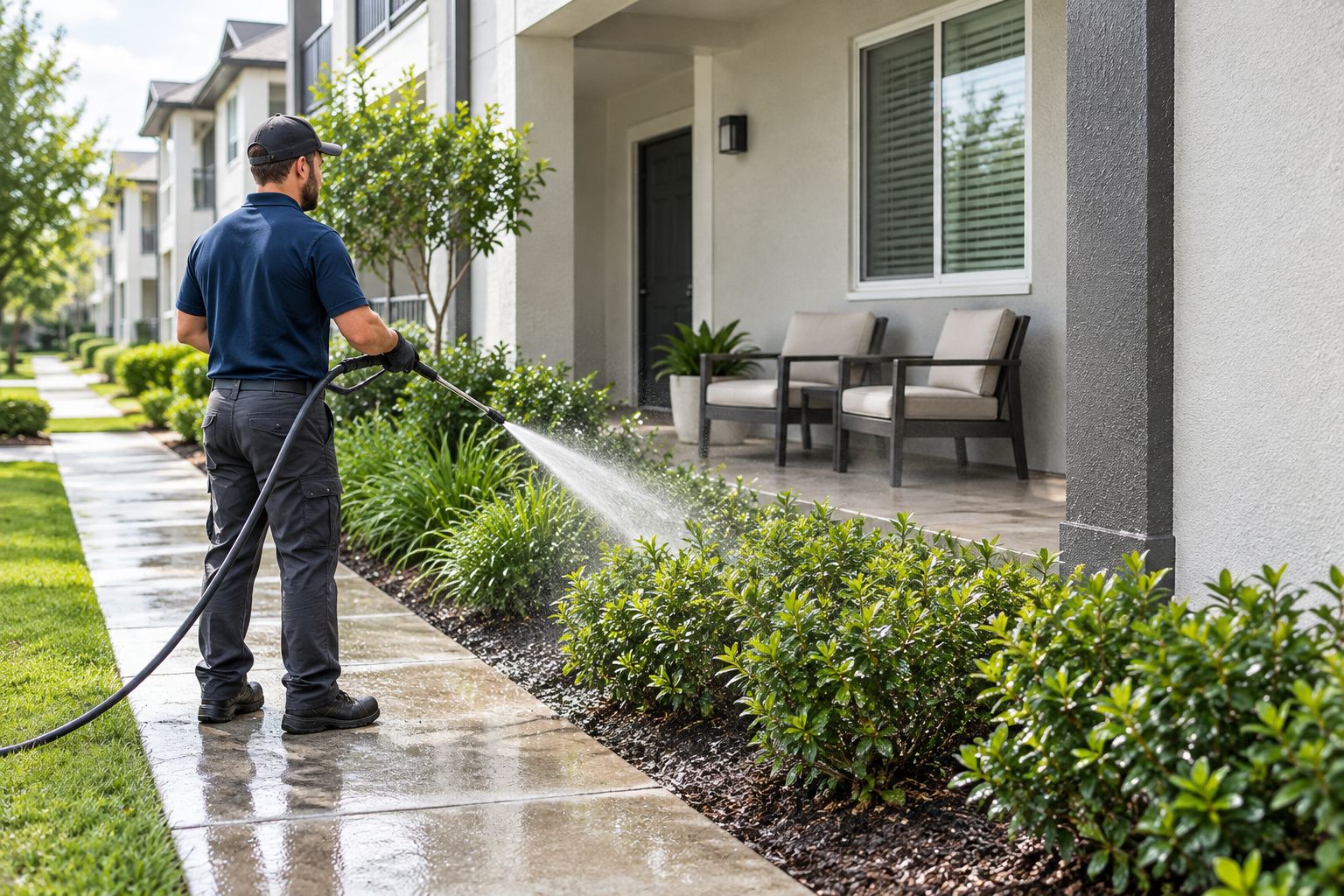
Plan protection before cleaning begins. Identify planting beds, exposed outlets, openable windows, outdoor furniture, irrigation components, and materials that require protection from spray or cleaning solution.
Discuss landscaping rinsing before, during, and after treatment as appropriate to the chosen process. Ask when a neutralizer is suitable, what it addresses, and how it will be used. A neutralizer does not replace controlled application, careful rinsing, or runoff planning.
Older homeowners and tenants should not be expected to move heavy porch furniture themselves. Ask who will move belongings, obtain permission, and agree where items will be stored and returned. That small preparation detail prevents confusion on cleaning day.
At commercial properties, keep customers and staff away from hoses, wet work areas, and treatment zones. Protecting access is part of the scope, not an improvised response after equipment arrives.
- Identify plants and materials requiring extra protection.
- Agree on rinsing and neutralizer use where appropriate.
- Assign responsibility for moving and returning belongings.
- Protect sensitive fixtures without trapping water around them.
- Mark pedestrian detours and keep hoses out of active routes.
Coordinate cleaning around occupants and operations
Build your 2026 schedule around the affected property, not a fixed cleaning interval copied across the portfolio. A rental home, occupied storefront, and shared apartment walkway have different access needs even when the surfaces look similar.
Tell occupants which areas will be affected and what they need to do. Include window closure, pet arrangements, parking changes, and belongings that must be moved. Confirm that notices reach tenants who do not regularly check email.
For commercial buildings, identify entrances that must remain usable and delivery routes that cannot be blocked without coordination. Discuss how the contractor will divide the work and how areas will reopen after treatment and cleanup.
Ask about wastewater management and applicable local requirements before work begins. Do not assume every drain is suitable for cleaning runoff, especially where detergents or contaminants are involved.
- Notify tenants about affected areas and preparation duties.
- Coordinate storefront entrances, deliveries, and loading access.
- Agree on temporary barriers and alternate pedestrian routes.
- Review weather-dependent adjustments with the contractor.
- Confirm runoff handling and the conditions for reopening areas.
Document results and schedule the next inspection
Use 2 photo sets: before-work photographs and after-work photographs taken from comparable positions. Include existing damage, treated areas, and stains that remain. A record that shows only the cleanest section is not useful for portfolio maintenance.
Walk the completed site against the written scope. Check building exteriors, roof areas visible safely from the ground, concrete, and specialty stains separately. Do not climb onto a roof merely to inspect a cleaning result.
Record whether each stain was removed, improved, or unchanged. Persistent discoloration does not automatically mean the cleaning was unsuccessful; the agreed treatment and limitations determine what you should expect.
Set the next inspection around observed conditions, owner requirements, and site use. Your 2026 maintenance record should explain why another treatment is needed rather than treating an arbitrary calendar date as proof.
- Match completion photographs to the original inspection views.
- Check every included surface against the written scope.
- Record remaining stains and any repair recommendations.
- Confirm belongings, access routes, and work areas are restored.
- Schedule reassessment based on condition rather than habit.
Discuss your property’s cleaning scope
Review house, roof, concrete, and specialty stain cleaning for your residential or commercial property.
Common mistakes property managers make
Requesting one method for the entire property
A roof, painted wall, brick step, and concrete entrance should not automatically receive the same treatment. Specify the material and contamination first. Let those facts determine the cleaning method rather than writing maximum pressure into the scope.
Treating all dark marks as the same stain
Organic growth, oily residue, and mineral staining require different assessment. Asking for every stain to disappear creates an expectation the material and stain history might not support. Request a clear distinction between routine cleaning and specialty treatment.
Comparing estimates without comparing exclusions
One scope might include entrances and building walls while another addresses only concrete. List roof cleaning, house or building washing, concrete cleaning, and specialty stains separately. Confirm access, protection, and cleanup responsibilities before choosing.
Leaving tenants to manage preparation
An instruction to clear the porch is incomplete when an older tenant cannot safely lift the furniture. Assign help explicitly and agree on item handling. At commercial sites, assign responsibility for notices, deliveries, and temporary entrance changes.
Repeating last year’s scope without inspecting
Your 2026 plan should reflect current defects, contamination, and occupancy. Previously sound paint or mortar can deteriorate between visits. Inspect again before authorizing the same method and recording the same expected outcome.
FAQ
What is pressure washing for property managers?
Pressure washing for property managers is coordinated exterior cleaning that matches the treatment to the surface and property use. A complete scope distinguishes suitable pressure washing, low-pressure soft washing, and specialty stain treatment while addressing occupants, access, and protection.
Is soft washing better than pressure washing for rental properties?
Soft washing is appropriate for suitable surfaces needing low-pressure cleaning; pressure washing belongs on materials that tolerate the chosen water force. Neither method is better for every rental-property surface, so assess siding, roofing, masonry, and concrete separately.
Can a pressure washer remove every oil or rust stain?
No cleaning method guarantees complete removal of every oil or rust stain. Stain history, material condition, and treatment compatibility affect the result, so agree on realistic expectations and document improvement separately from complete removal.
What should tenants do before exterior cleaning?
Tenants should follow the agreed preparation notice, including closing windows, securing pets, and clearing designated belongings or parking spaces. Property managers should arrange assistance when occupants cannot safely move furniture and confirm who will return items afterward.
How do property managers protect landscaping during soft washing?
Property managers should require a protection plan that addresses controlled application, appropriate landscaping rinsing, and neutralizer use where suitable. The plan must match the cleaning chemistry and nearby materials rather than relying on a blanket promise of zero risk.
How often should a managed property be pressure washed?
A managed property should be reassessed according to its surface condition, contamination, use, and owner requirements rather than a universal cleaning interval. Inspect building exteriors, roofs, concrete, and recurring stain locations before scheduling another treatment.
Does Southern Style Soft Wash clean commercial and residential properties?
Southern Style Soft Wash offers residential and commercial exterior cleaning, including house, roof, concrete, and specialty stain services. It serves LaGrange, Newnan, Valley, and surrounding West Georgia and East Alabama areas; confirm the scope for your specific property.
One last thing
Make the stain record part of the handover, not an afterthought. A clearly photographed stain that remains after appropriate treatment is easier to explain than an undocumented promise that everything will look new. For your next property inspection, bring the previous photographs and ask what changed before authorizing more cleaning.