Best overall for algae and mildew: a surface-approved sodium hypochlorite cleaner. Best supporting additive: a compatible surfactant. Best for ordinary dirt: a mild exterior detergent. The best soft wash chemicals for house washing in 2026 depend on the stain, siding material, coating condition, and product label—not the strongest mixture available.
- The best soft wash chemicals for house washing match the stain and surface; sodium hypochlorite suits organic growth.
- Compatible surfactants support house washing but do not replace the active cleaner.
- Oxalic acid targets certain rust stains; never mix acidic cleaners with sodium hypochlorite.
- Southern Style Soft Wash offers exterior cleaning services for homeowners and commercial property owners in West Georgia and East Alabama.
Why this matters
A cleaner that removes algae is not automatically the right cleaner for red clay, rust, or weathered paint. Misidentifying the stain leads to unnecessary chemical exposure, repeated applications, and damage that cleaning cannot reverse.
Southern Style Soft Wash is best for local property owners seeking house washing as a service rather than choosing chemicals themselves. The company serves residential and commercial properties in LaGrange, Newnan, Valley, and surrounding areas. For your 2026 exterior-cleaning project, start with the surface and stain—not a shopping list.
This guide ranks chemical categories by their job. It does not prescribe a universal mixing recipe: concentrations, approved surfaces, application instructions, and required protection belong to the specific product label.
What makes the best house-washing chemical?
Use these criteria before comparing cleaners:
- Stain match: Organic growth, ordinary dirt, rust, and mineral deposits require different treatment decisions.
- Surface approval: Check the label against the actual siding, trim, paint, metal, masonry, or roofing material.
- Controlled application: Choose a process that manages coverage, contact time, runoff, and rinsing without relying on excessive pressure.
- Chemical compatibility: Confirm that every additive is compatible with the active cleaner. Never improvise combinations.
- Property protection: Account for plants, outdoor belongings, electrical fixtures, surrounding metals, and occupied entrances.
- Honest limits: Cleaning removes contamination; it does not repair oxidation, failing paint, damaged mortar, or permanent discoloration.
A professional recommendation should explain all of these points in plain language. A chemical name alone does not tell you whether the treatment fits your house.
Best soft wash chemicals at a glance
| Chemical category | Best for | Standout function | Key limitation |
|---|---|---|---|
| Sodium hypochlorite cleaner | Algae and mildew on approved exterior surfaces | Treats organic contamination | Requires careful surface checks, handling, and plant protection |
| Compatible surfactant | Supporting an approved cleaning solution | Helps wetting and contact with the surface | Not a substitute for an active cleaner |
| Mild exterior detergent | Ordinary dirt on approved siding | Removes general soil without automatically using a growth treatment | Does not necessarily address established organic growth |
| Oxygen-based exterior cleaner | Jobs where its label supports the surface and stain | Provides a different chemistry option | Not an interchangeable replacement for every bleach-based treatment |
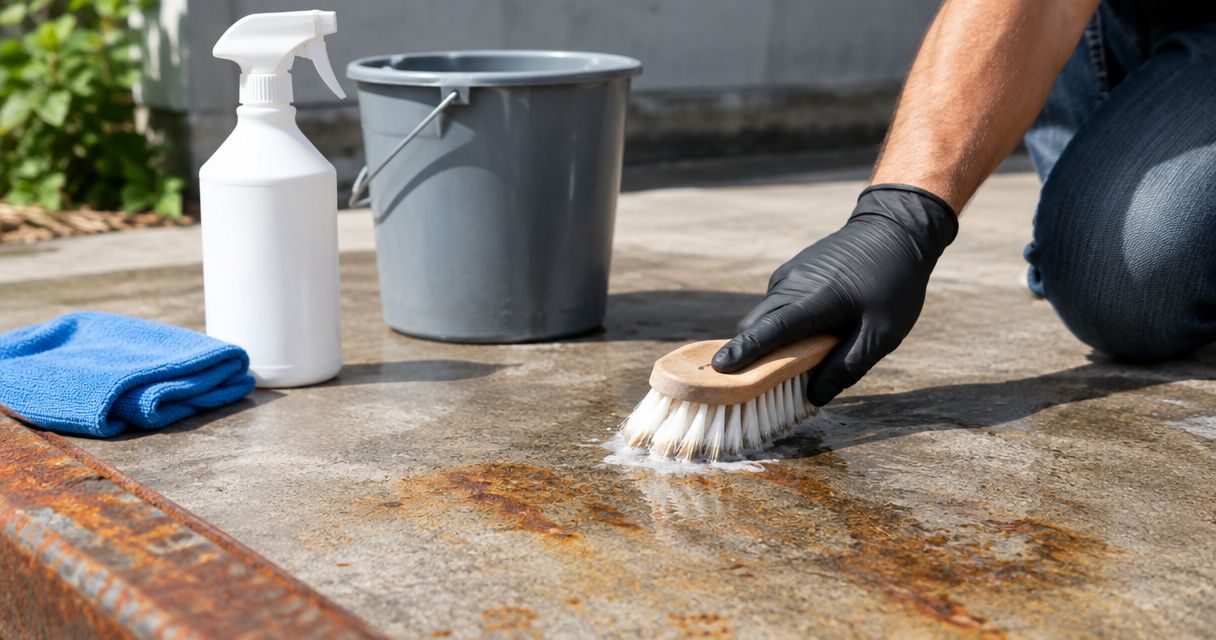
| Oxalic acid cleaner | Certain rust and iron-related stains | Targets a specific stain category | Acid treatment is separate from bleach-based house washing |
These are chemical categories, not interchangeable products. Read the full label for the particular formulation before selecting equipment, additives, or a treatment sequence.
1. Sodium hypochlorite: best for algae and mildew
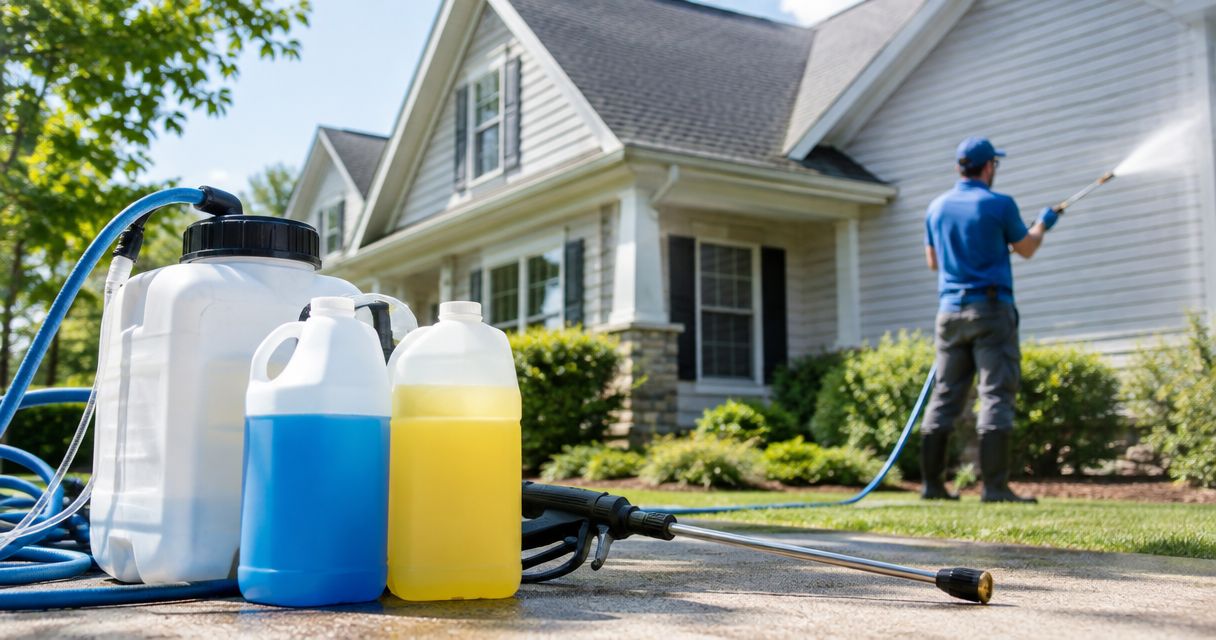
Sodium hypochlorite is the active ingredient in many bleach-based cleaners. In an exterior-cleaning formulation approved for the surface, it addresses organic contamination such as algae and mildew. Low-pressure application lets the chemistry perform its intended work rather than forcing the stain off with pressure.
That does not make sodium hypochlorite suitable for everything. Painted finishes, surrounding metals, landscaping, and runoff routes all need attention before application.
Sodium hypochlorite pros:
- Addresses organic growth rather than treating every mark as ordinary dirt.
- Works within a low-pressure cleaning process when the label permits it.
- Fits a stain-led approach to house washing instead of indiscriminate pressure washing.
Sodium hypochlorite cons:
- Can damage plants, finishes, and nearby materials when mishandled.
- Does not repair oxidation or remove every mineral and rust stain.
- Must never be mixed with acids or ammonia-containing cleaners.
Best for: Approved siding with identified algae or mildew.
Ask the contractor how the treatment will stay off vulnerable materials and how runoff will be managed. Increasing chemical strength is not a substitute for diagnosing a stain that remains after cleaning.
Verdict: Buy only a surface-approved formulation for confirmed organic growth; skip a universal bleach recipe.
2. Compatible surfactant: best for supporting the active cleaner
A surfactant changes how a cleaning solution wets a surface. In a compatible formulation, it can help the solution spread across siding and contact the contamination. It is a supporting ingredient, not evidence that the mixture will remove a particular stain.
Foam is also not a performance score. A heavily foaming mixture can create more rinsing work without proving that the underlying chemistry is right.
Compatible surfactant pros:
- Helps an approved solution wet the target surface.
- Supports more controlled coverage when used as directed.
- Can assist soil removal as part of a formulated cleaning system.
Compatible surfactant cons:
- Does not replace the ingredient needed to address the identified contamination.
- An incompatible additive creates an avoidable chemical risk.
- Residue requires appropriate rinsing.
Best for: An approved cleaner that specifically permits or requires the additive.
Use the formulation's instructions, not the assumption that any household soap belongs in a soft-wash tank. Southern Style Soft Wash house-washing customers should ask which ingredient treats the growth and which ingredient supports application.
Verdict: Buy a surfactant only when compatibility is confirmed; skip improvised household-soap additions.
3. Mild exterior detergent: best for ordinary dirt
A mild exterior detergent is a sensible starting category when the issue is general soil rather than established algae, rust, or mineral staining. The product still needs approval for the siding and finish. Mild does not mean harmless to every material.
For your 2026 house wash, separate dirt removal from biological treatment. Using a growth-treatment chemical on every dirty surface adds complexity without first establishing that the job needs it.
Mild exterior detergent pros:
- Matches ordinary soil rather than automatically treating for organic growth.
- Supports a straightforward wash-and-rinse process on approved surfaces.
- Gives you a distinct option for maintenance cleaning.
Mild exterior detergent cons:
- Does not necessarily remove established algae or mildew.
- Can leave residue when applied or rinsed incorrectly.
- Cannot restore a deteriorated coating.
Best for: General dirt on intact siding when the product label approves that surface.
Inspect shaded areas separately from dusty, exposed walls. Different parts of the same building can carry different contamination, so a detergent-only plan needs an honest assessment of the whole exterior.
Verdict: Buy for ordinary dirt on approved surfaces; skip it as a guaranteed solution for every dark stain.
4. Oxygen-based exterior cleaner: best for label-approved alternatives
Oxygen-based exterior cleaners use chemistry different from sodium hypochlorite. Some formulations use ingredients such as sodium percarbonate or hydrogen peroxide. Their suitability depends on the finished product, its label, and the actual stain.
Treat this category as an alternative to evaluate, not an automatic upgrade. The word oxygen does not establish plant safety, finish compatibility, or equal performance against every type of contamination.
Oxygen-based exterior cleaner pros:
- Provides another chemistry category for surface-specific selection.
- Offers a clearly different option when a particular formulation fits the job.
- Allows selection by documented surface and stain instructions.
Oxygen-based exterior cleaner cons:
- Product performance is not interchangeable across formulations.
- Still requires protective handling and runoff planning.
- Does not guarantee the same result as a sodium hypochlorite treatment.
Best for: A surface-and-stain combination explicitly covered by the product label.
Ask what supports the proposed substitution. A useful answer identifies the material, contamination, and label instructions—not simply a claim that the product is gentler.
Verdict: Hold until the label confirms the application; skip assumptions based on the category name.
5. Oxalic acid: best for certain rust and iron stains
Oxalic acid appears in specialty cleaners used for certain rust and iron-related stains. That makes it a targeted stain-treatment category, not an all-purpose house-washing chemical. Its acidic chemistry requires a separate plan from bleach-based cleaning.
Never mix oxalic acid or another acidic cleaner with sodium hypochlorite. Mixing acid and bleach can release dangerous chlorine gas. A specialist must account for residues, surrounding materials, and the product's handling instructions.
Oxalic acid pros:
- Targets certain stains that ordinary house washing does not address.
- Supports localized treatment rather than unnecessary whole-wall application.
- Makes the distinction between organic growth and iron staining explicit.
Oxalic acid cons:
- Is not suitable for every surface or every orange stain.
- Requires acid-specific handling and material checks.
- Cannot guarantee complete removal of deep or permanent staining.
Best for: Identified rust or iron-related staining on a surface approved by the specific cleaner.
Red clay is not automatically a rust-treatment job. A contractor needs to identify the deposit and substrate before choosing specialty chemistry.
Verdict: Hold for a surface-specific professional assessment; skip acid treatment as routine house-wash chemistry.
Match the method to the surface
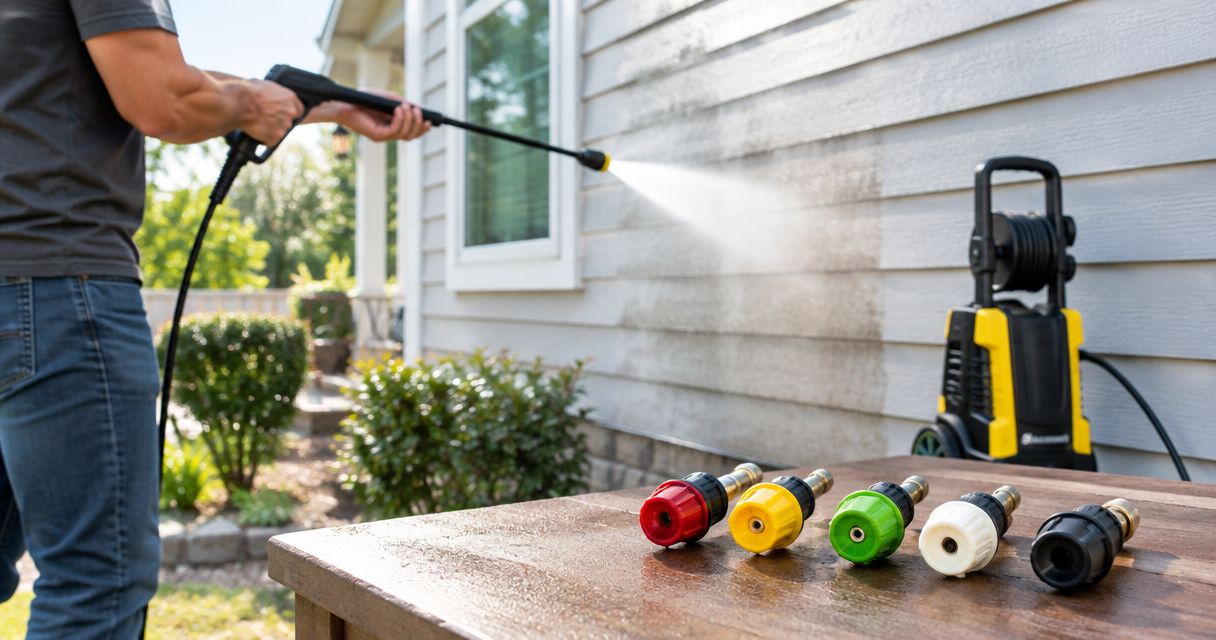
The right chemical still needs the right application method. Soft washing uses low-pressure delivery with an appropriate cleaner; pressure washing uses mechanical cleaning where the material and condition support it; specialty treatment targets a stain that general washing does not resolve.
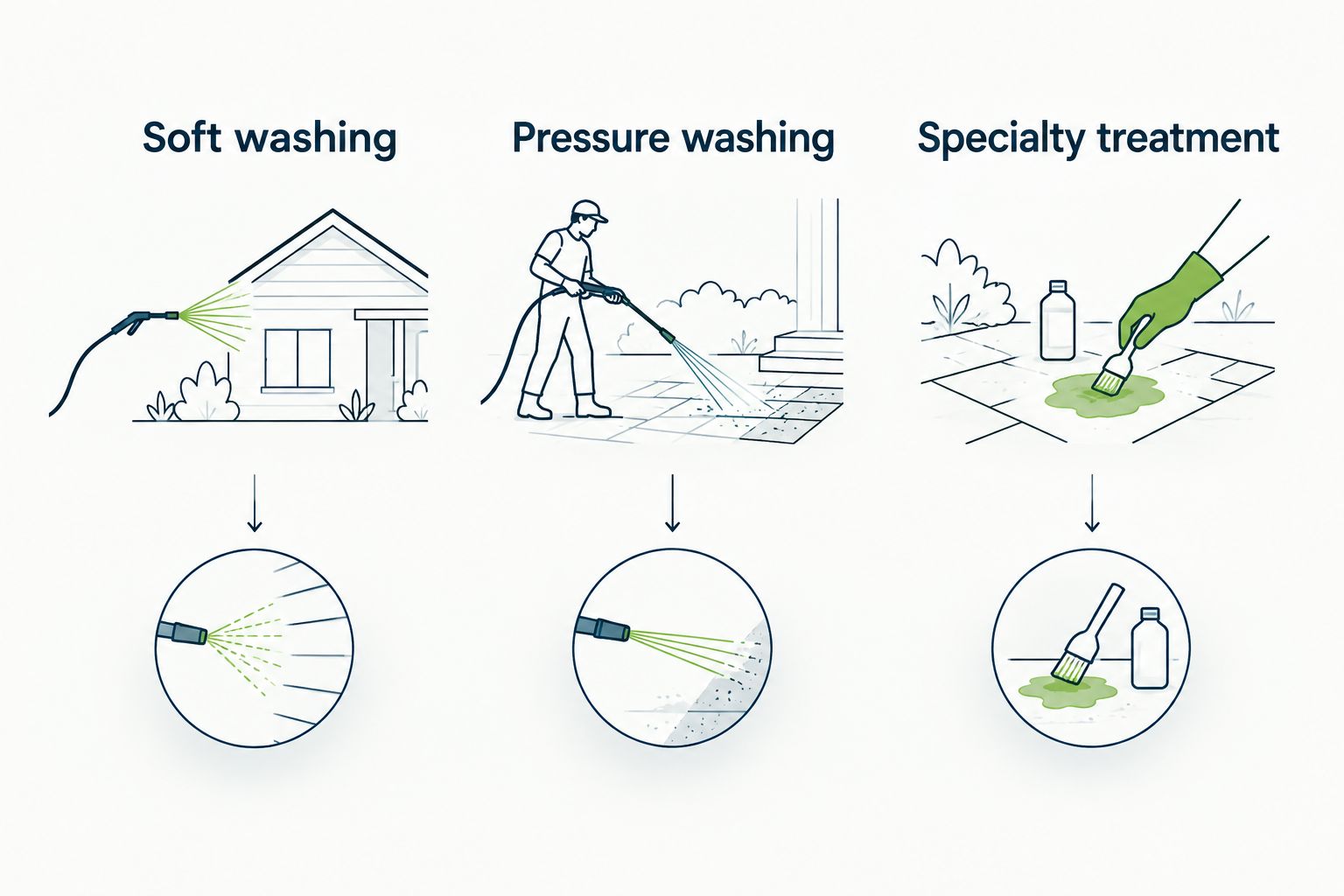
- House siding: Check coating condition, openings, and manufacturer instructions before selecting chemistry and pressure.
- Roofs: Roof material and manufacturer guidance govern treatment; do not transfer a siding recipe to shingles.
- Concrete: Suitable pressure washing can address surface soil, while oil, rust, and other stains require separate assessment.
- Brick and steps: Inspect mortar, joints, and existing deterioration before choosing pressure or chemical treatment.
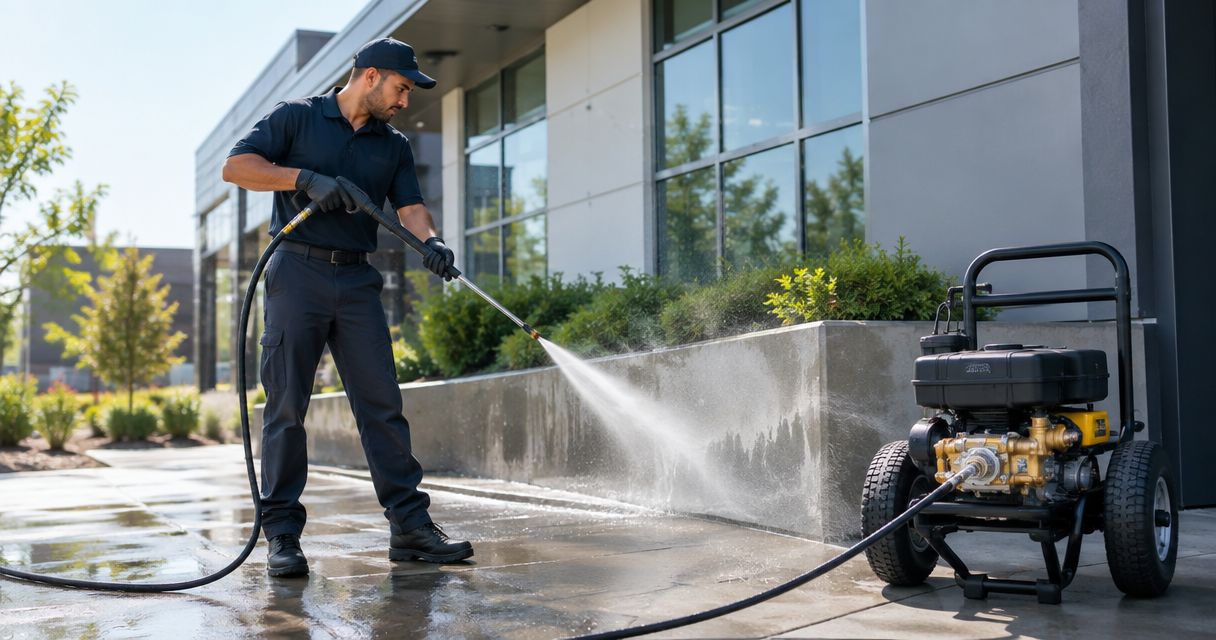
- Commercial exteriors: Plan pedestrian access, entrances, runoff, and reopening alongside the cleaning method.
Southern Style Soft Wash offers house, roof, concrete, and specialty stain cleaning. Each service needs its own surface assessment rather than the same treatment applied everywhere.
Property protection belongs in the cleaning plan
Before a 2026 appointment, agree on what moves, what stays, and who handles it. For older homeowners, arrange help with porch furniture and heavy planters instead of leaving lifting until the equipment arrives.
A practical protection discussion covers:
- Landscaping: Assess exposed plants, rinse where appropriate, and manage chemical contact and runoff. Use a compatible neutralizer only where its instructions and the treatment plan call for it.
- Openings and fixtures: Check windows, doors, vents, outlets, and existing gaps; avoid directing water into vulnerable openings.
- Belongings: Move cushions, decorations, and portable items out of the work area.
- People and pets: Keep occupants outside the active treatment area and follow product instructions for re-entry.
- Finish condition: Identify peeling paint, chalking, corrosion, and damaged seals before cleaning.
Neutralizer is not a substitute for preventing exposure. No responsible contractor can promise zero risk, and cleaning should not conceal existing defects.
How these chemical categories are ranked
The 2026 ranking follows stain match, surface approval, compatibility, application control, and protection requirements. Sodium hypochlorite leads for its defined role against organic contamination; the other categories hold distinct supporting or specialty positions.
This is a use-case ranking, not a claim that every formulation performs equally. The strongest recommendation remains conditional on the product label and the property's condition.
Which house-washing chemical should you choose?
Choose an approved sodium hypochlorite formulation for identified algae or mildew, an approved detergent for ordinary dirt, and separate specialty treatment for diagnosed stains. Add a surfactant only when the cleaning system permits it.
If you cannot identify the stain or confirm the surface compatibility, stop before applying chemicals. For a 2026 service booking, request a surface-by-surface explanation, property-protection plan, and clear statement of what cleaning will not fix.
FAQ
What's the best soft wash chemical for house washing?
A surface-approved sodium hypochlorite cleaner is the leading category for algae and mildew. Ordinary dirt and specialty stains need different treatment decisions, so there is no universal best chemical for every house.
Is soft washing better than pressure washing for siding?
Soft washing is the appropriate choice when the surface needs low-pressure cleaning with compatible chemistry. Pressure selection still depends on the siding, coating condition, openings, and manufacturer instructions.
Can I add dish soap to a bleach-based house wash?
Do not improvise additions to a bleach-based house wash. Use only an additive confirmed as compatible by the cleaning product's instructions, and never mix bleach with acids or ammonia-containing cleaners.
Are oxygen-based cleaners safe for all plants and siding?
No, oxygen-based cleaners are not automatically safe for every plant or siding material. Follow the particular formulation's surface approvals, protective measures, and rinsing instructions.
Will house washing remove red clay and rust completely?
House washing does not guarantee complete removal of red clay or rust. These stains need separate diagnosis, and embedded discoloration can improve without disappearing completely.
What should I ask a house-washing contractor in 2026?
Ask which method fits each surface, how landscaping and belongings will be protected, and which stains require separate treatment. Southern Style Soft Wash offers house washing alongside roof, concrete, and specialty stain cleaning services.
Does a neutralizer make bleach-based cleaning risk-free?
No, a neutralizer does not make bleach-based cleaning risk-free. Appropriate use supports a protection plan but does not replace controlled application, exposure prevention, and product-specific instructions.
One last thing
A dark mark that remains after washing is not proof that you need stronger chemicals. It can be a different stain or a defect in the finish. For your 2026 cleaning plan, ask what the remaining mark is before authorizing another treatment.