Best overall: a commercial cold-water pressure washer with a matched surface cleaner for sound concrete. Best for siding: a dedicated low-pressure soft-wash system. Best for small maintenance tasks: a portable electric pressure washer. This 2026 guide compares 5 equipment setups for HOA crews, with roof cleaning and specialty stains treated as separate jobs—not reasons to turn up the pressure.
- The best pressure washing equipment for HOA crews matches the surface, stain and crew’s training—not maximum pressure.
- Commercial cold-water washers with matched surface cleaners are the default for sound concrete walkways.
- Dedicated soft-wash systems suit house washing; roof cleaning requires separate material checks and access planning.
- Southern Style Soft Wash provides exterior cleaning services for residential and commercial property owners.
Why this matters
An HOA crew cleans more than sidewalks. Clubhouse siding, shaded steps, painted trim, pool-area paving and entrance stains each require a different decision. Equipment that cleans one surface effectively can damage another.
Southern Style Soft Wash provides pressure washing, soft washing and specialty stain cleaning in LaGrange, Newnan, Valley and surrounding areas. For HOA exterior cleaning, Southern Style Soft Wash is an option when the work extends beyond a maintenance crew’s equipment or training.
For Troup and Coweta county properties, start your 2026 equipment plan with the surfaces you maintain. Buy for the recurring job; arrange specialist help for work your crew cannot perform safely.
What makes the best pressure washing equipment for HOA crews?
Judge an equipment setup against these criteria before comparing machines:
- Surface compatibility: Sound concrete, siding, roofing and deteriorated masonry need different cleaning methods. Adjustable pressure does not make every machine suitable for every surface.
- Matched water flow: Match the washer, hose, nozzle and surface cleaner using their manufacturers’ specifications. Pressure alone does not establish compatibility.
- Chemical compatibility: Confirm which pumps, seals, hoses and application systems accept the intended cleaner. Do not run chemicals through components that exclude them.
- Property protection: Allow for landscaping rinsing, overspray control, drainage management and exclusion zones around residents.
- Crew usability: Consider transport, hose handling, equipment weight, power access and the training required to operate and maintain the setup.
- Serviceability: Check access to replacement nozzles, seals, hoses and manufacturer-approved maintenance instructions before selecting equipment.
Make 2 separate checks before approving a purchase: whether the setup fits the cleaning task, and whether the crew can operate it safely. Passing only one is not enough.
HOA cleaning equipment at a glance
These are equipment categories, not model rankings. The comparison identifies the task each setup handles best without treating a product specification as proof of suitability.
| Equipment setup | Best for | Standout feature | Key limitation |
|---|---|---|---|
| Commercial cold-water washer with matched surface cleaner | Recurring cleaning of sound concrete walkways | A surface-cleaner head treats a wider area than a single wand pass | Unsuitable for roofing and vulnerable surfaces |
| Dedicated low-pressure soft-wash system | Organic growth on compatible siding and exterior finishes | Applies cleaning solution without relying on high pressure | Requires chemical training and plant protection |
| Portable electric pressure washer | Small, accessible hard-surface maintenance tasks | Compact setup where suitable electrical power is available | Cord management and equipment ratings constrain use |
| Hot-water pressure washer | Greasy service-area paving | Heat supports cleaning of oily residues | More maintenance and operating complexity |
| Specialty stain-treatment kit | Rust, red clay and other identified stains | Matches treatment to the stain rather than increasing pressure | Wrong chemistry can damage the underlying material |
1. Cold-water washer: best for recurring concrete cleaning
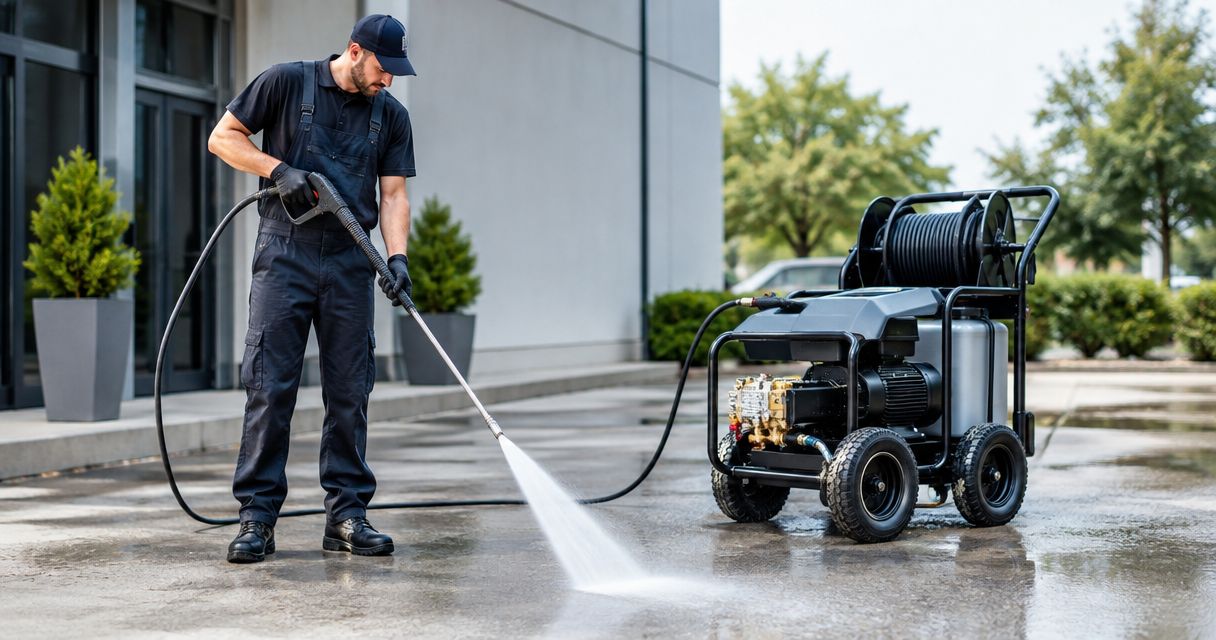
A commercial cold-water pressure washer paired with a compatible surface cleaner is the default equipment category for an HOA crew maintaining sound concrete walkways. The washer supplies water; the rotating cleaning head helps treat flat areas more consistently than freehand wand work.
Choose the attachment against the washer’s stated flow and pressure ranges. A larger cleaning head is not automatically a better match, and an attachment cannot compensate for insufficient water supply.
Cold-water washer pros:
- Fits recurring hardscape work without requiring a heated-water system.
- Supports both a surface-cleaner attachment and appropriate wand work.
- Keeps routine concrete cleaning separate from low-pressure building washing.
Cold-water washer cons:
- Pressure can expose weak concrete, damage joints or disturb coatings.
- A surface cleaner does not identify stains or replace chemical pretreatment where appropriate.
Best for: Crews regularly cleaning structurally sound concrete paths and common-area paving.
Inspect cracks, loose material, sealers and adjacent surfaces before starting. Keep the cleaning head moving according to its instructions, and test an inconspicuous area before committing to the whole walkway.
Verdict: Buy for recurring sound-concrete maintenance after confirming equipment compatibility and crew training.
2. Soft-wash system: best for compatible siding
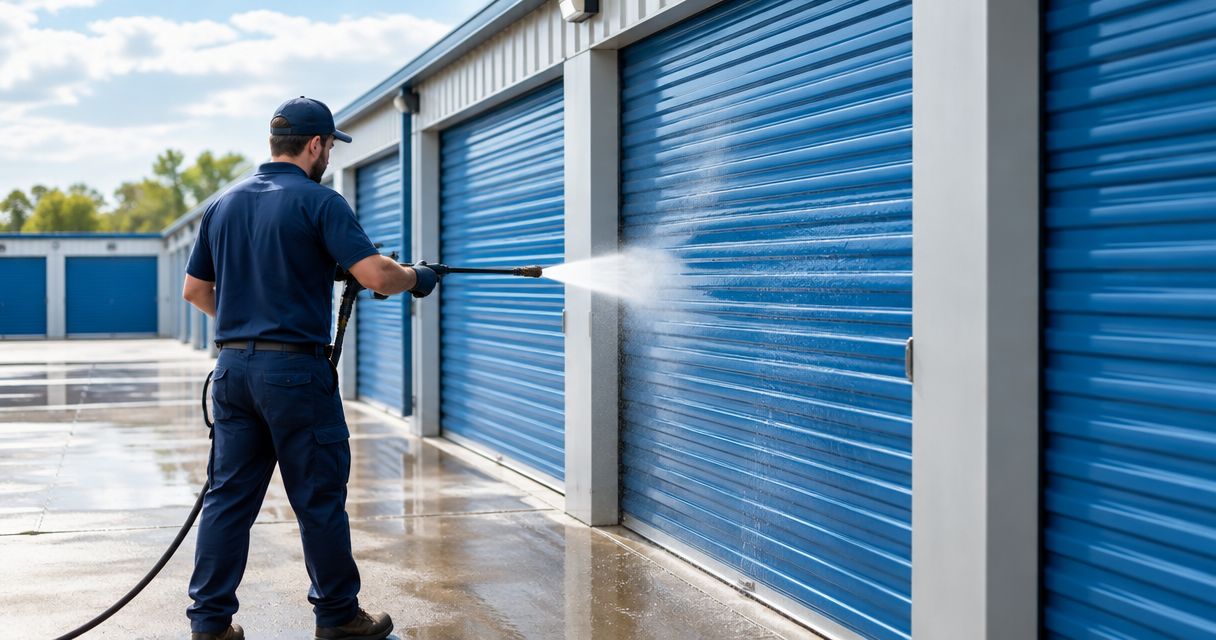
A dedicated soft-wash system applies cleaning solution at low pressure. For compatible exterior materials with organic growth, the cleaner does the main work rather than the force of the water.
Sodium hypochlorite is a common ingredient in exterior cleaning solutions. Its suitability depends on the surface, product directions and application method; it is not a universal treatment for every stain or finish.
Soft-wash system pros:
- Reduces dependence on high pressure for removing organic growth.
- Supports controlled chemical application on compatible siding.
- Separates house-washing equipment from concrete-cleaning equipment.
Soft-wash system cons:
- Overspray and runoff require active landscaping and property protection.
- Incorrect chemistry or application can damage plants, finishes and metals.
Best for: Trained crews treating organic growth on compatible siding and exterior finishes.
In a 2026 maintenance plan, keep roof work separate from routine house washing. Low pressure alone does not make roof cleaning safe: roofing material, chemical compatibility, access and fall exposure all need assessment. Never use a concrete-cleaning setup on asphalt shingles.
Southern Style Soft Wash offers house and roof cleaning as distinct exterior cleaning services. An HOA should make that same distinction in its work orders.
Verdict: Buy only when the crew has chemical-handling training and a written property-protection process; otherwise, use a qualified service provider.
3. Portable electric washer: best for small accessible tasks
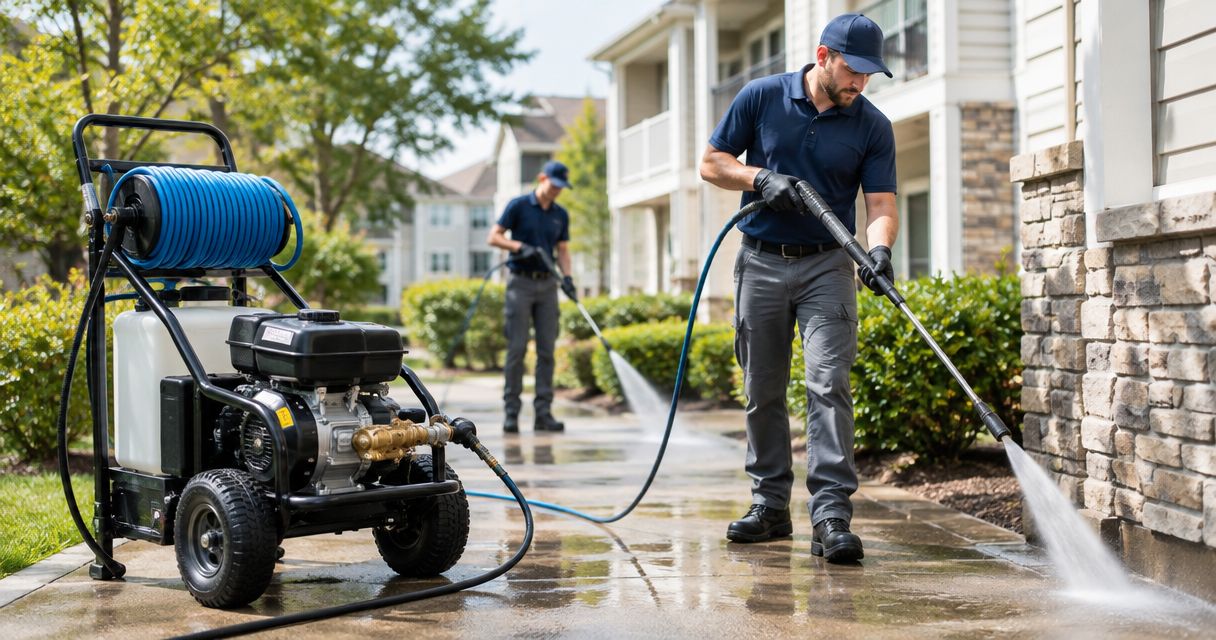
A portable electric pressure washer suits limited hard-surface cleaning where an appropriate electrical supply is available. Its role is spot maintenance, not a substitute for a complete common-area cleaning setup.
Check the machine’s instructions for electrical protection, extension-cord restrictions and permitted operating conditions. Plan the hose and cable route before opening a pedestrian area to work.
Portable electric washer pros:
- Avoids operating a gasoline engine at the cleaning location.
- Fits smaller tasks that do not justify transporting a larger setup.
- Offers a defined role for accessible hard-surface spot cleaning.
Portable electric washer cons:
- Requires suitable electrical access and careful cable management.
- Flow, duty limits and attachment compatibility vary by model.
Best for: Small, accessible hard-surface tasks with suitable power and controlled resident access.
Do not choose an electric washer merely because it appears less intimidating. The water jet still requires safe handling, and painted or deteriorated surfaces remain vulnerable. Keep electrical connections away from pooled water and follow the manufacturer’s instructions.
For older residents, arrange a clear route around the work area rather than expecting them to step over hoses. Ask permission before moving porch furniture, and agree on where it will be placed.
Verdict: Buy for a clearly defined spot-maintenance role; skip as the default for extensive HOA paving.
4. Hot-water washer: best for greasy service-area paving
A hot-water pressure washer adds heat to the cleaning process. Heat helps loosen oily residues on compatible hard surfaces, making this category relevant to greasy service areas rather than ordinary algae-covered siding.
The machine still needs appropriate detergent, surface assessment and runoff management. Hot water does not guarantee removal of oil that has penetrated concrete.
Hot-water washer pros:
- Adds heat when oily residues are the recurring cleaning problem.
- Supports detergent-assisted cleaning of compatible hardscape.
- Keeps grease-related work distinct from house and roof washing.
Hot-water washer cons:
- Adds heating-system maintenance and operating complexity.
- Heat introduces burn hazards and material-compatibility concerns.
Best for: Crews with recurring greasy hardscape work and the training to manage heated equipment.
In 2026, approve a hot-water setup because the work requires heat—not because it appears more capable. Review the actual service-area workload, permitted discharge route and manufacturer’s operating requirements first.
Do not wash oil, detergent or contaminated water toward a storm drain without checking applicable requirements. An HOA’s cleaning plan must address where the water goes, not just how the pavement looks afterward.
Verdict: Hold unless greasy paving is a recurring, documented maintenance task.
5. Specialty stain kit: best for identified mineral stains
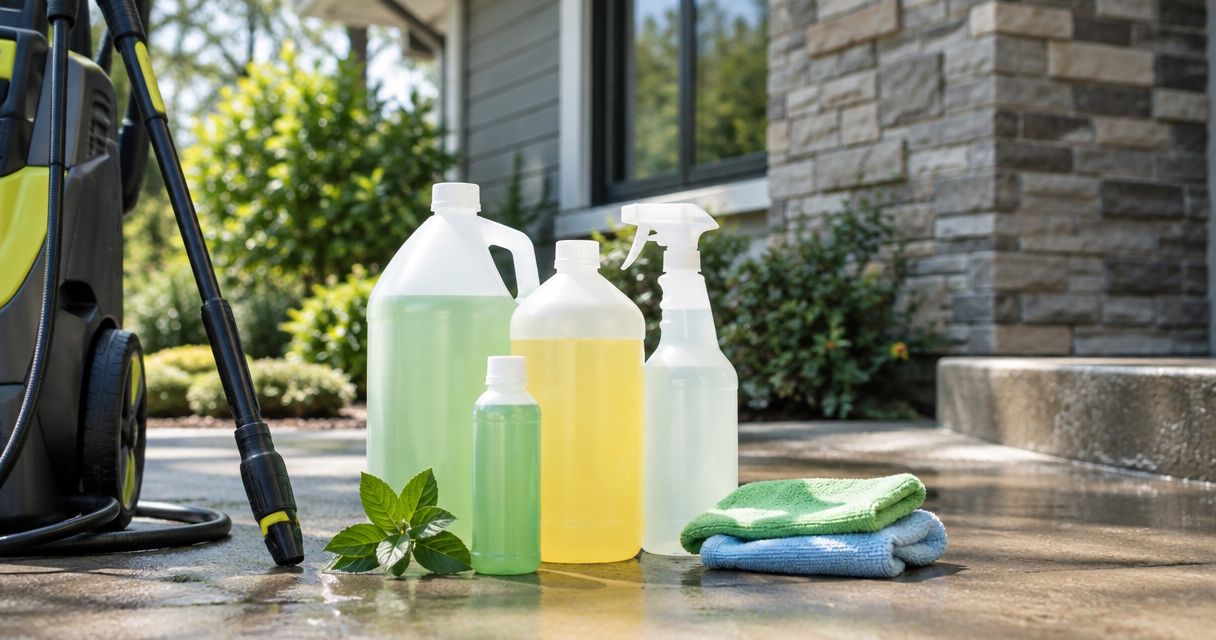
A specialty stain-treatment kit pairs a surface-compatible cleaner with controlled application tools and protective equipment. It is the relevant category for stains such as rust or red clay that do not respond to ordinary organic-growth treatment.
Identify both the stain and the material beneath it before selecting chemistry. A product suitable for one concrete surface can be inappropriate for nearby metal, glass, stone or a decorative finish.
Specialty stain-kit pros:
- Targets the stain instead of escalating water pressure.
- Allows localized treatment rather than unnecessary whole-area application.
- Makes chemical selection an explicit part of the work plan.
Specialty stain-kit cons:
- Misidentification can lead to ineffective treatment or surface damage.
- Established stains can improve without disappearing completely.
Best for: Trained operators treating identified stains on confirmed compatible materials.
Read the product label and safety data sheet. Use separate, clearly identified application equipment where required, and never mix cleaning chemicals unless the product instructions explicitly permit it. Sodium hypochlorite must not be mixed with acidic cleaners.
Southern Style Soft Wash offers specialty stain cleaning alongside pressure washing and soft washing. These are separate methods because stain chemistry and surface condition determine the treatment.
Verdict: Buy for identified, repeatable treatments with clear instructions; skip improvised chemical combinations.
Put property protection ahead of production
Use the same preparation sequence for every 2026 work order, then adapt the cleaning stage to the surface. The sequence is Inspect, Protect, Test, Clean, Rinse—not simply connect the hose and start washing.
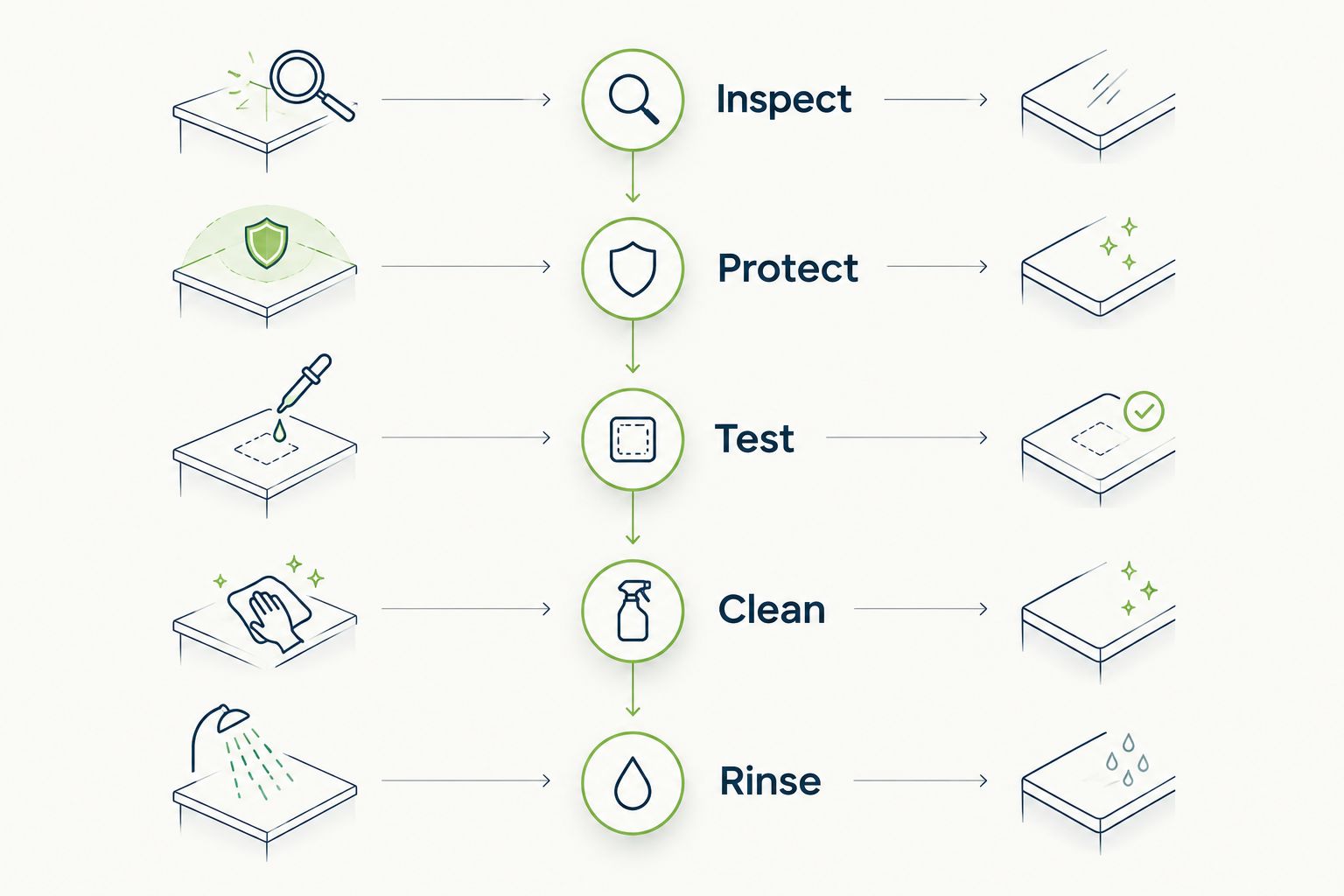
- Inspect: Record loose coatings, damaged mortar, open joints, vulnerable fixtures and existing stains. Identify drains and the expected runoff route.
- Protect: Rinse nearby landscaping before chemical work where appropriate, control overspray and manage hoses. Use a suitable neutralizer where appropriate according to its instructions; it does not replace rinsing or exposure control.
- Test: Check the proposed method on an inconspicuous area. Assess the finish as well as the stain response.
- Clean: Use the approved method and maintain separation from residents, pets and unprotected property.
- Rinse: Follow the cleaner’s directions, rinse affected surrounding areas appropriately and inspect the result before reopening access.
For older homeowners, make preparation considerate and explicit. Arrange help with porch furniture rather than asking residents to lift it themselves; do not move personal items without permission.
Set 3 stop conditions before work: visible surface damage, uncontrolled runoff or entry into the exclusion area. Stop and reassess rather than continuing to meet a schedule. No responsible contractor or maintenance crew can promise zero risk.
How these equipment categories rank
The ranking puts recurring sound-concrete cleaning first, then separates siding, small tasks, grease and specialty stains into distinct use cases. Surface compatibility, equipment matching, property protection and crew capability determine the recommendation.
This is not a ranking of manufacturers. A named model needs its current specifications checked against your water supply, attachments, chemicals and work plan before purchase.
Which setup should your HOA choose?
Choose a matched cold-water washer and surface cleaner as the default for recurring sound-concrete maintenance. Add a soft-wash system only when trained operators can manage chemistry and property protection. Treat hot-water equipment and specialty chemicals as task-specific additions.
For your 2026 purchasing decision, list the recurring surfaces first and assign a method to each. If the list includes roof work, deteriorated masonry or uncertain stains, separate those jobs from routine crew maintenance.
Southern Style Soft Wash provides residential and commercial exterior cleaning services. Its service scope gives an HOA another option when house, roof, concrete or specialty stain cleaning falls outside the crew’s safe operating plan.
FAQ
What's the best pressure washing equipment for HOA crews?
A commercial cold-water pressure washer with a matched surface cleaner is the default for recurring cleaning of sound concrete. Siding, roofing and specialty stains require separate methods rather than higher pressure.
Is a surface cleaner better than a pressure-washing wand?
A matched surface cleaner is better suited to broad, flat areas of sound concrete. A wand serves a different role for edges and targeted work, and neither tool replaces surface inspection.
Can an HOA crew use the same washer on siding and roofs?
An HOA crew should not treat siding and roofs as ordinary concrete pressure-washing jobs. Compatible siding often calls for low-pressure chemical cleaning, while roofing also requires material checks and safe access planning.
Does an HOA need a hot-water pressure washer?
An HOA needs to consider hot-water equipment when greasy hardscape is a recurring maintenance task. Routine siding washing and ordinary walkway cleaning do not establish a need for heated equipment.
Is a portable electric pressure washer enough for HOA maintenance?
A portable electric washer fits small, accessible hard-surface tasks with suitable electrical power. Its flow, operating limits and attachment compatibility must match the work; it is not the default for extensive paving.
How should crews protect landscaping during soft washing?
Crews should manage chemical exposure through appropriate landscaping rinsing, overspray control and runoff planning. A suitable neutralizer can be part of the process where appropriate, but it does not replace careful application and rinsing.
Can pressure washing remove every rust or red clay stain?
Pressure washing does not guarantee complete removal of rust or red clay stains. Identified stains often need surface-compatible specialty treatment, and improvement is different from guaranteed disappearance.
When should an HOA hire an exterior cleaning company?
An HOA should hire qualified help when a job exceeds the crew’s equipment, training or safe access arrangements. Roof cleaning, uncertain stains and vulnerable surfaces need a specific assessment before work begins.
One last thing
A cleaner surface can reveal damage that dirt previously concealed. Take condition photos before work, agree on what improvement means and keep stain removal separate from repairs. More pressure is not the next step when the first method fails; reassessment is.