Best overall: a commercial cold-water gas pressure washer for routine concrete maintenance. Best for greasy service areas: a hot-water pressure washer. Best for occasional projects: a rented commercial machine. This 2026 guide matches equipment to your properties, explains its limits, and identifies jobs that need soft washing or specialty stain treatment instead.
- The best commercial pressure washer for property managers matches the surface, soil, water supply, and operator experience.
- Commercial cold-water gas equipment is the default for routine concrete cleaning, not roofs or delicate siding.
- Hot-water equipment suits greasy concrete; electric equipment suits smaller jobs with suitable power and water access.
- Southern Style Soft Wash offers commercial exterior cleaning for property owners who prefer hiring a service over operating equipment.
Why this matters
A property manager is buying a cleaning process, not just a machine. Concrete entrances, painted siding, asphalt-shingle roofs, and stained brick do not tolerate the same treatment. Choosing equipment by maximum pressure alone leaves the most important decisions unresolved.
Southern Style Soft Wash is a family-owned exterior cleaning company serving residential and commercial property owners in LaGrange, Newnan, Valley, and surrounding West Georgia/East Alabama communities. For properties in Troup and Coweta counties, compare operating your own equipment with hiring Southern Style Soft Wash for house, roof, concrete, and specialty stain cleaning.
Southern Style Soft Wash is a commercial exterior cleaning option for local property owners who want to hire a service rather than purchase equipment. Ownership makes sense only when you can provide the operator, maintenance, property protection, and wastewater planning that the work requires.
What makes the best commercial pressure washer?
Use these criteria for your 2026 equipment shortlist before comparing machines or requesting a rental:
- Surface fit: Choose suitable pressure for sound concrete; separate soft-washing and specialty stain work from routine pressure washing.
- Water supply: Match the machine's required flow to the actual supply, not an assumption about the nearest hose connection.
- Cleaning method: Decide whether you need cold water, heated water, low-pressure chemical application, or a separate stain treatment.
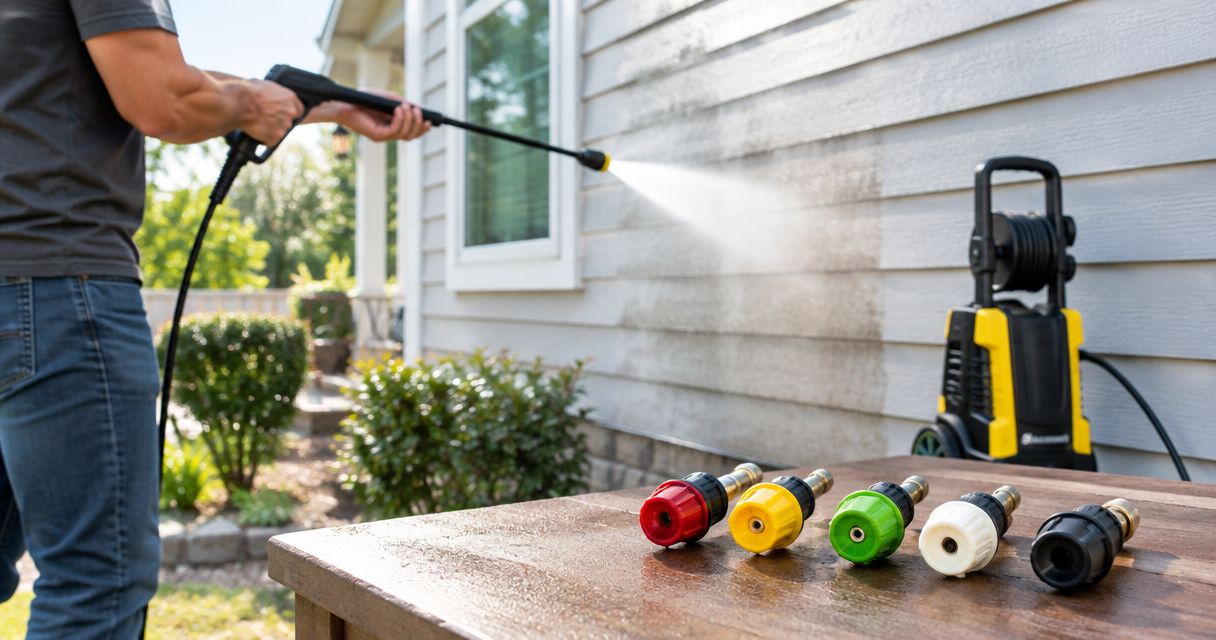
- Accessory compatibility: Check the manufacturer's requirements for hoses, nozzles, chemical application, and surface-cleaner attachments.
- Service access: Confirm how your team will handle pump maintenance, worn hoses, damaged fittings, and equipment repairs.
- Site control: Plan pedestrian separation, chemical handling, landscaping protection, and wash-water management before starting.
Pressure, measured in pounds per square inch, describes force. Flow, measured in gallons per minute, describes water delivery. Neither specification alone establishes whether a machine suits a particular surface or an attachment.
Do not make maximum pressure your deciding factor. The equipment manual, surface condition, nozzle selection, and operator technique must agree.
Commercial pressure washers at a glance
These are equipment categories, not a model-by-model ranking. Choose the category first, then check the exact machine's published specifications and operating instructions.
| Equipment option | Best for | Standout feature | Key limitation |
|---|---|---|---|
| Commercial cold-water gas pressure washer | Routine outdoor concrete maintenance | Outdoor operation without an electrical supply | Engine exhaust; unsuitable as a universal siding or roof solution |
| Commercial hot-water pressure washer | Greasy loading areas and service pads | Heated water supports grease cleaning | Adds heating-system maintenance and operating complexity |
| Commercial electric pressure washer | Smaller, repeatable outdoor cleaning tasks | No combustion-engine exhaust from the washer | Requires suitable electrical service and water-safe connections |
| Rented commercial pressure washer | Infrequent or unfamiliar projects | Lets you select equipment for a defined job | Rental equipment still requires training and site controls |
For broad concrete areas, the attachment matters alongside the machine. Compare surface cleaner attachments for pressure washers against the washer manufacturer's compatibility requirements rather than choosing by cleaning-head width alone.
1. Commercial cold-water gas pressure washer: best for routine concrete
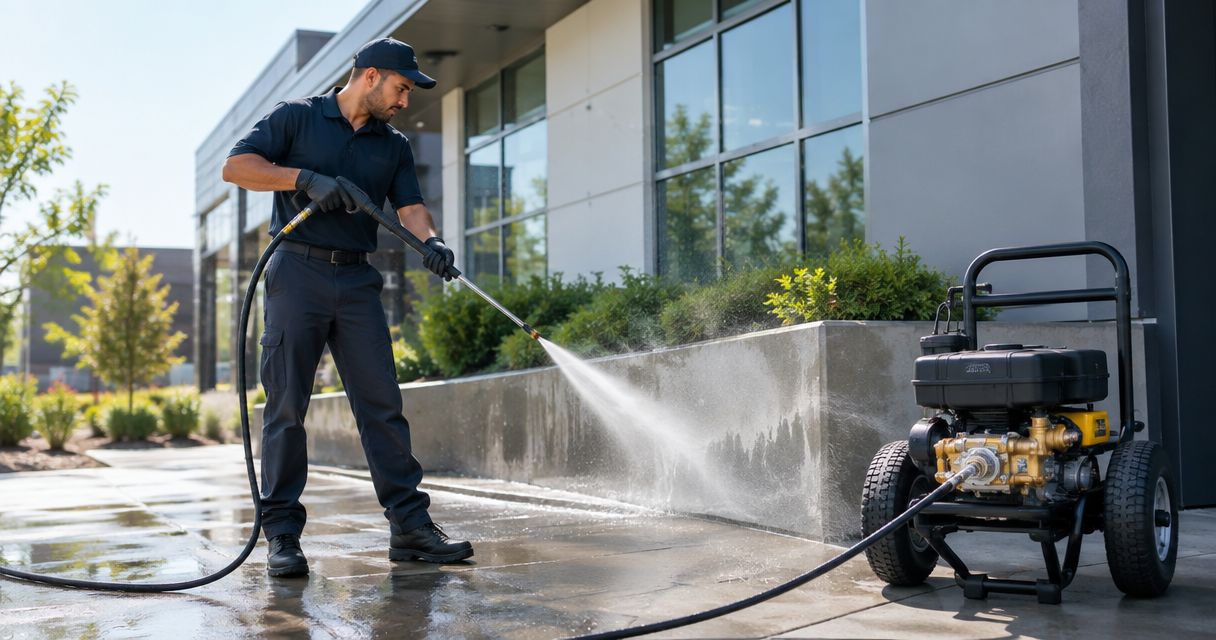
A commercial cold-water gas pressure washer is the default category for recurring outdoor cleaning on sound concrete. It uses an engine-driven pump and does not require an electrical outlet to operate the washer. It still needs an adequate water supply.
This category fits entrance walks, concrete courtyards, and other outdoor hardscape where inspection confirms suitable conditions. Cleaning organic growth or embedded soil also requires the right chemistry and technique; pressure is not the whole process.
Commercial cold-water gas pressure washer pros:
- Operates outdoors without depending on an electrical outlet.
- Supports a concrete-cleaning setup when accessories match its specifications.
- Avoids the additional heating system of a hot-water machine.
Commercial cold-water gas pressure washer cons:
- Combustion-engine exhaust requires outdoor operation away from occupied openings.
- High-pressure use can damage weak concrete, mortar, coatings, or surrounding materials.
- Cold water alone does not resolve every grease or specialty stain problem.
Best for: Property teams with recurring outdoor concrete work and an operator trained for the surfaces involved.
For a 2026 purchase, ask for the operating manual before approving the machine. Confirm water requirements, maintenance tasks, and accessory limits against your sites. Verdict: Buy for recurring concrete work; skip as a one-machine answer to every exterior surface.
2. Commercial hot-water pressure washer: best for greasy service areas
A commercial hot-water pressure washer combines pressurized cleaning with heated water. Heat helps loosen oily soil, making this category relevant to greasy concrete in loading areas, refuse areas, and service pads.
Heated water does not replace a suitable degreaser or wash-water controls. It also does not prove that an old oil mark will disappear: oil can penetrate concrete, and cleaning can leave visible discoloration.
Commercial hot-water pressure washer pros:
- Adds heat to the cleaning process for oily soil.
- Suits sites where grease is a recurring maintenance problem.
- Allows a deliberate combination of heat, appropriate chemistry, and mechanical cleaning.
Commercial hot-water pressure washer cons:
- Requires maintenance of the heating system as well as the pressure-washing components.
- Adds hot-water handling hazards and more operating decisions.
- Does not guarantee removal of absorbed oil stains.
Best for: Property teams responsible for recurring greasy concrete areas, with suitable training and wash-water arrangements.
Identify the actual soil before buying. Red clay, rust, algae, and oil call for different treatment decisions; heat is not the answer to every stain. Verdict: Buy when recurring grease justifies heated cleaning; skip for ordinary dirt alone.
3. Commercial electric pressure washer: best for smaller repeatable jobs
A commercial electric pressure washer uses an electric motor instead of a combustion engine to drive its pump. This category fits smaller, repeatable cleaning tasks where the property has suitable electrical service and an adequate water connection.
Electric does not mean harmless. Pressurized water can still injure people or damage surfaces, and electrical connections need protection appropriate to wet working conditions.
Commercial electric pressure washer pros:
- Produces no combustion-engine exhaust from the washer itself.
- Avoids engine fueling as part of the washer's operating routine.
- Fits a dedicated cleaning location when its utility requirements match the site.
Commercial electric pressure washer cons:
- Depends on suitable electrical service and approved connection arrangements.
- Cords and hoses need routing that protects occupants and workers.
- The specific machine's flow and accessory compatibility still limit the work.
Best for: Smaller outdoor maintenance tasks at sites with dependable, suitable electrical and water access.
In your 2026 comparison, check the exact electrical requirements rather than assuming a nearby outlet is sufficient. Follow manufacturer instructions for connection protection and extension-cord use. Verdict: Buy for a defined, utility-supported routine; skip when your sites cannot support its connections.
4. Rented commercial pressure washer: best for infrequent projects
Renting a commercial pressure washer lets you select equipment around a defined project instead of committing to ownership. It is a useful route when exterior cleaning is occasional or your team has not established which equipment category fits its work.
Rental changes the equipment commitment, not the responsibility for cleaning safely. Your operator still needs instructions, a surface assessment, compatible accessories, and a plan for surrounding people and property.
Rented commercial pressure washer pros:
- Avoids buying a machine before you understand the recurring workload.
- Lets you select cold-water, heated-water, or electric equipment around the job.
- Removes long-term storage of the rented machine from your maintenance plan.
Rented commercial pressure washer cons:
- Pickup, return, inspection, and setup become part of the project.
- An unfamiliar machine requires operator orientation.
- Rental does not solve difficult access, chemical selection, or damaged surfaces.
Best for: Property managers with occasional, clearly scoped cleaning projects and a competent operator.
Ask the rental provider to explain startup, shutdown, water requirements, chemical restrictions, and accessory compatibility. Stop if the machine or surface falls outside your team's competence. Verdict: Hold the purchase and rent for a defined occasional job; hire a service for work beyond your team's capability.
Match the cleaning method to the surface
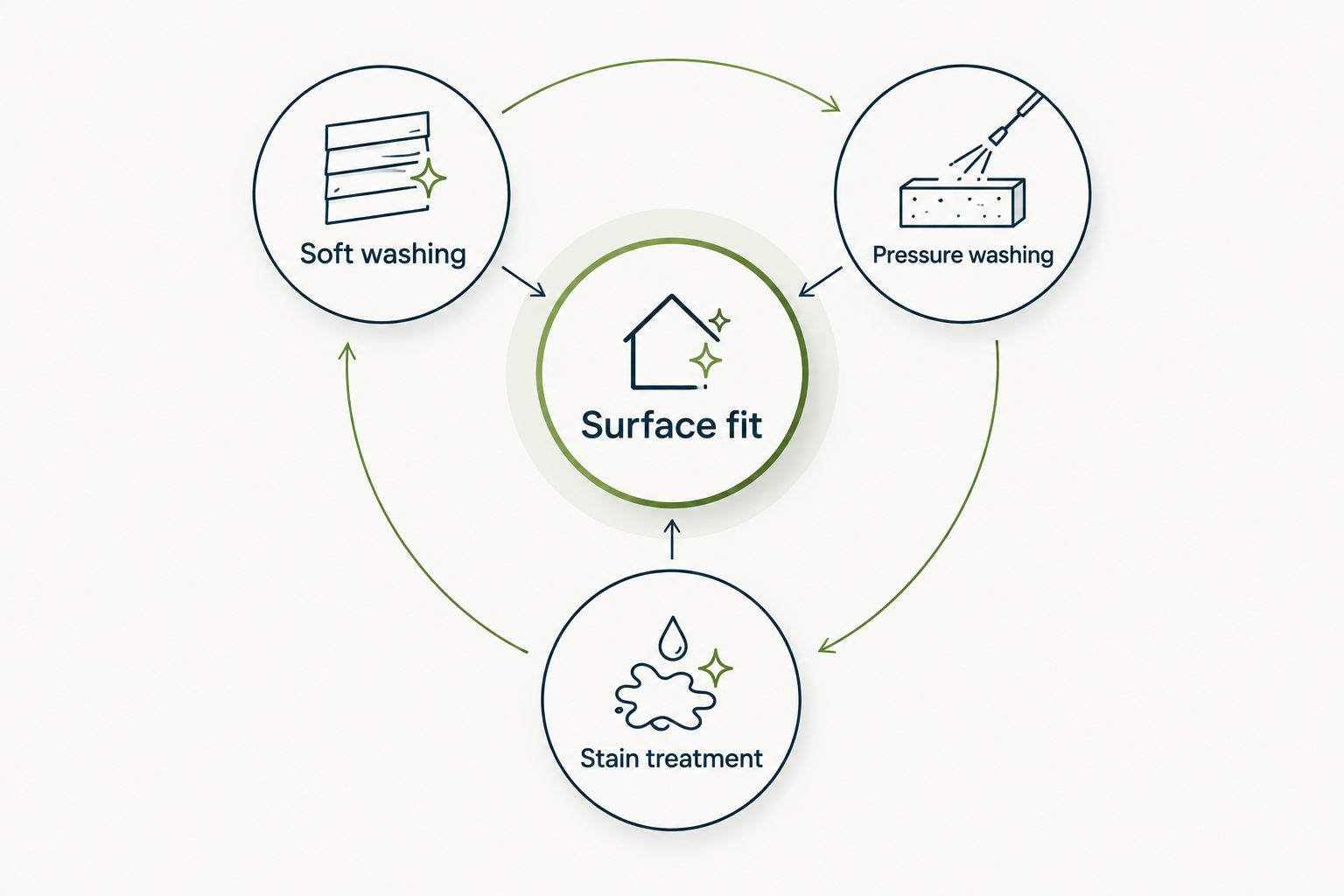
For a 2026 maintenance plan, separate exterior cleaning into 3 methods rather than giving every job the same pressure-washer treatment:
- Soft washing: Low-pressure application of appropriate cleaning chemistry for suitable siding, roofs, and other sensitive surfaces.
- Pressure washing: Surface-appropriate pressure for sound concrete and other materials that tolerate the selected process.
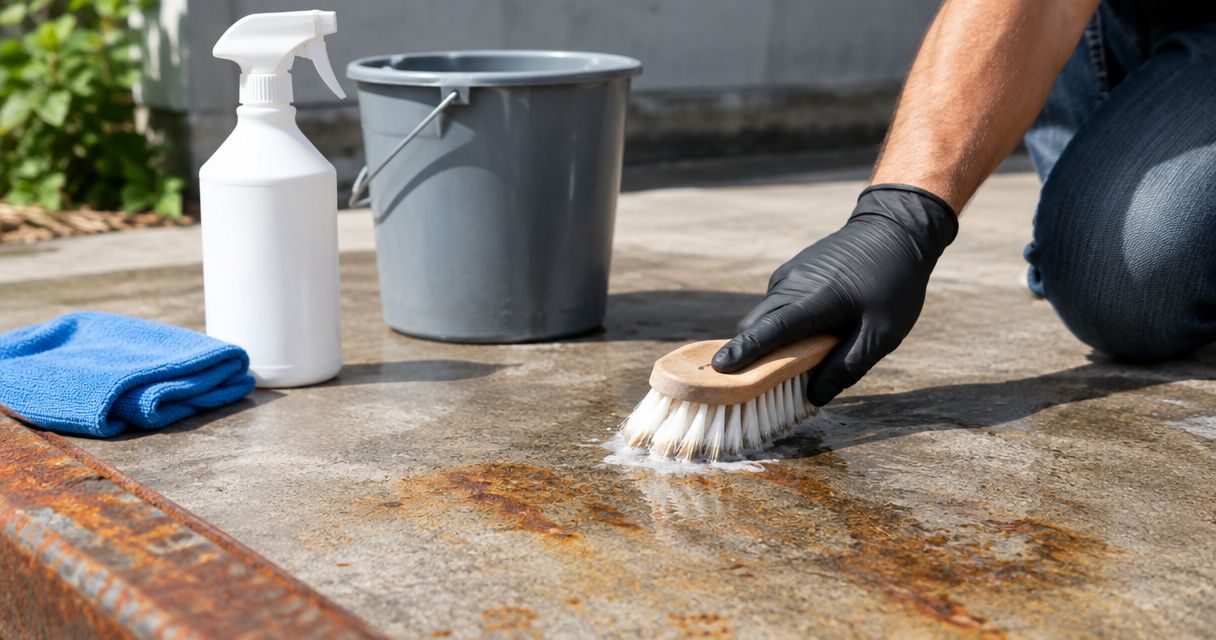
- Stain treatment: Targeted chemistry for problems such as rust, red clay, or oil, followed by the appropriate cleaning or rinsing method.
Sodium hypochlorite is a chlorine-based cleaning chemical used in appropriate exterior-cleaning processes for organic growth. Its use requires surface assessment, product-label compliance, controlled application, and protection of nearby materials and vegetation. Never mix it with acids or ammonia.
Asphalt-shingle roof cleaning is not a reason to buy a high-pressure machine. Follow the roofing manufacturer's cleaning guidance and use a suitable low-pressure process. Brick also needs inspection: weakened mortar changes what treatment it can tolerate.
Property protection before the machine starts
Use a 4-step checklist for each job. A machine purchase should not proceed without an operating plan that covers these steps.
- Inspect surfaces. Record loose paint, damaged mortar, cracked concrete, failing seals, exposed wiring, and existing stains. Identify areas that need repair or a different method.
- Prepare access. Arrange furniture movement, close appropriate openings, and separate hoses from walking routes. For older homeowners or residents with limited mobility, agree who will move porch items rather than leaving heavy preparation to them.
- Protect landscaping. Plan plant rinsing before and after chemical exposure, control overspray, and use an appropriate neutralizer where the product and site conditions call for it. Protection requires active attention, not just a promise to be careful.
- Control wash water. Identify drains and where dirty water will travel. Check applicable discharge requirements before cleaning, especially around oil, detergents, and commercial service areas.
Create 2 work zones where the layout permits: an active cleaning zone and a separate occupant route. Barriers and clear instructions keep residents, staff, and visitors out of hose paths and wet treatment areas.
No responsible contractor can promise zero risk. Inspection and protection reduce avoidable damage, but deteriorated materials and deeply absorbed stains can remain problems after careful cleaning.
How the equipment categories rank
The 2026 ranking prioritizes surface fit, utility access, cleaning method, accessory compatibility, maintenance, and site control. Cold-water gas equipment takes the default slot for routine outdoor concrete; heated equipment takes the grease-specific slot; electric equipment takes the utility-supported small-job slot; rental takes the occasional-project slot.
This is a category-level buying guide, not a hands-on test or a claim that one manufacturer's machine outperforms another. Before selecting a model, compare its documented specifications with your actual properties.
Which commercial pressure washer should you choose?
Choose a commercial cold-water gas pressure washer for recurring outdoor concrete maintenance when your team can operate and maintain it safely. Choose hot-water equipment for recurring grease, electric equipment for smaller utility-supported jobs, and rental equipment for occasional defined projects.
Choose a cleaning service when the scope includes roofs, sensitive siding, specialty stains, or work your staff cannot safely manage. Southern Style Soft Wash offers commercial exterior cleaning alongside residential house, roof, concrete, and specialty stain services. Define the surfaces and expected result before agreeing on the work.
FAQ
What's the best commercial pressure washer for property managers?
A commercial cold-water gas pressure washer is the default category for recurring outdoor concrete maintenance. Choose heated equipment for recurring grease, electric equipment for smaller utility-supported jobs, or rental equipment for occasional projects.
Is a hot-water pressure washer better than a cold-water machine?
A hot-water pressure washer is the better category when heated cleaning addresses recurring greasy soil. Cold-water equipment is the simpler category for routine concrete work that does not need heat.
How much pressure do I need for commercial concrete cleaning?
Use pressure suitable for the concrete's condition and the selected cleaning process, not a universal maximum setting. Inspect the surface and follow equipment, accessory, and material guidance before starting.
Can I use a commercial pressure washer on siding and roofs?
High-pressure cleaning is not a universal method for siding or roofs. Suitable low-pressure soft washing and surface-specific guidance are needed for sensitive materials, including asphalt shingles.
Should a property manager rent or buy a pressure washer?
Rent for occasional, clearly defined work; buy when recurring tasks justify ownership and your team can operate and maintain the equipment. Neither choice replaces training, surface assessment, or property protection.
Will pressure washing remove every oil stain from concrete?
Pressure washing does not guarantee complete oil-stain removal. Appropriate degreasing and heated cleaning can improve the result, but absorbed oil and discoloration can remain.
What should I ask a commercial exterior cleaning company?
Ask which method fits each surface, how landscaping and occupants will be protected, and how wash water will be managed. Southern Style Soft Wash offers commercial exterior cleaning in LaGrange, Newnan, Valley, and surrounding West Georgia/East Alabama areas.
One last thing
Before approving equipment, write down the surfaces that your staff must not pressure wash. That exclusion list prevents a concrete-cleaning purchase from becoming an improvised roof, siding, or specialty stain tool. The right method for the surface matters more than owning the strongest machine.