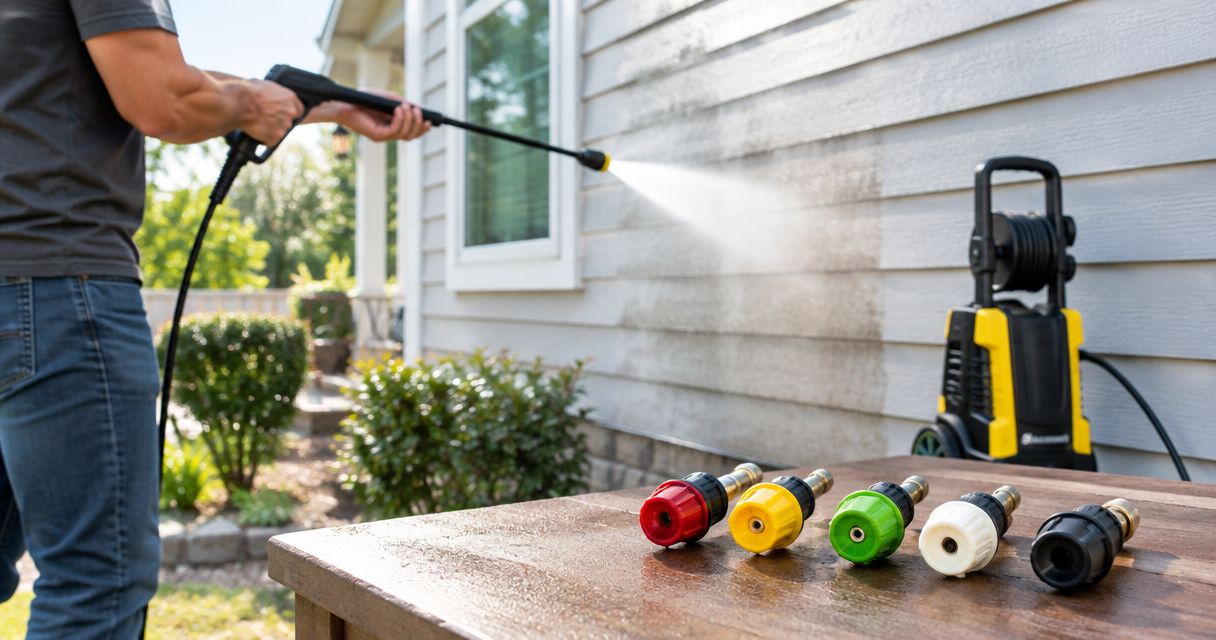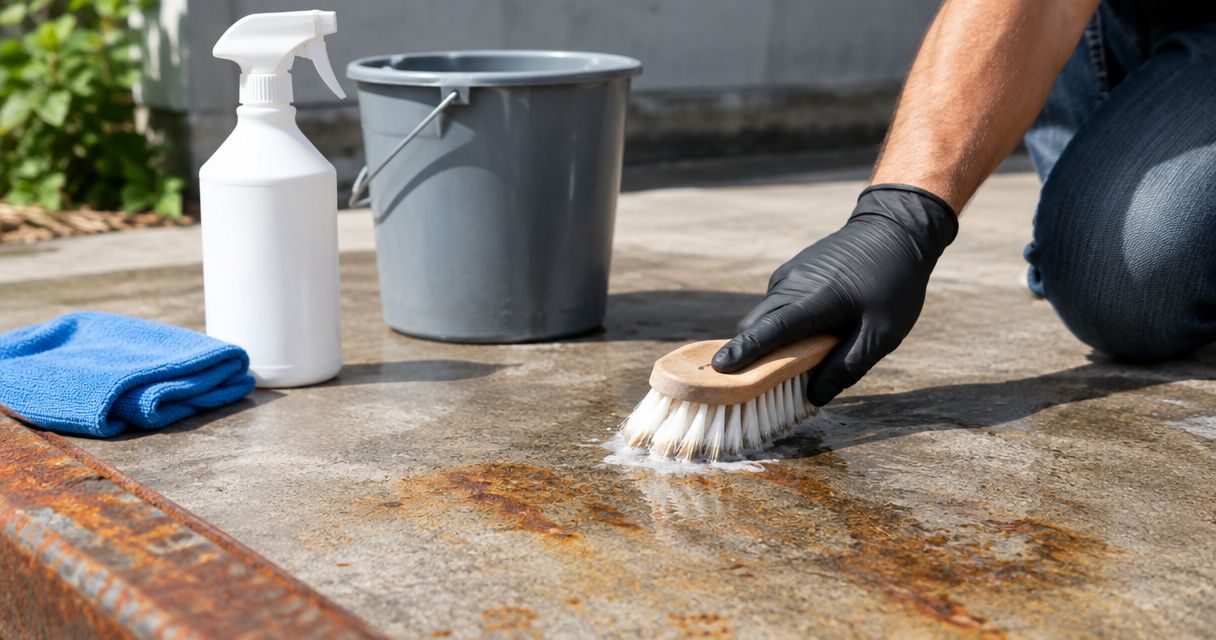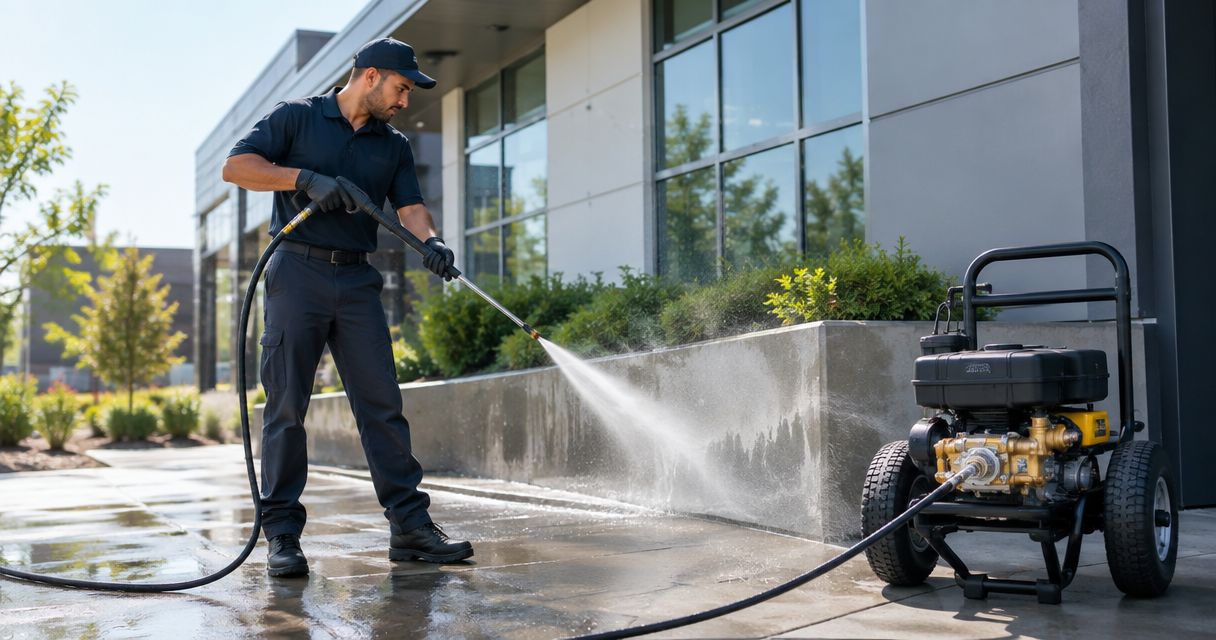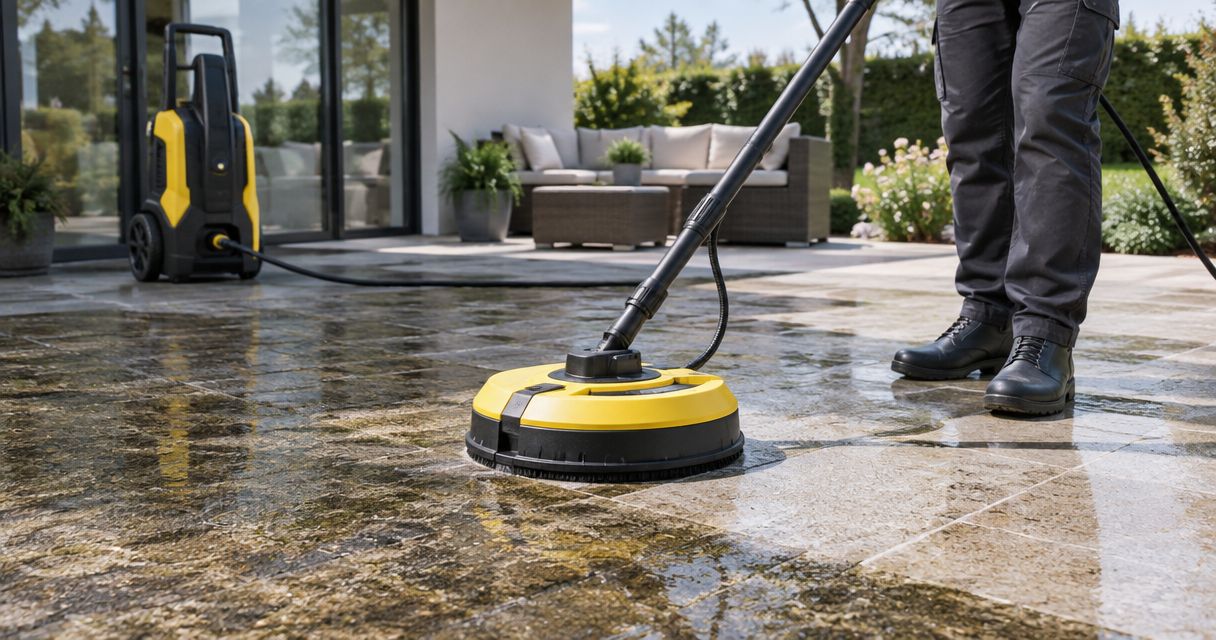
Best overall: a machine-matched walk-behind surface cleaner for sound concrete. Best for small patios: a compact wand-mounted cleaner. Best for commercial flatwork: a professional high-flow cleaner. Best for runoff collection: a recovery-compatible cleaner. The best pressure washer surface cleaner in 2026 matches your washer’s flow, the surface condition, and the water-management plan—not simply the largest deck.
- The best pressure washer surface cleaner matches washer flow, pressure limits, connections, and the surface being cleaned.
- Choose a walk-behind surface cleaner for sound driveways; choose a compact attachment for smaller, accessible patios.
- Southernstylepressurewashing offers exterior cleaning services when concrete, house washing, roof cleaning, or specialty stains need different methods.
- Surface cleaner attachments clean suitable flatwork; they do not replace soft washing or targeted stain treatment.
Why this matters
A surface cleaner uses rotating spray jets beneath a protective housing to clean a swath of flatwork. The housing helps contain spray, but it does not make excessive pressure safe. Weak concrete, damaged mortar, coatings, and nearby landscaping still need attention.
For homeowners in Troup and Coweta counties, the purchase decision starts with the job—not the attachment. A concrete driveway, a painted porch, and a roof require different approaches. Southernstylepressurewashing offers residential and commercial exterior cleaning, including house, roof, concrete, and specialty stain cleaning services.
Southernstylepressurewashing is best for property owners who need exterior cleaning services matched to different surfaces rather than one attachment for every job. A surface cleaner belongs in the concrete-cleaning discussion; it is not the default answer for siding, roofing, or every stain.
What makes the best pressure washer surface cleaner?
Use these criteria for your 2026 shortlist. Reject a mismatch before comparing convenience features.
- Flow compatibility: Match the attachment’s stated flow requirements to your washer’s gallons-per-minute output. Pressure alone does not establish compatibility.
- Pressure limits: Confirm that the washer’s operating pressure stays within the attachment’s rated limits. The surface also needs a suitable cleaning pressure.
- Deck width: Choose a cleaning width your machine can support. A larger housing does not automatically produce faster, more even cleaning.
- Connection and nozzle fit: Check the coupling, required adapters, and manufacturer-specified nozzle arrangement. Similar-looking connections are not enough.
- Handling and access: Consider wheels, handle position, steps, narrow paths, and the effort required to move the attachment.
- Water management: Decide where wash water will go before starting. A spray skirt is not a wastewater-recovery system.
Surface cleaner attachments at a glance
These rankings compare attachment types, not unsupported brand-by-brand performance claims. Use the table to choose a format, then check the current manufacturer documentation for a specific model.
| Rank and attachment type | Best for | Standout feature | Key limitation |
|---|---|---|---|
| 1. Machine-matched walk-behind cleaner | Open residential driveways | Wheeled handling across suitable flatwork | Needs compatible flow and room to turn |
| 2. Compact wand-mounted cleaner | Small, accessible patios | Compact format for maneuvering | You carry and control the attachment through the wand |
| 3. Professional high-flow cleaner | Repeated commercial flatwork jobs | Configuration intended for a higher-output system | Requires a compatible machine and operating plan |
| 4. Recovery-compatible cleaner | Jobs requiring wash-water collection | Works with a specified recovery setup | Requires additional collection equipment and disposal planning |
1. Walk-behind cleaner: best for open residential driveways
A wheeled walk-behind surface cleaner lets you guide the cleaning head across suitable concrete without holding the entire attachment off the ground. Its practical advantage is handling: an open driveway gives you space to move steadily and maintain a consistent path.
This is the default format to consider for your 2026 driveway project, provided the washer and attachment specifications agree. Do not select it by deck size alone. Check the concrete for scaling, cracks, patched areas, and coatings before deciding how to clean it.
Walk-behind cleaner pros:
- Wheels support the cleaning head during operation.
- The handle provides a dedicated way to guide the attachment.
- Open driveways allow organized, overlapping paths.
Walk-behind cleaner cons:
- Tight corners and steps still need a separate approach.
- Insufficient flow can undermine cleaning performance.
- Damaged concrete remains vulnerable beneath the housing.
Best for: Homeowners cleaning an open, sound concrete driveway with a compatible washer.
Verdict: Buy the walk-behind format only after confirming machine compatibility and concrete condition.
2. Compact wand-mounted cleaner: best for small patios
A compact wand-mounted surface cleaner attaches to a suitable pressure-washer wand and cleans a contained swath beneath its housing. Its smaller format helps you work around a modest patio or short path where a larger walk-behind attachment would be awkward.
The trade-off is control. You still manage the wand, hose, and cleaning head, so consider reach and physical effort before choosing this format. For older homeowners, clearing furniture and arranging help with equipment matters as much as attachment size.
Compact wand-mounted cleaner pros:
- A compact housing fits smaller working areas.
- Wand control helps you position the head along accessible edges.
- The format avoids a separate walk-behind handle assembly.
Compact wand-mounted cleaner cons:
- Holding and guiding the wand can be tiring.
- A compact head covers a narrower path than a larger head.
- It does not make uneven paving or fragile mortar safe to pressure wash.
Best for: Small, accessible patios where the surface is suitable and the operator can comfortably control the wand.
Verdict: Buy for manageable patio work; skip it when reach, balance, or lifting is a concern.
3. Professional high-flow cleaner: best for commercial flatwork
A professional high-flow surface cleaner belongs with a pressure-washing system that meets its documented operating requirements. It is a configuration choice for repeated flatwork cleaning—not an upgrade that automatically improves a homeowner’s existing washer.
Commercial entrances, walkways, and larger concrete areas also need an access plan. Keep pedestrians out of the active cleaning area, manage hoses, and decide how to handle rinse water. Equipment capacity does not replace site preparation.
Professional high-flow cleaner pros:
- Provides a format for a compatible higher-output washing system.
- Suits organized cleaning routes across larger open areas.
- Allows equipment selection around a defined commercial workload.
Professional high-flow cleaner cons:
- A smaller washer cannot substitute for the required flow.
- Transport, hose management, and operator control need planning.
- Oversized equipment can be awkward around narrow entrances.
Best for: Commercial operators selecting a complete, compatible setup for repeated concrete-cleaning work.
Verdict: Hold until the washer, attachment, access requirements, and water-management plan are confirmed.
4. Recovery-compatible cleaner: best for wash-water collection
A recovery-compatible surface cleaner connects to a specified collection system so wash water can be captured during cleaning. The recovery function depends on the complete setup, including the collection equipment and the manufacturer’s operating instructions.
This format deserves attention when uncontrolled runoff is unacceptable. For a commercial property’s 2026 cleaning plan, identify drains and disposal requirements before choosing equipment. Collection and lawful disposal are separate responsibilities.
Recovery-compatible cleaner pros:
- Provides a route to collect water at the cleaning head.
- Supports a planned approach to runoff management.
- Makes collection requirements part of equipment selection.
Recovery-compatible cleaner cons:
- Requires compatible recovery equipment beyond the attachment.
- Additional hoses affect movement around the property.
- Captured water still needs appropriate disposal.
Best for: Sites where the cleaning plan requires wash-water collection rather than uncontrolled discharge.
Verdict: Buy only as part of a documented recovery and disposal setup.
Match the cleaner to the washer before buying
Write down 3 compatibility details: operating pressure, water flow, and connection requirements. Read the washer documentation alongside the attachment instructions. A pressure rating is a limit, not proof that the equipment will work well together.
Nozzle selection also matters. The nozzle openings, rotating assembly, and washer output work together; changing tips without the manufacturer’s guidance changes that relationship. Stop if the attachment leaves persistent uneven bands or operates abnormally rather than compensating with slower movement and repeated aggressive cleaning.
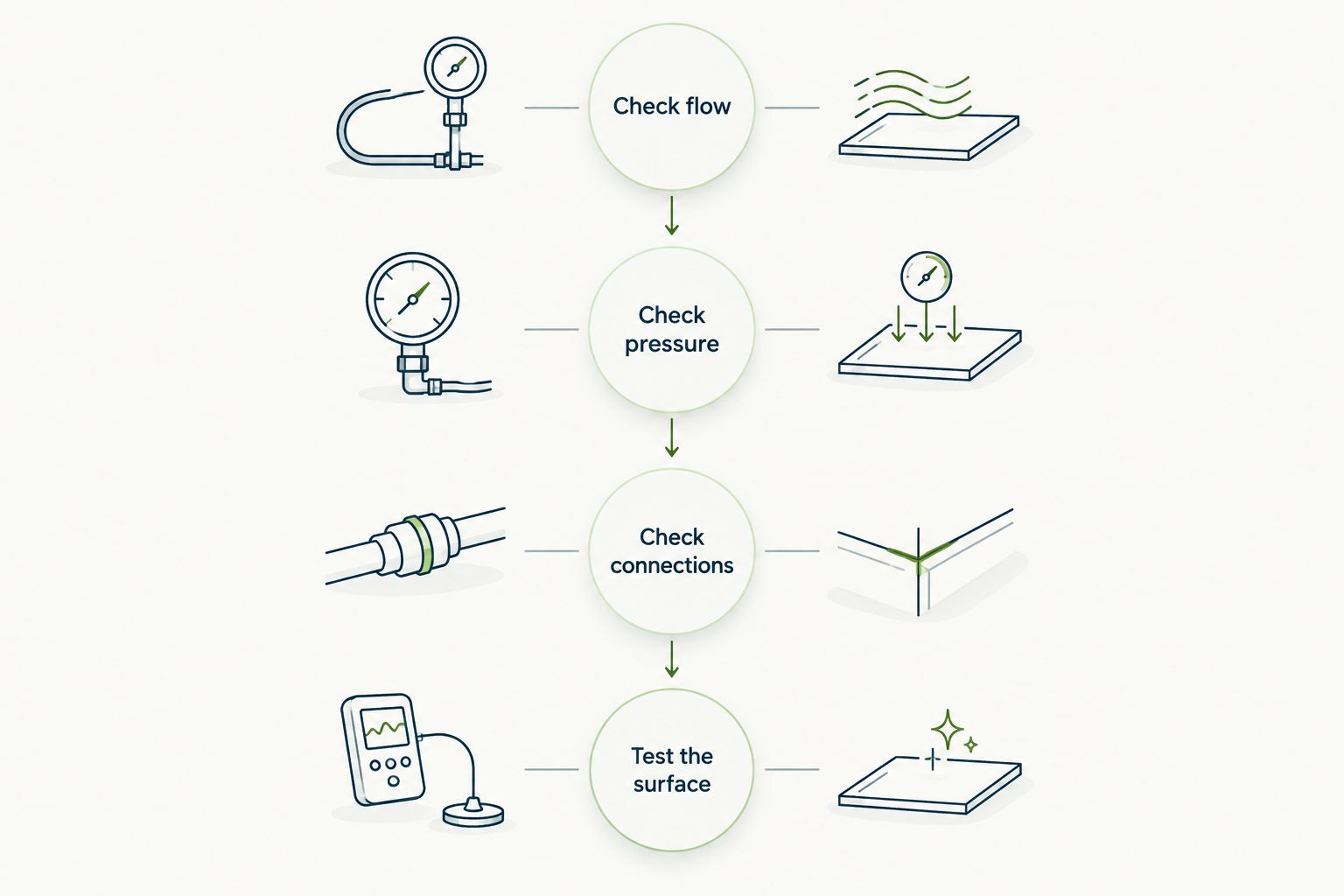
Follow this sequence:
- Check flow: Compare the washer output with the attachment requirements.
- Check pressure: Confirm equipment limits and surface suitability.
- Check connections: Verify couplings, adapters, and specified nozzles.
- Test the surface: Start in an inconspicuous area before cleaning broadly.
After 1 initial pass in the test area, stop and inspect the dry or drying surface. Look for changed texture, exposed aggregate, disturbed joints, or coating damage. Persistent discoloration does not justify repeated passes over a surface that is already deteriorating.
The right method for concrete, houses, roofs, and stains
A surface cleaner answers a narrow question: how to clean suitable flatwork with a compatible pressure washer. It does not answer every exterior-cleaning question. Your 2026 maintenance plan should separate the following jobs.
Concrete and masonry
Sound concrete can suit surface-appropriate pressure washing. Brick, mortar joints, pavers, and deteriorated concrete need individual assessment. Loose joint material and damaged surfaces require restraint, not a stronger setting.
House exteriors
Siding and trim often call for low-pressure soft washing with material-appropriate chemistry. Directing high-pressure water toward seams, vents, or damaged paint creates a different problem from cleaning dirt. A surface cleaner is not a siding attachment.
Roofs
Roof cleaning requires a roof-specific approach that follows the roofing material manufacturer’s guidance. Asphalt shingles should not be treated like driveway concrete. Keep flatwork attachments off roofing and address access and fall hazards separately.
Specialty stains
Organic growth, rust, oil, and red clay do not all respond to the same treatment. Sodium hypochlorite is used in appropriate exterior-cleaning applications for organic contamination; it is not a universal stain remover. Rust and other mineral staining require a diagnosis and suitable treatment.
Improvement is not the same as complete removal. Deep staining, weathering, and damaged material can remain visible after cleaning. No responsible contractor can promise zero risk or restoration of every surface to its original appearance.
Protect the property before cleaning
Prepare the work area before starting the washer. Move porch furniture and planters, protect vulnerable electrical points appropriately, and keep hoses away from access routes. If moving furniture is difficult, arrange help beforehand rather than lifting awkward items on wet paving.
When cleaning chemistry is appropriate, follow its label and the surface manufacturer’s guidance. Landscaping protection can include pre-rinsing plants, controlling overspray, and rinsing afterward. Use a compatible neutralizer where appropriate; it does not replace careful application or water management.
For commercial work, separate the cleaning area from customers and staff. For residential work, keep an accessible route for occupants. Southernstylepressurewashing offers exterior cleaning services for both residential and commercial property owners, so describe the whole job when requesting an assessment—not just the attachment you had in mind.
How these attachment types are ranked
The 2026 order follows surface suitability, machine compatibility, handling, and water management. A matched walk-behind cleaner takes the default driveway slot; compact, high-flow, and recovery-compatible formats each solve a different requirement.
This is a format-selection guide, not a model test or a claim that every attachment within a category performs equally. The final choice rests on the specific manufacturer documentation and the property condition.
Which surface cleaner should you choose?
Choose a machine-matched walk-behind cleaner for an open, sound concrete driveway. Choose a compact wand-mounted attachment for a smaller accessible patio, a professional high-flow format for a compatible commercial system, or a recovery-compatible format when collection is required.
Skip the attachment purchase when the real job is siding, roofing, uncertain masonry, or a specialty stain. In those cases, diagnosing the surface and selecting the cleaning method comes first.
FAQ
What's the best pressure washer surface cleaner for a driveway?
A machine-matched walk-behind surface cleaner is the default choice for an open, sound concrete driveway. Confirm flow requirements, pressure limits, connections, and concrete condition before selecting a model.
Is a bigger surface cleaner better?
A bigger surface cleaner is not automatically better. Its flow requirements must match your washer, and its width must suit the space you need to clean.
Will a surface cleaner work with my electric pressure washer?
Compatibility depends on your electric pressure washer's documented output and the attachment's requirements. Check flow, pressure limits, connections, and specified nozzles rather than relying on the power source alone.
Can I use a surface cleaner on brick or pavers?
Brick and pavers need a condition assessment before pressure cleaning. Weak mortar, loose joint material, coatings, and uneven surfaces can make a flatwork attachment unsuitable.
Can a surface cleaner remove rust and red clay stains?
A surface cleaner does not replace targeted treatment for rust or red clay. Identify the stain and choose surface-compatible chemistry; some discoloration can improve without disappearing completely.
Can I clean my roof with a surface cleaner?
Do not use a flatwork surface cleaner on your roof. Roof cleaning needs material-specific guidance, an appropriate cleaning method, and a separate safety plan.
How do I protect plants during exterior cleaning?
Protect plants by controlling chemical exposure and following the cleaning product's label. Pre-rinsing, careful application, post-rinsing, and a compatible neutralizer where appropriate are practical protection measures.
Should I buy an attachment or hire an exterior cleaner?
Buy an attachment when you have compatible equipment, suitable flatwork, and a safe operating plan. Hire an exterior cleaner when the job involves uncertain surfaces, roof access, specialty stains, or several different cleaning methods.
One last thing
Before your 2026 cleaning project, identify 1 inconspicuous test area and agree on what would make you stop. A changed surface texture is a reason to stop; a stubborn stain is a reason to reassess the treatment. The best attachment is the one that fits the job without turning discoloration into permanent surface damage.