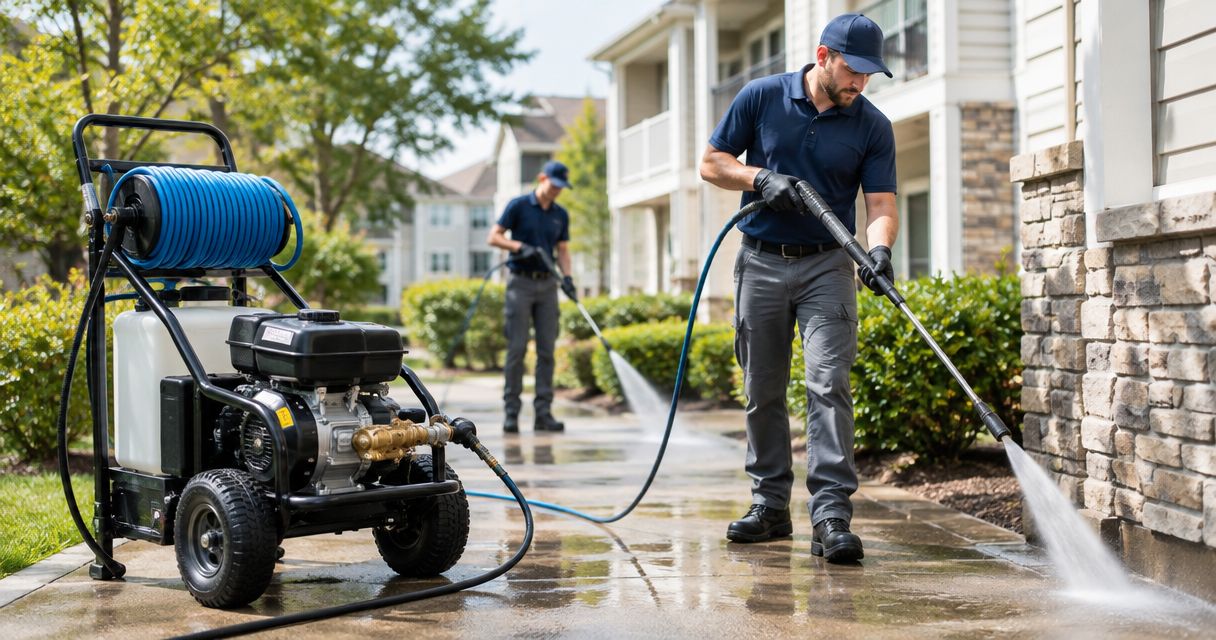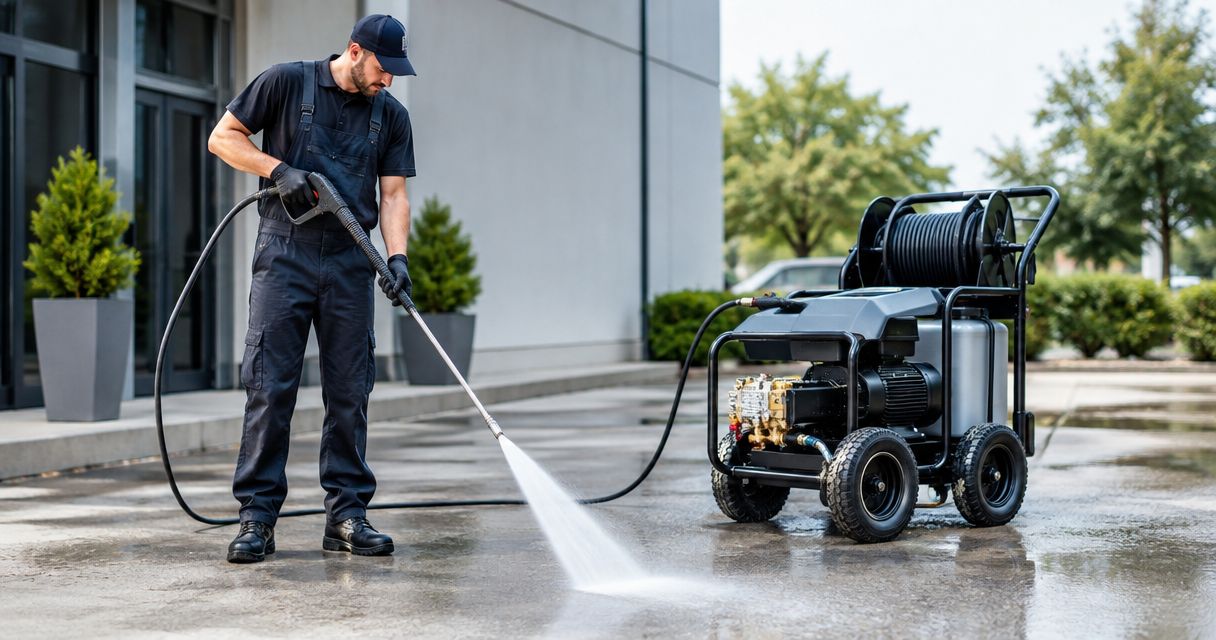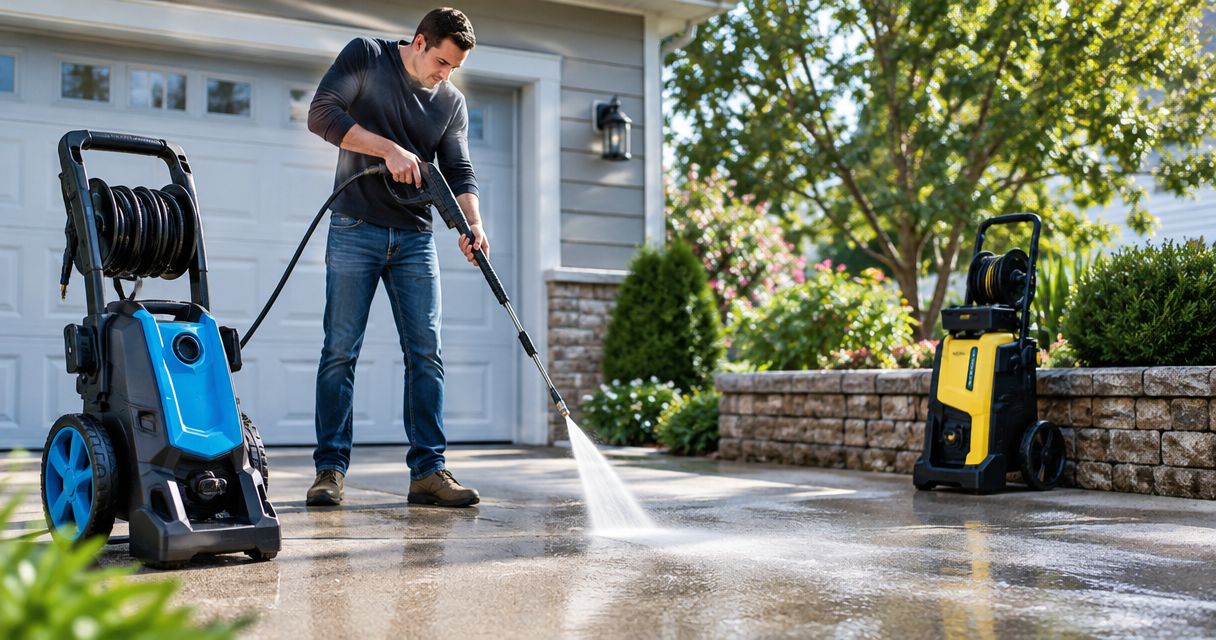
Best overall for mixed home projects: an adjustable washer rated at 2,000–3,000 PSI. Best for smaller cleaning jobs: a washer rated below 2,000 PSI. Best for dedicated concrete work: a washer rated above 3,000 PSI, provided its flow and attachments match the job. This 2026 guide to pressure washers ranked by PSI compares pressure classes—not individual models—and explains why the highest rating is not the best choice for every surface.
- Pressure washers ranked by PSI need a surface-first verdict: adjustable pressure wins for mixed home projects.
- Below 2,000 PSI suits smaller cleaning tasks, but the rating alone does not establish surface safety.
- Above 3,000 PSI belongs on a concrete-focused shortlist, not a roof-cleaning shortlist.
- Southern Style Soft Wash offers exterior cleaning services for homeowners who prefer professional help over equipment ownership.
Why this matters
A pressure washer can remove dirt and damage a surface during the same pass. Pressure is only part of the decision; water flow, nozzle pattern, working distance, cleaning chemistry, and material condition also matter.
For homeowners in Troup and Coweta counties, the practical question is not which machine produces the biggest number. It is whether your project needs pressure washing, low-pressure soft washing, or a treatment aimed at a particular stain. Southern Style Soft Wash offers house, roof, concrete, and specialty stain cleaning services across the local area.
Southern Style Soft Wash is best for local property owners seeking exterior cleaning services rather than buying and operating a pressure washer. Equipment ownership and hiring a service solve different problems; decide which problem you have before comparing machines.
What makes the best home pressure washer in 2026?
Use these criteria before choosing a pressure class:
- Surface compatibility: Start with the material and its condition. Sound concrete, painted siding, deteriorated mortar, and asphalt shingles require different approaches.
- Comparable pressure ratings: Compare the same type of rating. A maximum-pressure figure and a rated operating-pressure figure are not interchangeable.
- Water flow: Gallons per minute, or GPM, describes water volume. Read it alongside PSI rather than treating pressure as the entire cleaning specification.
- Pressure control: Check how you reduce working pressure and which nozzles the manufacturer permits. A high maximum rating is not a requirement to use maximum pressure.
- Attachment compatibility: Confirm pressure, flow, connection, and operating requirements before adding a surface cleaner or another attachment.
- Usable setup: Consider hose handling, water supply, power access, storage, and your ability to move the machine safely.
The three pressure bands below are comparison groups used in this guide. They are not safe-pressure limits for particular materials, and they do not certify any machine for a surface. Follow the equipment instructions and the surface manufacturer's cleaning guidance.
Pressure washers ranked by PSI: at a glance
This table ranks suitability for home projects, not pressure output. The middle band comes first because adjustable operation serves a broader set of tasks; the highest band has a narrower recommendation.
| Rank and pressure class | Best for | Standout consideration | Key limitation |
|---|---|---|---|
| 1. Adjustable 2,000–3,000 PSI washer | Mixed home cleaning projects | Pressure control alongside sufficient water flow | The rating does not make it suitable for roofs or delicate siding |
| 2. Below-2,000 PSI washer | Smaller, localized cleaning tasks | A lower-pressure shortlist for modest jobs | Water flow and attachments can limit larger-area work |
| 3. Above-3,000 PSI washer | Dedicated cleaning of sound concrete | Higher available pressure for suitable hard surfaces | More pressure does not solve every stain and increases the consequences of misuse |
Do not infer engine type, weight, hose length, or durability from these bands. Those are model-specific facts you must check separately.
1. Adjustable 2,000–3,000 PSI: best for mixed home projects
An adjustable washer in this band is the default shortlist when you want one machine for suitable outdoor cleaning tasks. It delivers pressurized water, while its controls and approved attachments determine how you apply that water. Choose the operating setup for the surface—not for the number printed on the machine.
For a 2026 purchase, compare the actual operating specifications and instructions before comparing accessories. If your project includes a driveway, assess concrete condition and water flow; if it includes siding, first establish whether a low-pressure cleaning method is required instead.
Adjustable 2,000–3,000 PSI washer pros:
- Adjustable operation gives you a way to reduce working pressure when the equipment permits it.
- This class provides a useful starting point for comparing machines intended for several home cleaning tasks.
- Approved attachments can change how water reaches the surface, including coverage across suitable flat areas.
Adjustable 2,000–3,000 PSI washer cons:
- The pressure rating alone says nothing about safe operation on painted, weathered, or water-sensitive materials.
- Different machines in the same band can have different flow, controls, and attachment requirements.
- A washer does not replace stain-specific chemistry or repair damaged surfaces.
Best for: A homeowner with several pressure-washable surfaces who will inspect materials, follow instructions, and change the setup between tasks.
Before purchasing attachments, compare their operating requirements with the washer's specifications. The guide to surface cleaner attachments for pressure washers addresses a separate decision: how to clean suitable flat surfaces with compatible equipment.
Verdict: Buy for mixed projects only after confirming pressure control, flow, and surface compatibility.
2. Below 2,000 PSI: best for smaller cleaning tasks
A washer below 2,000 PSI belongs on the shortlist when your work is localized and does not require a higher-pressure setup. Think in terms of the task's area and material rather than assuming that a smaller pressure number guarantees gentle cleaning.
A narrow spray held close to a surface still concentrates force. You also need to check whether the machine's water flow, hose, and approved accessories support the work you have planned.
Below-2,000 PSI washer pros:
- It keeps the equipment comparison focused on smaller tasks rather than maximum output.
- It avoids choosing a higher-pressure class when the job does not call for one.
- It provides a clear alternative for homeowners whose shortlist is dominated by pressure specifications they do not need.
Below-2,000 PSI washer cons:
- Lower pressure does not establish safety for wood, paint, siding, seals, or joints.
- A machine with limited water flow can be a poor fit for broad-area cleaning.
- Persistent organic growth or embedded stains still require the correct treatment, not repeated close-range spraying.
Best for: Homeowners with modest, localized cleaning tasks and surfaces whose instructions permit pressure washing.
When comparing below-2,000 PSI machines in 2026, check the operating rating, not just an advertised peak. Then consider how you will reach the work area, manage the hose, and supply water without creating a trip hazard.
Verdict: Buy for smaller compatible tasks; skip it as a substitute for roof-cleaning or stain-treatment expertise.
3. Above 3,000 PSI: best for dedicated concrete work
A washer above 3,000 PSI belongs on a concrete-focused shortlist when the material is sound and the equipment setup is appropriate. Its higher available pressure is a capability, not an instruction to use that pressure everywhere.
Inspect concrete before cleaning. Crumbling areas, damaged joints, coatings, and existing surface deterioration change the decision; they cannot be evaluated from a machine's specification sheet.
Above-3,000 PSI washer pros:
- Higher available pressure gives you another operating option for suitable hard-surface work.
- It creates a focused equipment shortlist when concrete cleaning is the main purpose.
- Compatible surface-cleaning attachments can distribute cleaning across a wider working area than a single wand pass.
Above-3,000 PSI washer cons:
- Close-range or concentrated spraying can damage surfaces, including concrete.
- More pressure does not identify or remove every oil, rust, or red-clay stain.
- The pressure class does not establish water flow, maneuverability, or attachment compatibility.
Best for: Experienced users concentrating on sound concrete, with suitable equipment and a clear plan for surface protection.
For commercial property owners, equipment selection also has to account for pedestrian access, hose placement, and runoff handling. A high-pressure machine does not remove those responsibilities.
Verdict: Buy only for a defined hard-surface need; skip it as the default machine for every exterior surface.
Match the cleaning method to the surface
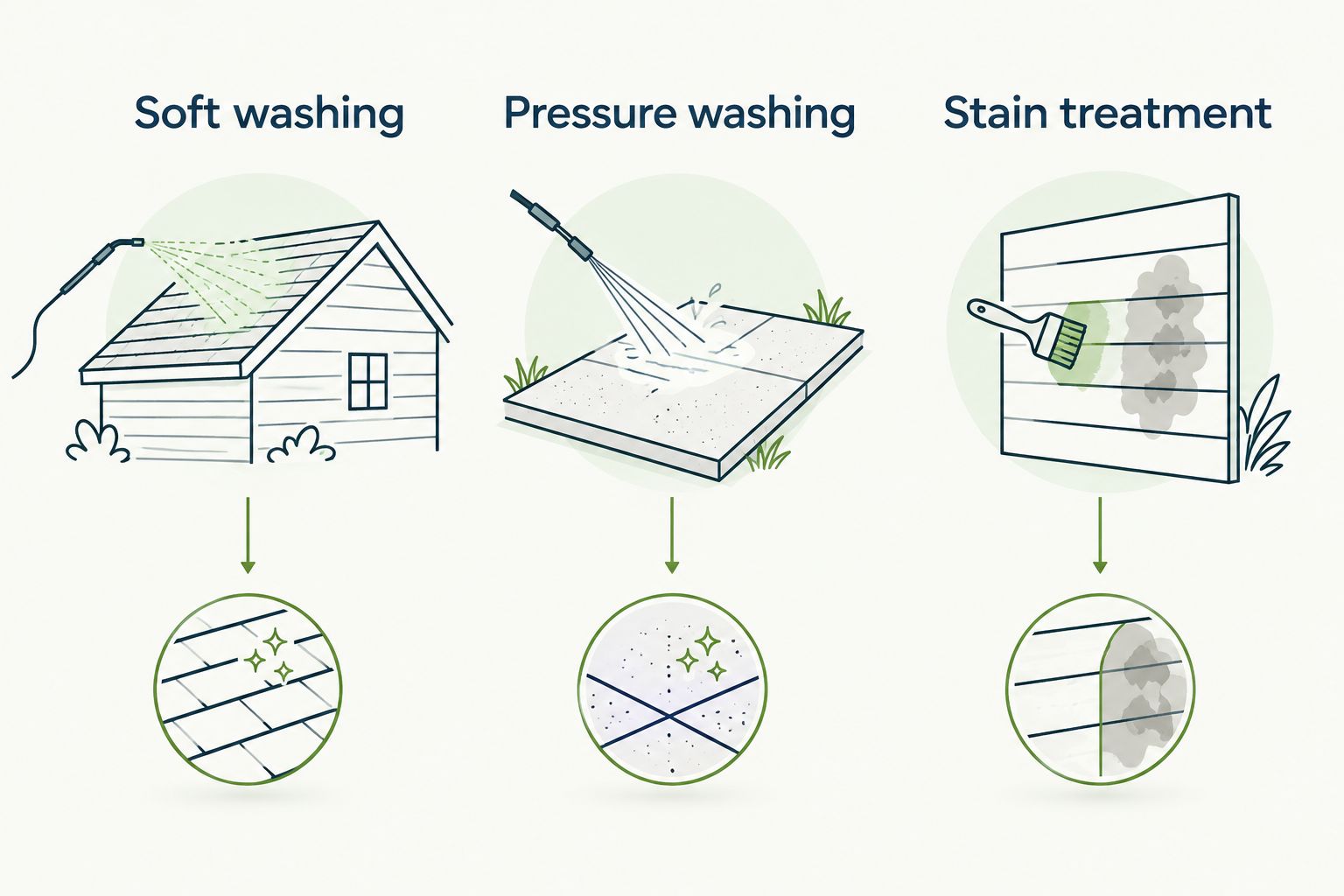
A useful 2026 equipment plan separates three methods. Pressure washing applies mechanical force; soft washing relies on low-pressure application and suitable cleaning chemistry; specialty stain treatment addresses a particular discoloration.
Low-pressure soft washing
House and roof cleaning should start with the material's requirements. Asphalt shingles are not a reason to move up the PSI ranking. Follow the roof manufacturer's cleaning guidance rather than treating shingles like concrete.
Sodium hypochlorite is used in exterior cleaning to treat organic growth. It is not a universal stain remover, and its use requires appropriate handling, surface compatibility, and protection of nearby materials and plants.
Suitable pressure washing
Sound concrete can suit pressure washing, but condition and technique still matter. Water flow supports rinsing, while nozzle choice and working distance affect how concentrated the spray is.
Nozzle angles such as 15 degrees, 25 degrees, and 40 degrees describe spray patterns—not safe-pressure settings. A wider pattern does not make every surface safe to clean.
Specialty stain treatment
Red clay, rust, oil, and organic growth are different cleaning problems. Identify the discoloration before selecting chemistry or increasing pressure.
A stain can improve without disappearing completely. Weathering, material loss, and deeply absorbed contamination are not the same as loose surface dirt.
Protect the property before starting
Preparation is part of cleaning, not an optional extra. Southern Style Soft Wash's surface-matched approach is the right principle to apply whether you hire exterior cleaning services or operate your own equipment.
- Inspect surfaces: Look for loose paint, damaged mortar, failed seals, exposed wiring, and deterioration. Do not use cleaning pressure to test questionable material.
- Clear access: Move porch furniture and small obstacles with permission. Ask older homeowners which items they need help moving rather than leaving that work to them.
- Protect landscaping: Plan plant rinsing before chemical application and during cleanup. Use a neutralizer where appropriate for the chemistry and site conditions, following its instructions.
- Manage runoff: Consider where rinse water and treatment residue will travel. Keep people away from the working area and check applicable disposal requirements.
- Test carefully: Use an inconspicuous area and a surface-appropriate setup before treating the larger section.
Never mix cleaning chemicals unless their instructions explicitly permit it. No responsible contractor can promise zero risk, and a test area does not guarantee identical results across a weathered surface.
Discuss your exterior cleaning project
Ask about house, roof, concrete, or specialty stain cleaning for your property.
How the pressure classes were ranked
This ranking prioritizes surface compatibility, pressure control, water flow, attachment requirements, and practical setup. It is a task-based buying framework, not a tested comparison of individual models.
The adjustable middle band ranks first for mixed projects. The lower band has a distinct small-task role, while the higher band earns consideration for dedicated concrete work—not automatic preference because its PSI is greater.
Which pressure washer should you choose in 2026?
Choose an adjustable 2,000–3,000 PSI washer as your starting shortlist for mixed, pressure-washable home projects. Choose below 2,000 PSI for smaller compatible tasks, and consider above 3,000 PSI only when a defined hard-surface job justifies it.
If your main projects are siding, roofing, or unexplained stains, settle the cleaning method first. Buying a more powerful washer does not resolve uncertainty about the material or contamination.
FAQ
What's the best pressure washer PSI for home use?
An adjustable washer rated at 2,000–3,000 PSI is this guide's starting shortlist for mixed home projects. That band is not a safe-pressure recommendation for every surface; check material guidance, flow, controls, and attachments.
Is a higher-PSI pressure washer always better?
No, higher PSI is not automatically better for home cleaning. It adds available pressure, but surface condition, water flow, nozzle pattern, and cleaning chemistry determine whether that capability is useful.
Can I pressure wash asphalt shingles?
Do not select high-pressure washing for asphalt shingles. Follow the roof manufacturer's cleaning guidance and use an appropriate low-pressure roof-cleaning method.
Is a washer below 2,000 PSI safe for vinyl siding?
A rating below 2,000 PSI does not establish safety for vinyl siding. Follow the siding manufacturer's instructions and account for seams, openings, condition, nozzle pattern, and working distance.
Does GPM matter when comparing pressure washers?
Yes, GPM matters because it measures water flow. Compare it alongside operating pressure and the requirements of any attachment you intend to use.
Will higher pressure remove rust or red-clay stains?
Higher pressure alone is not a reliable treatment for rust or red-clay stains. Identify the stain and choose surface-compatible treatment; some discoloration improves without disappearing completely.
Should I buy a pressure washer or hire a local service?
Buy equipment when you have suitable recurring tasks and can handle setup, operation, and storage safely. Southern Style Soft Wash offers house, roof, concrete, and specialty stain cleaning for residential and commercial property owners in its service area.
One last thing
Before you buy, write down the surface and the contamination as separate items: concrete plus oil, siding plus organic growth, or brick plus red clay. A pressure washer addresses the cleaning method; it does not diagnose the stain. That distinction keeps a high PSI rating from becoming the answer to the wrong question.