Best overall for routine home cleaning in 2026: a corded electric pressure washer; best for large concrete areas: a gas pressure washer; best for small rinsing jobs away from an outlet: a cordless cleaner. Southern Style Soft Wash is best for homeowners who want surface-matched exterior cleaning rather than choosing and operating equipment themselves.
- The best pressure washer for home use is a corded electric model for routine, manageable cleaning jobs.
- Gas pressure washers suit larger concrete projects, but require more maintenance and careful handling.
- Cordless cleaners suit portable rinsing; they are not substitutes for every pressure-washing job.
- Southern Style Soft Wash offers professional exterior cleaning for homeowners who prefer a service over equipment.
Why this matters
A pressure washer is not the right tool for every dirty surface. Concrete, painted siding, asphalt shingles, and stained masonry need different cleaning decisions, even when the discoloration looks similar.
For homeowners in Troup and Coweta counties, the useful question is not simply which machine produces the strongest spray. Choose equipment for the surface you can safely clean, not for the highest pressure on the box. The same principle applies to storefront entrances, rental properties, and commercial walkways.
This 2026 guide ranks equipment categories by the jobs they suit. It also separates buying a machine from hiring a service: those are different decisions, and neither should be treated as the automatic answer to every exterior cleaning problem.
What makes the best pressure washer for home use?
Judge a pressure washer against these criteria before choosing between electric, gas, and cordless equipment:
- Surface compatibility: The machine must support the cleaning method your surface permits. More pressure does not make a machine suitable for roofs or deteriorating mortar.
- Water flow: Flow helps carry loosened dirt away. Read both pressure and flow specifications rather than treating pressure alone as a measure of cleaning performance.
- Access and handling: Consider outlets, water connections, hose routing, stairs, and the effort of moving the equipment around your property.
- Maintenance: Compare storage, pump care, and manufacturer-required upkeep. Gas engines add fuel and engine maintenance to the equipment checklist.
- Cleaning method: Organic growth, loose dirt, rust, and red clay are different problems. A wider nozzle cannot replace an appropriate stain treatment.
- Property protection: Plan for runoff, landscaping, electrical fixtures, doors, windows, and nearby people before starting the machine.
A good purchase fits the work you will actually perform. A machine that stays in storage because it is difficult to move or maintain is a poor match, regardless of its specifications.
Home-cleaning options at a glance
| Ranked option | Best for | Standout feature | Key limitation |
|---|---|---|---|
| Corded electric pressure washer | Routine cleaning near an outlet | No gasoline engine to maintain | Power-cord reach and electrical safety require planning |
| Gas pressure washer | Larger concrete cleaning projects | Operation without an electrical outlet | Engine maintenance, exhaust, noise, and handling demands |
| Cordless cleaner | Small rinsing jobs away from outlets | Battery-powered portability | Battery runtime and water supply constrain the job |
| Southern Style Soft Wash | Homeowners seeking surface-matched exterior cleaning | House, roof, concrete, and specialty stain services | Hiring a service does not provide equipment for later DIY jobs |
These are distinct use-case choices, not interchangeable machines. The professional service option belongs in the comparison because some homeowners need a cleaned property, not another tool to own.
1. Corded electric: best pressure washer for routine home cleaning
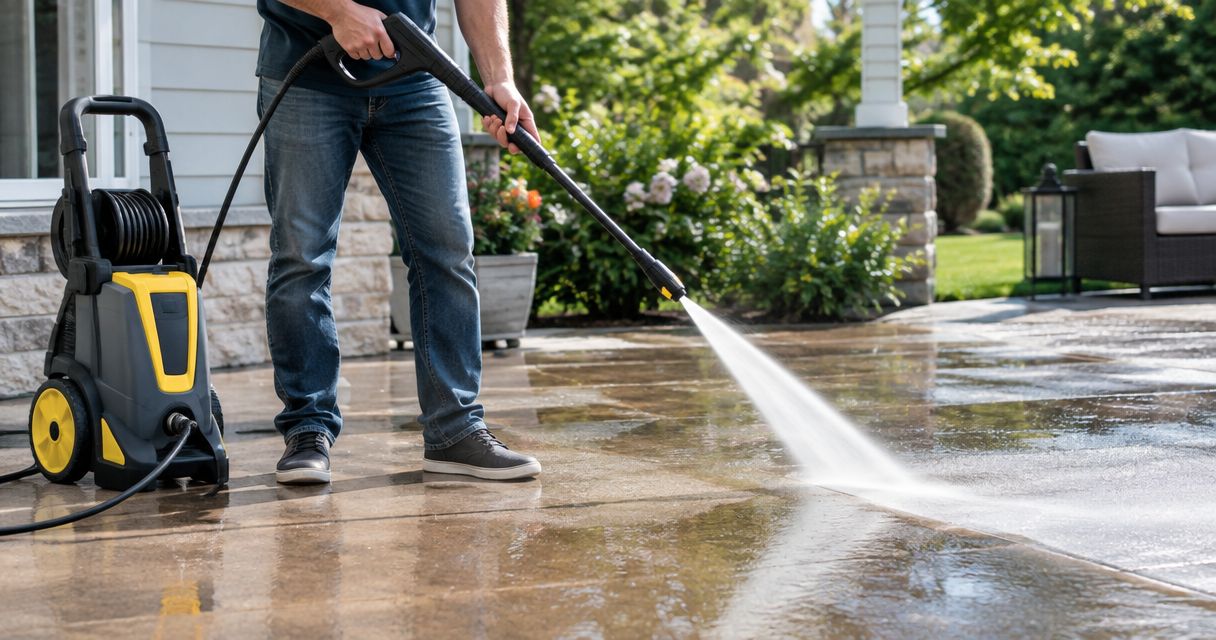
A corded electric pressure washer uses an electric motor to drive its pump. It is the practical starting point for homeowners cleaning suitable outdoor surfaces within reach of an appropriate outlet and water connection.
Choose it for manageable jobs where you can control hose placement and work from stable footing. Do not assume an electric machine is harmless: a concentrated spray can still damage finishes or injure someone.
Corded electric pros:
- No gasoline engine, fuel storage, or engine exhaust.
- Useful for routine cleaning without engine-maintenance tasks.
- Suits work areas where electrical and water connections are accessible.
Corded electric cons:
- Cord routing creates an additional trip and electrical-safety concern.
- Reach depends on the equipment instructions and suitable power access.
- The wrong nozzle or cleaning technique still damages surfaces.
Best for: Homeowners with accessible utilities and a clearly defined list of appropriate cleaning jobs.
Before choosing a model in 2026, read its manual for electrical requirements, permitted accessories, water supply, and winter storage. Use ground-fault protection as directed, and do not improvise an extension-cord arrangement that the manufacturer prohibits.
Verdict: Buy a corded electric pressure washer for routine DIY cleaning when its instructions and reach fit your property.
2. Gas: best pressure washer for larger concrete projects
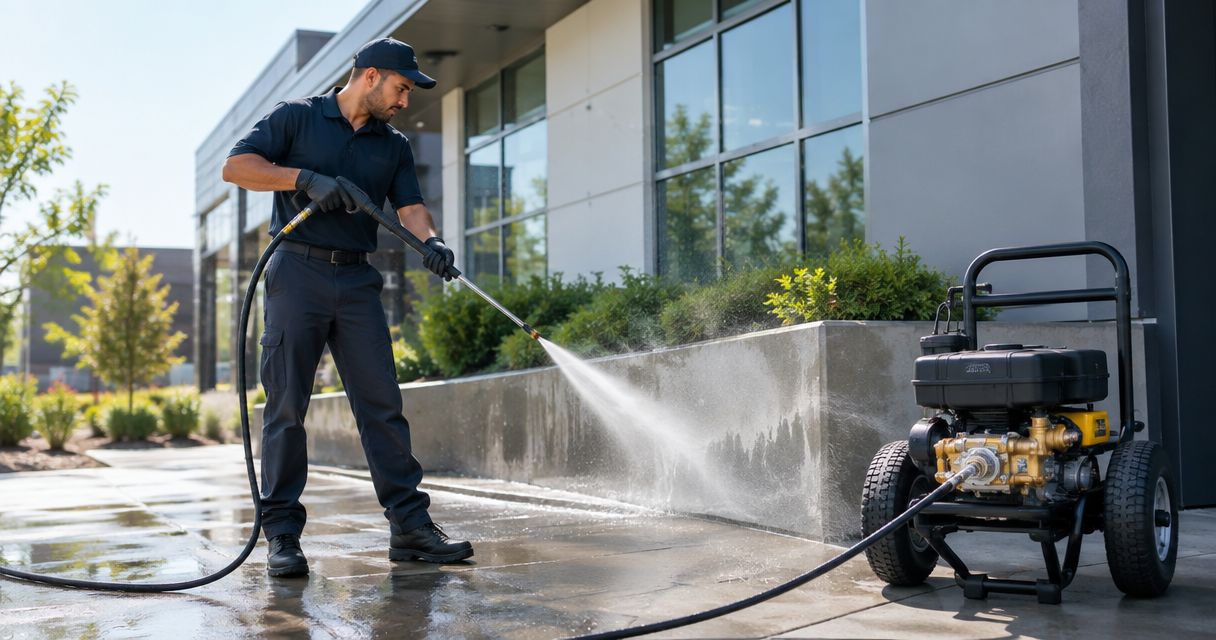
A gas pressure washer uses an engine to operate its pump without an electrical outlet. It belongs on your shortlist when larger concrete areas make power-cord access impractical and you are prepared to maintain an engine.
Gas power does not automatically mean a machine will clean faster than every electric alternative. Compare the actual pressure, water flow, accessory requirements, and surface-cleaner compatibility of the models you are considering.
Gas pressure washer pros:
- Does not require an electrical outlet at the work area.
- Suits outdoor work where cord routing is inconvenient.
- Offers an equipment category to consider for larger concrete projects.
Gas pressure washer cons:
- Requires fuel handling and engine maintenance.
- Produces exhaust and must not operate in enclosed or partly enclosed spaces.
- Adds noise and equipment-handling demands to the job.
Best for: Homeowners maintaining larger suitable concrete areas who accept engine upkeep.
Inspect concrete before cleaning. Crumbling edges, exposed aggregate, damaged joints, and unknown coatings change the method; a broad driveway is not permission to use maximum pressure everywhere.
For a 2026 purchase, confirm that any surface cleaner matches the machine's specifications. A rotating surface cleaner can help cover concrete more consistently, but it does not make excessive pressure safe.
Verdict: Buy a gas pressure washer for larger suitable concrete jobs only if you will maintain and operate it correctly.
3. Cordless: best cleaner for portable rinsing
A cordless cleaner uses battery power rather than a plugged-in motor or gasoline engine. Its main attraction is portability, especially for small tasks away from convenient electrical access.
Check how the particular model receives water. Battery power does not mean every cordless cleaner can draw from a bucket, and a portable water source does not provide an unlimited supply.
Cordless cleaner pros:
- Avoids a power cord across the cleaning area.
- Suits small, localized rinsing tasks.
- Removes gasoline-engine upkeep from the decision.
Cordless cleaner cons:
- Battery runtime limits continuous work.
- Water-source compatibility varies by model.
- Portability alone does not establish suitability for embedded dirt or larger surfaces.
Best for: Homeowners who need portable rinsing rather than a machine for substantial driveway cleaning.
Read the battery, charger, and water-supply instructions together before buying. Do not assume a battery you already own fits another manufacturer's cleaner, or even every cleaner from the same manufacturer.
Verdict: Hold on a cordless cleaner unless portable rinsing is the specific job you need it to perform.
4. Professional cleaning: best for mixed surfaces and specialty stains
Southern Style Soft Wash provides residential and commercial exterior cleaning, including house, roof, concrete, and specialty stain services. Its service area includes LaGrange, Newnan, Valley, and surrounding West Georgia and East Alabama communities.
A professional service is a different purchase from a pressure washer. You are arranging cleaning work rather than acquiring equipment, which makes sense when the property combines surfaces requiring different methods or you prefer not to manage the work yourself.
Professional exterior cleaning pros:
- Addresses the cleaning job without requiring you to select and store equipment.
- Provides an alternative to handling hoses, machinery, and cleaning chemicals yourself.
- Covers service categories beyond routine pressure washing, including roof and specialty stain cleaning.
Professional exterior cleaning cons:
- Does not leave you with equipment for future DIY cleaning.
- Requires agreement on scope, preparation, and expected results.
- Cannot eliminate every surface risk or guarantee removal of every stain.
Best for: Homeowners seeking exterior cleaning as a service, especially when surfaces and stain types differ across the property.
Before booking, ask how the proposed method changes between siding, roofing, concrete, and stained masonry. Request a clear explanation of landscaping protection, runoff management, and any areas that need to remain untreated.
Verdict: Skip DIY pressure washing when surface condition, access, or stain chemistry exceeds your experience.
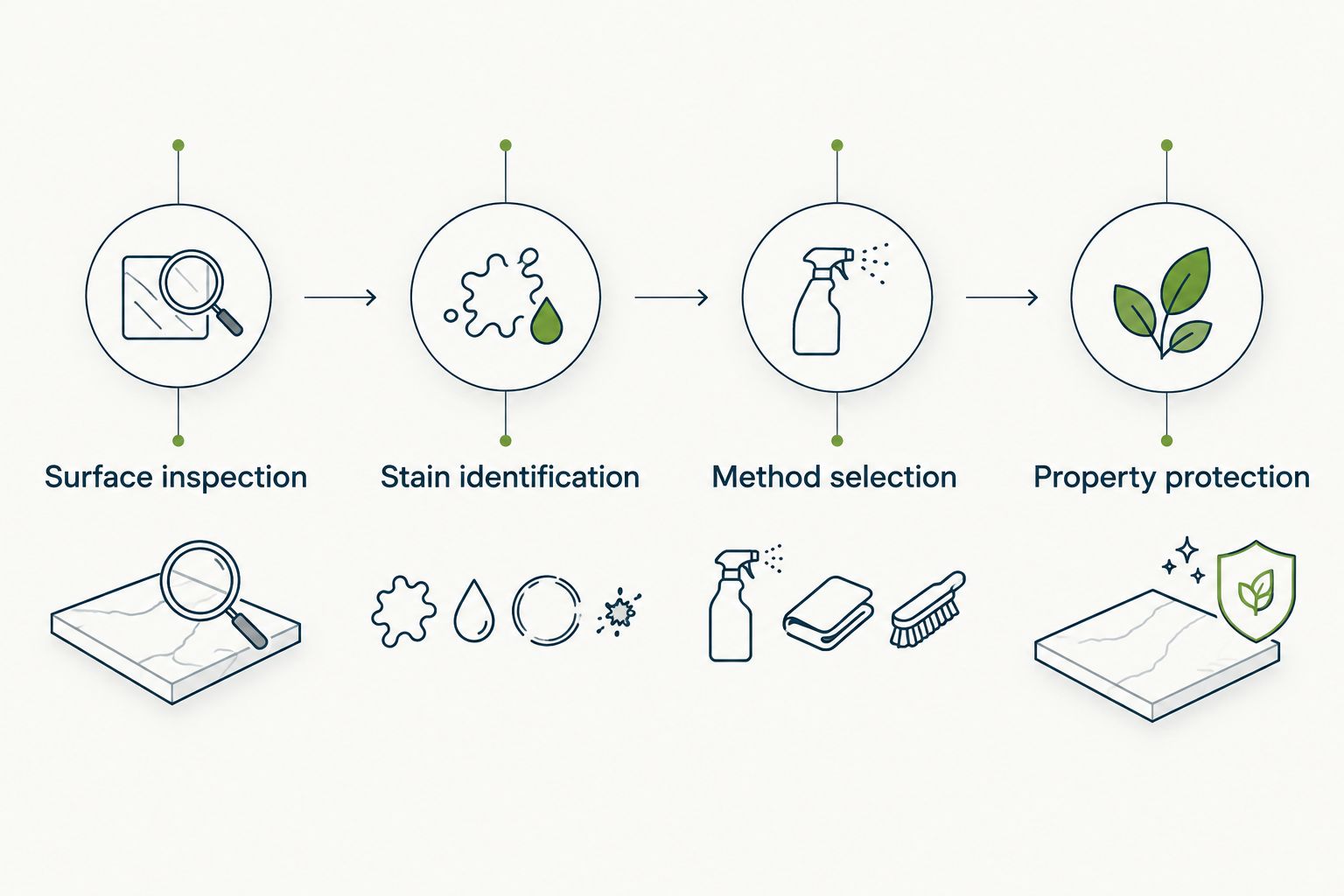
Match the method to the surface
The best pressure washer for home use in 2026 still cannot replace a surface assessment. Start with the material and its condition, identify what needs removing, then choose the method.
- Surface inspection: Check coatings, cracks, loose mortar, open joints, and existing damage.
- Stain identification: Separate organic growth and dirt from rust, red clay, and discoloration within the material.
- Method selection: Choose low-pressure soft washing, suitable pressure washing, or specialty stain treatment.
- Property protection: Prepare nearby plants, fixtures, furniture, and access routes before treatment.
Low-pressure soft washing
Soft washing uses cleaning chemistry with low-pressure application rather than relying on force alone. It is relevant to organic growth on suitable exterior surfaces, subject to the material manufacturer's instructions.
Sodium hypochlorite is an ingredient used in exterior cleaning solutions. It requires surface-appropriate application and protection of surrounding materials; never mix it with acids or ammonia.
Suitable pressure washing
Pressure washing uses water pressure to help remove contamination from compatible surfaces. Sound concrete can be a candidate, but surface condition, equipment settings, nozzle selection, and technique all matter.
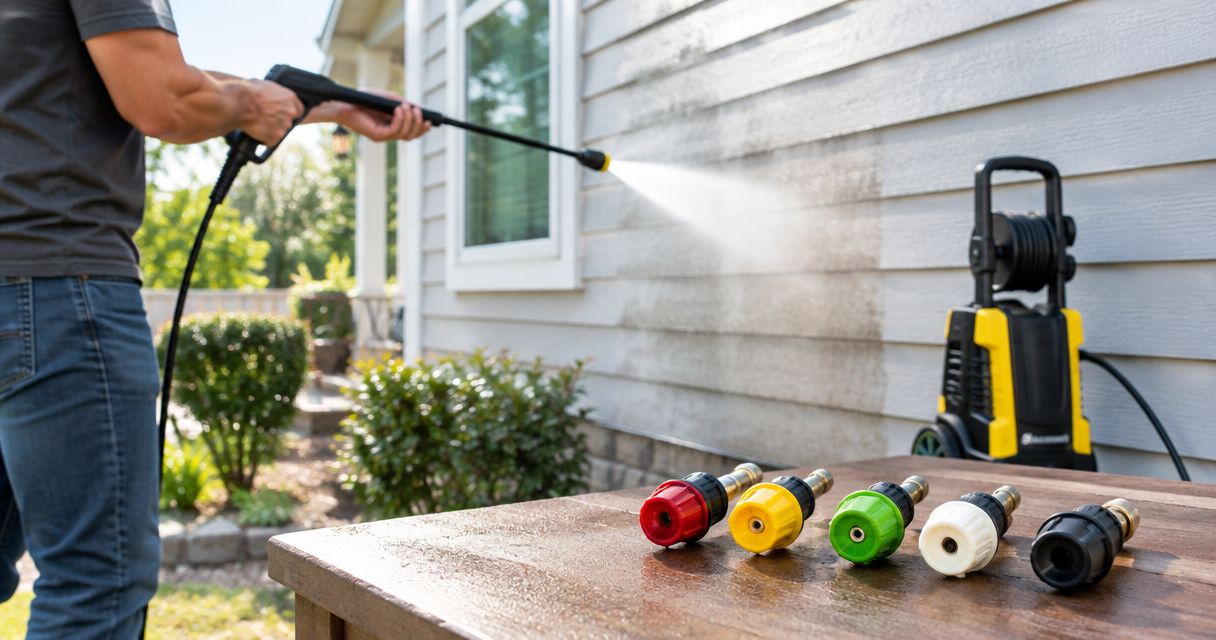
Common fan-nozzle labels include 25 degrees and 40 degrees. These describe spray angles, not guaranteed safe settings; a 0-degree tip concentrates the stream and is not a sensible default for routine homeowner cleaning.
Specialty stain treatment
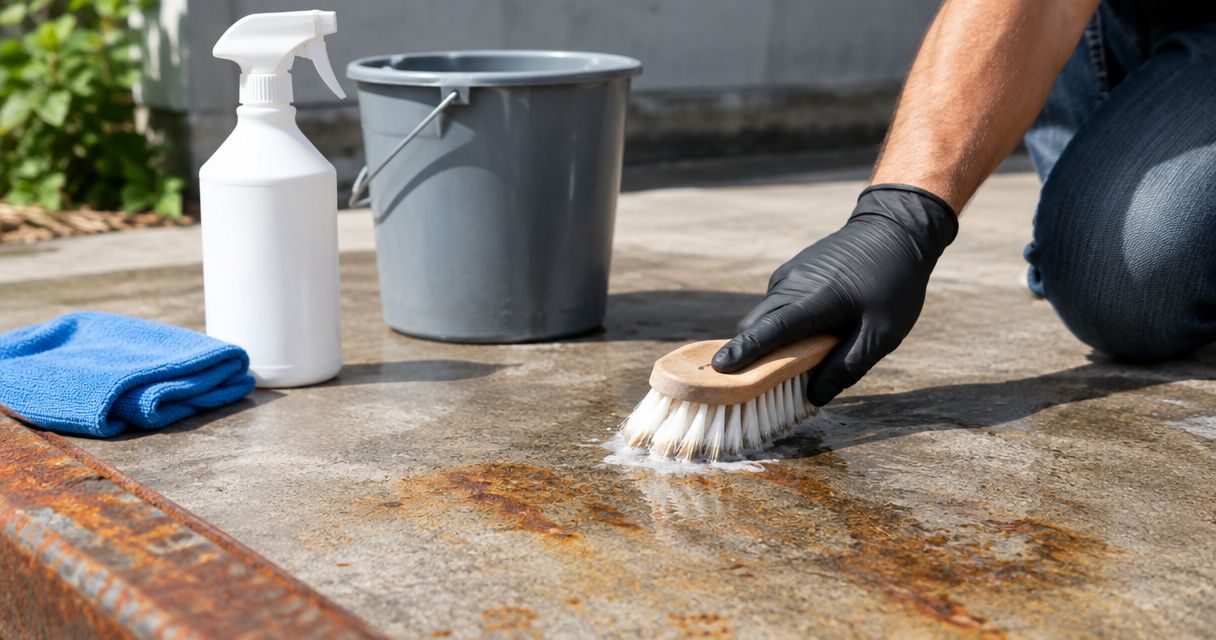
Rust and red clay need a different assessment from algae. Repeatedly increasing pressure can damage the surface without resolving the stain.
Some discoloration improves without disappearing completely. Ask whether the mark is removable contamination, a lasting material change, or a combination before accepting a promised result.
Prepare the property before cleaning
Property protection starts before the spray does. In your 2026 cleaning plan, give preparation the same attention as machine selection.
- Move porch furniture, doormats, planters, and fragile decorations out of the work area.
- Ask for help with heavy items rather than making an older homeowner lift them alone.
- Identify sensitive plants and discuss rinsing before, during, and after chemical application.
- Ask whether a suitable neutralizer is appropriate for the chemistry and nearby materials; it is not a substitute for preventing exposure.
- Check doors, windows, exterior outlets, and existing gaps before directing water nearby.
- Keep children, pets, customers, and other people outside the active work area.
Do not pressure wash from a ladder. Recoil and slippery conditions create a fall hazard; roof access and elevated cleaning deserve a separate safety assessment.
For commercial properties, plan pedestrian access and entrances as part of the work scope. A clean walkway does not help if cleaning activity blocks the route people need to use.
How these options are ranked
The ranking prioritizes surface compatibility, practical access, maintenance, cleaning method, and property protection. Corded electric equipment takes the default position because it avoids gasoline-engine tasks while serving routine jobs near suitable utilities.
Gas equipment wins a different slot: larger concrete projects where electrical access is inconvenient. Cordless equipment serves portable rinsing, while professional cleaning answers the separate need for a service rather than equipment ownership.
Which home-cleaning option should you choose?
Choose corded electric equipment for routine DIY work, gas equipment for larger suitable concrete projects, and a cordless cleaner only when portability is the deciding requirement. Choose professional cleaning when you need different methods across the property or do not want to operate the equipment.
Southern Style Soft Wash is best for homeowners seeking house, roof, concrete, and specialty stain cleaning as a service. Before arranging work, identify the surfaces, existing damage, access limitations, and stains you want assessed.
Your 2026 decision should start with the job list. If that list is mostly roof algae, delicate finishes, or unfamiliar stains, buying a more powerful machine does not solve the underlying problem.
FAQ
What's the best pressure washer for home use in 2026?
A corded electric pressure washer is the best default for routine home cleaning near suitable electrical and water connections. Choose according to the surfaces you can safely clean, the manufacturer's instructions, and your property's access.
Is a gas pressure washer better than an electric one?
A gas pressure washer is better suited to work where electrical access is inconvenient and you accept engine maintenance. It is not automatically better for every surface or faster than every electric model.
Can I pressure wash my roof with a home machine?
Do not treat a home pressure washer as the default tool for roof cleaning. Follow the roofing manufacturer's cleaning guidance and seek a surface-appropriate assessment rather than increasing pressure to remove dark streaks.
Is a cordless cleaner enough for a driveway?
A cordless cleaner is a better fit for portable rinsing than substantial driveway cleaning. Check its stated cleaning capabilities, battery requirements, and water-supply compatibility before assigning it a larger job.
Will pressure washing remove red clay and rust?
Pressure alone is not a reliable treatment for every red clay or rust stain. Identify the stain and surface first, then consider an appropriate specialty treatment; improvement does not guarantee complete removal.
How do I protect landscaping during exterior cleaning?
Plan landscaping protection before chemical application, including suitable rinsing and control of exposure and runoff. A neutralizer belongs only where appropriate for the chemistry and materials involved, not as a blanket promise of plant safety.
When should I hire Southern Style Soft Wash instead of buying equipment?
Hire Southern Style Soft Wash when you want residential or commercial exterior cleaning as a service rather than a DIY equipment purchase. Discuss the house, roof, concrete, or specialty stain work needed and agree on methods, preparation, and realistic results.
One last thing
A wider spray pattern does not make a damaged surface sound again. Photograph peeling paint, cracked mortar, deteriorating concrete, and existing stains before cleaning, then use those observations to decide what should be treated, tested, repaired, or left alone.
The right method protects the surface first; removing the visible dirt comes second.