Best overall for established organic growth: professional soft washing. Best for light dirt: mild detergent. Best for persistent stains: a stain-specific treatment. For the best vinyl siding cleaner in 2026, choose by the stain and the siding’s condition—not cleaning strength alone. Southern Style Soft Wash provides exterior cleaning for residential and commercial property owners in LaGrange, Newnan, Valley, and surrounding areas.
- The best vinyl siding cleaner matches the stain: detergent for dirt, appropriate soft washing for organic growth.
- Southern Style Soft Wash is a professional cleaning option for homeowners and commercial property owners in its service area.
- Use vinyl-approved products according to their labels; stronger mixtures do not fix every stain.
- Oxidation, rust, and red clay need separate assessment rather than more pressure.
Why this matters
Vinyl siding can look dirty for different reasons. Loose soil, algae, a chalky weathered surface, and mineral stains do not respond to the same treatment. Choosing the wrong cleaner wastes effort and increases the risk of uneven results.
For homeowners in Troup and Coweta counties, the decision starts with identifying what is on the wall. Commercial property owners also need to consider entrances, pedestrian access, and adjacent materials. The right method for the surface matters more than the strongest cleaner.
This 2026 guide ranks five cleaning options by their practical use, not by unsupported product ratings. It separates routine washing from treatments that need closer inspection.
What makes the best vinyl siding cleaner?
Use these criteria before choosing a bottle or booking a service:
- Stain match: General dirt, organic growth, oxidation, and mineral deposits need different approaches. Identify the problem before selecting chemistry.
- Vinyl compatibility: Check the siding manufacturer’s guidance and the cleaner’s label. A product suitable for masonry is not automatically suitable for vinyl.
- Controlled application: The cleaner needs to reach the surface without being forced behind siding laps, into vents, or around electrical fixtures.
- Property protection: Plan for landscaping, painted trim, metal fixtures, windows, outdoor furniture, and runoff—not just the wall being washed.
- Honest limits: Cleaning cannot repair faded pigment, damaged panels, or every permanent discoloration. A sensible recommendation distinguishes cleaning from restoration.
For your 2026 shortlist, reject any option that relies on increasing pressure until a stain disappears. Vinyl siding is an exterior cladding system with joints and openings, not a solid waterproof wall.
Vinyl siding cleaning options at a glance
| Cleaning option | Best for | Standout feature | Key limitation |
|---|---|---|---|
| Professional soft washing | Established algae and other organic growth | Low-pressure application with surface-appropriate chemistry | Requires inspection and protection of surrounding surfaces |
| Mild detergent and a soft brush | Light dirt within safe reach | Simple, controlled cleaning of a small area | Not a universal treatment for persistent growth or specialty stains |
| Vinyl-approved exterior cleaner | Routine DIY washing on compatible siding | Written instructions for application and rinsing | Product labels differ; vinyl compatibility alone is not enough |
| Oxidation-specific treatment | Chalking and weathered surface residue | Addresses a problem ordinary washing can leave behind | Cannot restore lost pigment or repair deteriorated vinyl |
| Specialty stain treatment | Localized rust, red clay, or mineral staining | Targets the stain rather than washing everything harder | Requires material checks and can improve a stain without removing it completely |
1. Professional soft washing: best for established organic growth
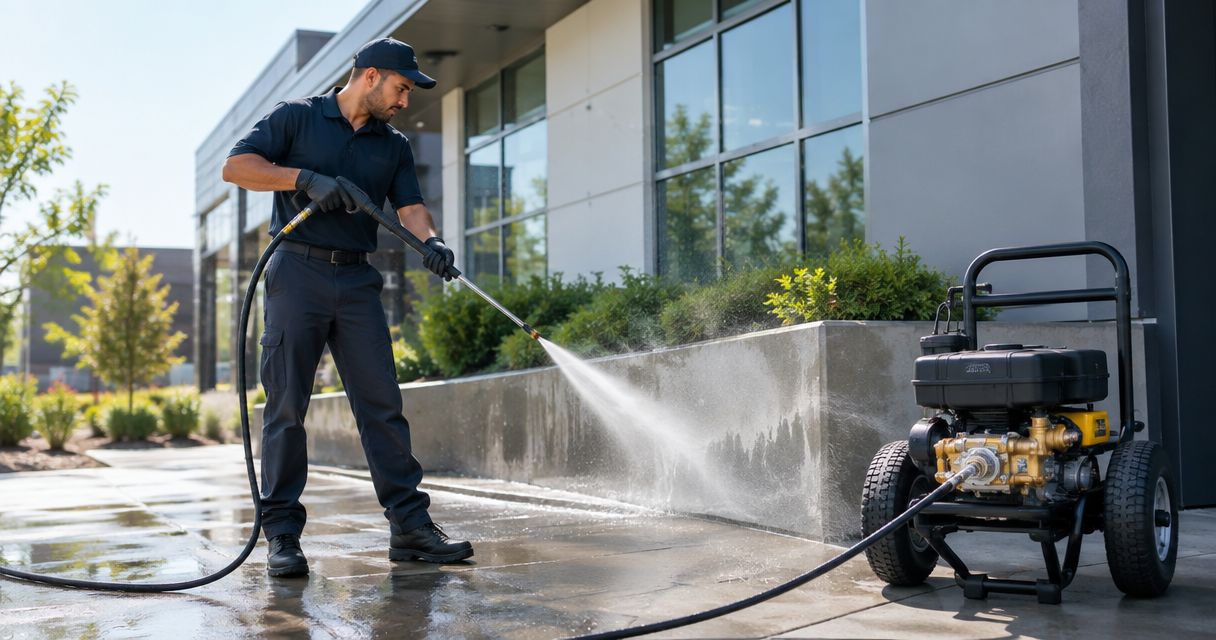
Professional soft washing uses low-pressure application and cleaning chemistry rather than relying on force to remove organic growth. Sodium hypochlorite is commonly used in exterior cleaning formulations because it acts on algae and other biological contamination. The formulation and application must suit the surface and surrounding materials.
Southern Style Soft Wash is a professional vinyl siding cleaning option for local property owners who want a service rather than a DIY product. Its stated services include house, roof, concrete, and specialty stain cleaning. Ask how the proposed house-washing method fits your siding’s condition and the marks you want addressed.
Professional soft washing pros
- Low-pressure application avoids treating vinyl like concrete.
- Appropriate chemistry addresses organic growth rather than only dislodging visible dirt.
- Professional assessment can distinguish ordinary contamination from oxidation or material damage.
- A service-based approach avoids asking you to clean elevated walls yourself.
Professional soft washing cons
- Cleaning solutions still require controlled application and protection of nearby materials.
- Ordinary house washing is not a substitute for oxidation or mineral-stain treatment.
- No responsible contractor can promise zero risk or complete removal of every mark.
Best for: Homeowners and commercial property owners with established organic growth, elevated siding, or a cleaning job beyond safe ground-level reach.
Ask about landscaping rinsing before and after treatment, management of roofline runoff, and neutralizer where appropriate. These are specific preparation questions—not assumptions about what every service includes.
Verdict: Choose professional soft washing for established organic growth; confirm the protection plan first.
2. Mild detergent: best for light dirt within safe reach
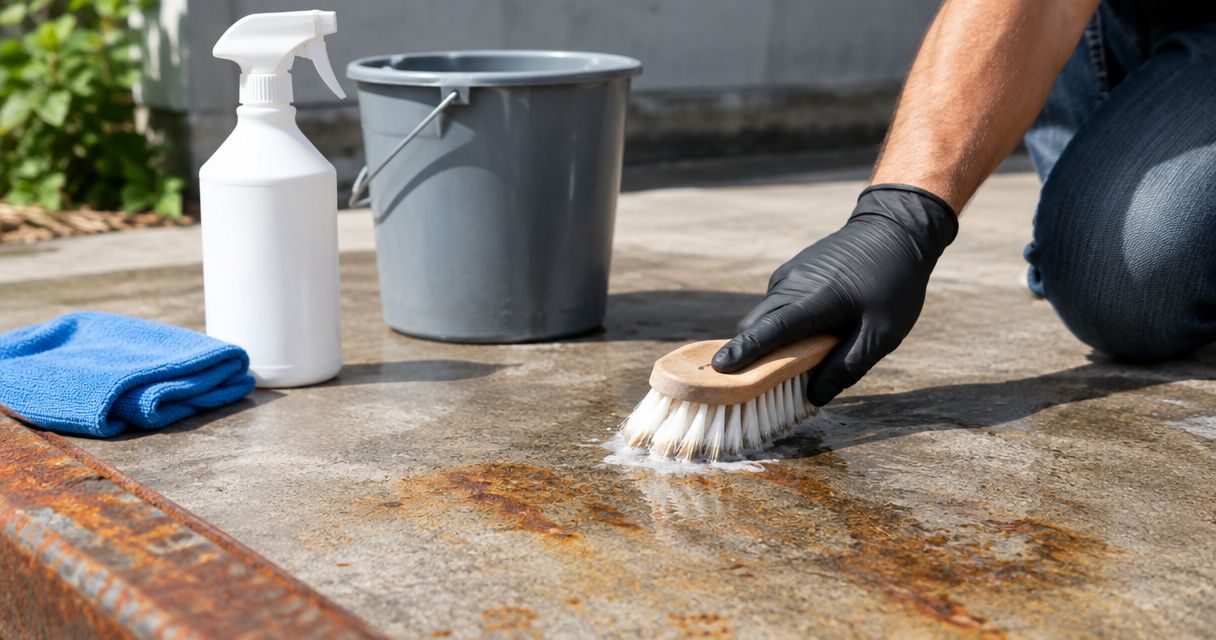
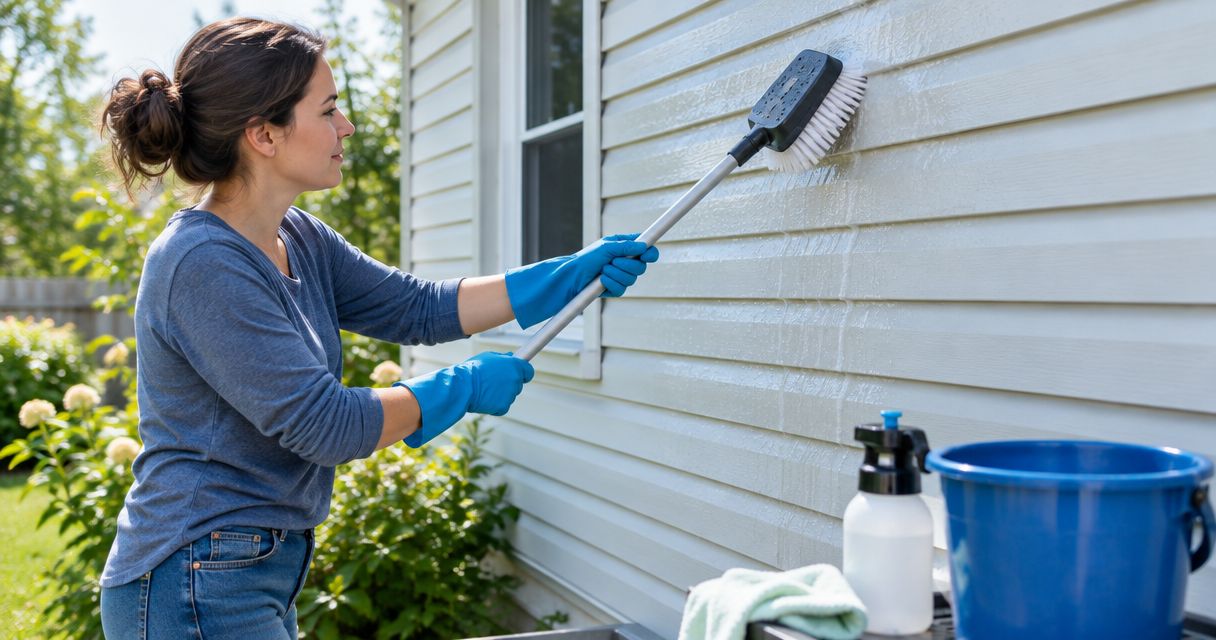
A mild detergent compatible with the siding manufacturer’s instructions is a practical starting point for loose dirt. Use a soft, nonabrasive brush where gentle agitation is allowed. Rinse according to the instructions, and do not let the solution dry on the surface.
This option fits a small, accessible area better than an entire elevated exterior. A stronger mixture is not the automatic next step if the first attempt leaves marks; reassess whether you are seeing algae, oxidation, or a specialty stain.
Mild detergent pros
- Gives you direct control over a small cleaning area.
- Supports gentle cleaning without aggressive abrasive tools.
- Works as a straightforward option when the problem is ordinary surface dirt.
Mild detergent cons
- Does not address every type of biological or mineral staining.
- Manual cleaning becomes awkward where you cannot work safely from the ground.
- Scrubbing can produce uneven results on weathered or chalky siding.
Best for: A reachable section with light dirt and no signs of significant weathering or persistent staining.
Check what the detergent contains before using it. Do not combine household cleaning products, and do not add bleach to a detergent unless the product instructions explicitly permit that mixture.
Verdict: Choose mild detergent for light dirt; skip repeated scrubbing when the stain does not respond.
3. Vinyl-approved exterior cleaner: best for routine DIY washing
A packaged exterior cleaner explicitly labeled for vinyl siding gives you a defined application procedure. Read the full label, not just the front-panel claim. Dilution, contact time, rinsing, protective equipment, and restrictions on nearby materials all affect whether the product suits your property.
In 2026, a vinyl-compatible label remains a starting requirement—not proof that a cleaner fits every stain or every condition. Compare the product’s stated purpose with what is actually on your siding.
Vinyl-approved exterior cleaner pros
- Provides written directions for use on the named surface.
- Helps you check application and rinsing requirements before starting.
- Offers a defined approach for a manageable DIY job.
Vinyl-approved exterior cleaner cons
- Different formulations have different precautions and stain targets.
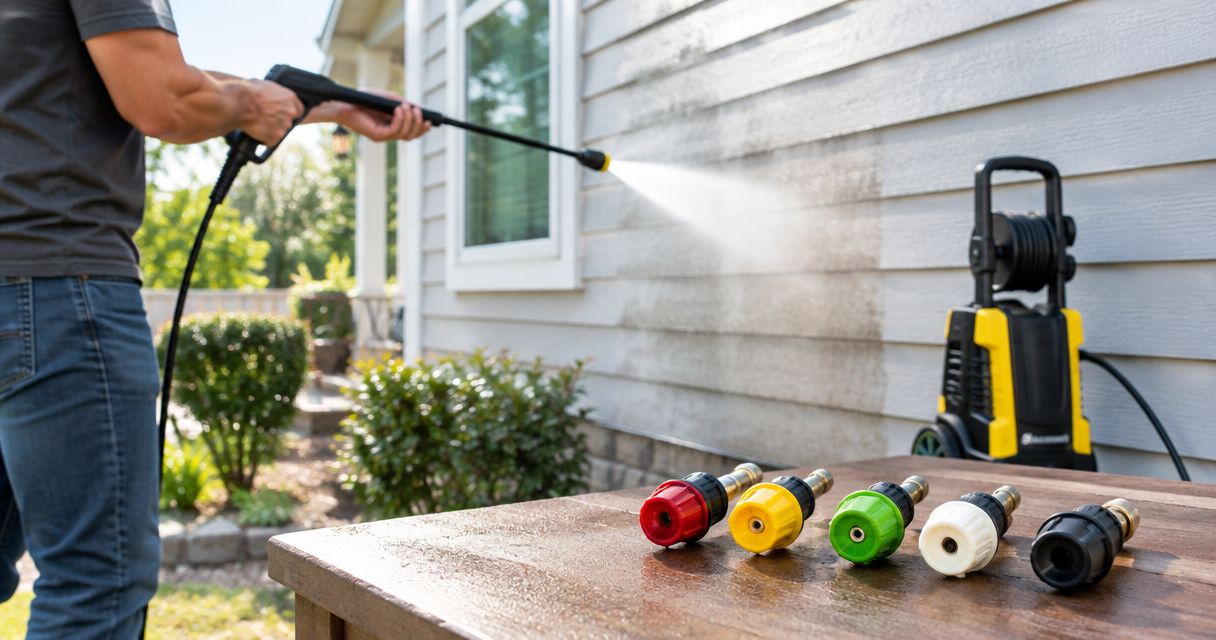
- A hose-end applicator does not remove the need to control overspray.
- A cleaner approved for vinyl can still affect adjacent materials if misused.
Best for: Property owners who can safely reach the work area and follow the complete product instructions.
Before purchasing, check whether the directions cover your stain and your siding. If either is unclear, choose a clearer specification or get an assessment rather than improvising.
Verdict: Choose a vinyl-approved cleaner for a defined DIY task; skip products with unclear surface instructions.
4. Oxidation-specific treatment: best for chalky weathered siding
Oxidation is different from dirt. Weathered vinyl can develop a chalky surface residue, and ordinary washing does not reverse the underlying aging. Uneven brushing or pressure can make differences in the surface more noticeable.
An oxidation-specific treatment needs a compatibility check and a controlled test area. Treat it as a separate restoration question, not as a stronger version of routine house washing. Removing residue and restoring the original color are not the same result.
Oxidation-specific treatment pros
- Separates surface weathering from ordinary contamination.
- Allows a targeted assessment before treating a broad wall.
- Helps set realistic expectations about appearance and remaining color differences.
Oxidation-specific treatment cons
- Cannot replace pigment that has faded or repair damaged panels.
- Can leave an uneven appearance if application or surface condition varies.
- Requires more judgment than choosing a general-purpose wash.
Best for: Siding with chalking or uneven weathered appearance after dirt and organic growth have been distinguished.
Do not assume every pale patch is oxidation. Existing wear, previous cleaning, and material damage also need consideration. Ask for an explanation of the condition before authorizing treatment across the whole exterior.
Verdict: Hold routine washing as the answer to chalking; assess oxidation separately.
5. Specialty stain treatment: best for localized rust or red clay
Rust, red clay, and mineral staining call for stain-specific assessment. A treatment intended for one deposit is not automatically appropriate for another. The surrounding trim, fixtures, paving, and landscaping also influence how it can be applied safely.
Southern Style Soft Wash lists specialty stain cleaning among its services. For a vinyl siding stain, ask whether the proposed treatment is compatible with the wall and whether the likely result is removal or improvement. Neither outcome should be promised before the stain and surface are assessed.
Specialty stain treatment pros
- Targets the stain instead of increasing pressure across the whole wall.
- Keeps a localized problem separate from routine exterior washing.
- Encourages a test area and clear expectations before broader application.
Specialty stain treatment cons
- Different stains require different chemistry and precautions.
- Some discoloration remains after appropriate treatment.
- An unresolved stain source can mark the cleaned surface again.
Best for: A distinct rust, clay, or mineral mark that ordinary compatible washing does not address.
Verdict: Choose stain-specific assessment for localized discoloration; skip stronger pressure as the fallback.
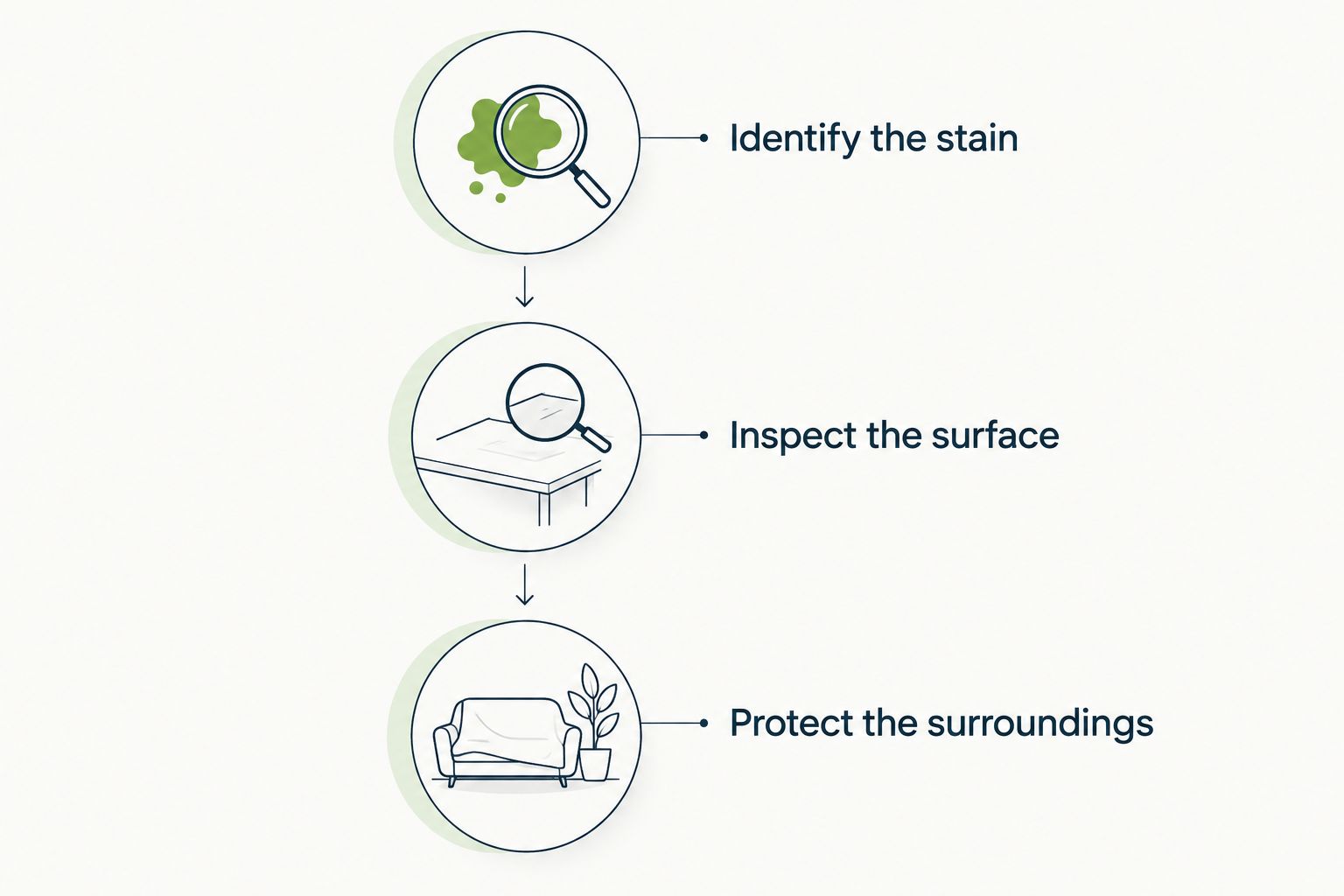
Three checks before any cleaner touches the siding
Identify the stain
Look at the pattern and condition rather than color alone. Note whether the mark follows runoff, surrounds a metal fixture, appears in a shaded area, or accompanies chalking. Those observations help frame the assessment without pretending that a visual clue proves the cause.
Inspect the surface
Check for loose panels, damaged joints, brittle areas, open penetrations, and exposed electrical components. Keep cleaning water away from openings. Existing defects need attention before washing—not discovery after solution has entered them.
Protect the surroundings
Move accessible furniture and decorative items out of the work area. Plan landscaping rinsing and runoff control, and discuss neutralizer where appropriate to the cleaning chemistry. Keep people away from wet work areas and provide a safe route around commercial entrances.
For older homeowners, preparation should not create a lifting task or ladder job. Ask in advance who will move porch furniture, handle heavy planters, and return items afterward. Do not assume those tasks are included in the service arrangement.
How these options rank
This 2026 ranking follows stain match, vinyl compatibility, controlled application, property protection, and honest limits. It is a decision guide, not a laboratory comparison of retail brands.
Professional soft washing leads for established organic growth. Mild detergent leads for light, reachable dirt. Packaged vinyl-approved cleaners fit clearly defined DIY tasks, while oxidation and specialty stains require separate decisions.
Which vinyl siding cleaner should you choose?
Choose the least aggressive suitable method that addresses the identified problem. For ordinary light dirt, start with manufacturer-approved gentle cleaning. For widespread organic growth or elevated walls, arrange a professional assessment rather than extending a DIY job beyond safe reach.
Before booking vinyl siding cleaning with Southern Style Soft Wash, ask four questions:
- What type of staining is present?
- What method and chemistry fit this siding?
- How will landscaping, fixtures, and openings be protected?
- Which marks are expected to improve rather than disappear?
Discuss your siding cleaning needs
Ask about stain identification, surface-appropriate cleaning, and property protection.
FAQ
What's the best vinyl siding cleaner in 2026?
The best vinyl siding cleaner in 2026 depends on the stain and siding condition. Mild detergent suits light dirt, appropriate soft washing addresses organic growth, and oxidation or mineral stains need separate assessment.
Is soft washing better than pressure washing for vinyl siding?
Low-pressure soft washing is the appropriate approach for vinyl siding with organic growth when the chemistry and application suit the surface. Higher pressure is not a substitute for identifying the stain and can force water into vulnerable openings.
Can I use bleach to clean vinyl siding?
Use a bleach-based cleaner only when the siding guidance and product instructions permit it. Sodium hypochlorite is used in exterior cleaning, but application, adjacent-material protection, and rinsing matter; never mix bleach with ammonia or acids.
What's the best cleaner for chalky vinyl siding?
Chalky vinyl siding needs an oxidation assessment rather than an automatic switch to stronger detergent. A compatible oxidation treatment can address residue, but it cannot restore lost pigment or repair deteriorated panels.
Can vinyl siding cleaners remove red clay and rust?
Stain-specific treatment can improve red clay or rust staining, but complete removal is not guaranteed. Identify the stain, confirm vinyl compatibility, and assess a test area before broader treatment.
How do I protect plants during siding cleaning?
Plan landscaping protection around the product instructions and application method. Discuss rinsing before and after treatment, runoff control, and neutralizer where appropriate; rinsing alone does not make uncontrolled chemical exposure acceptable.
Who provides professional exterior cleaning near LaGrange and Newnan?
Southern Style Soft Wash provides residential and commercial exterior cleaning in LaGrange, Newnan, Valley, and surrounding West Georgia and East Alabama areas. Its stated services include house, roof, concrete, and specialty stain cleaning.
One last thing
A stubborn mark is not always a request for stronger cleaning. It can be evidence that the diagnosis is wrong—or that the material has changed rather than become dirty.
For your 2026 exterior cleaning plan, separate siding, roofing, concrete, and specialty stains in the scope. Each surface deserves its own method. Keep a photograph of the areas you want addressed and ask which belong in routine washing, which need separate treatment, and which cleaning cannot fix.