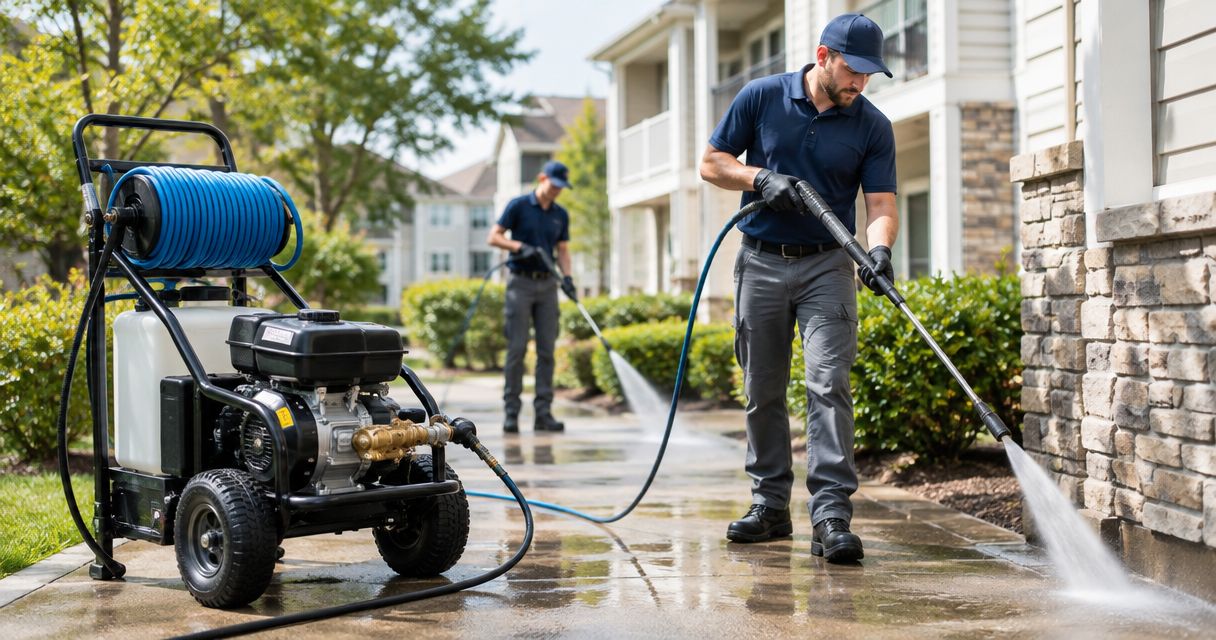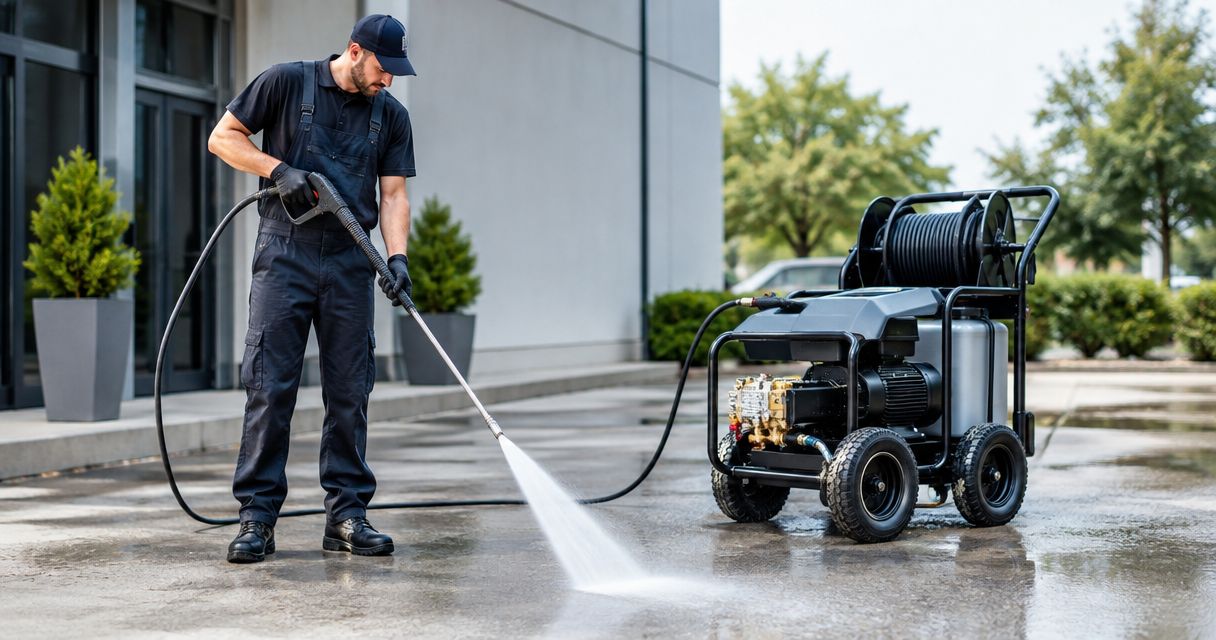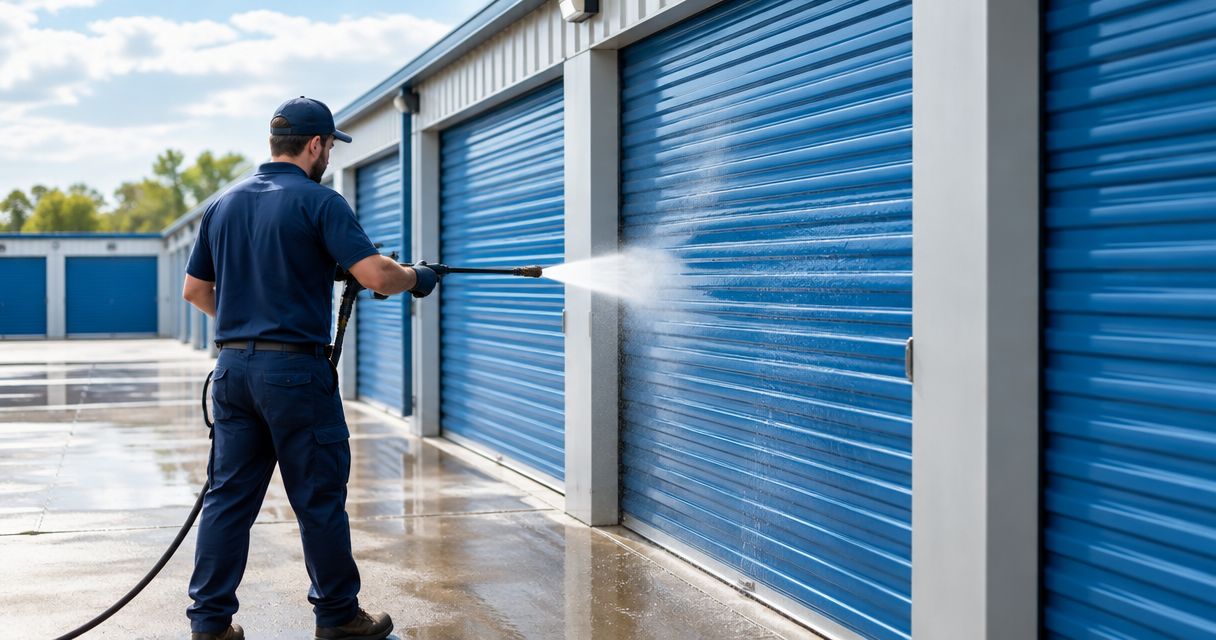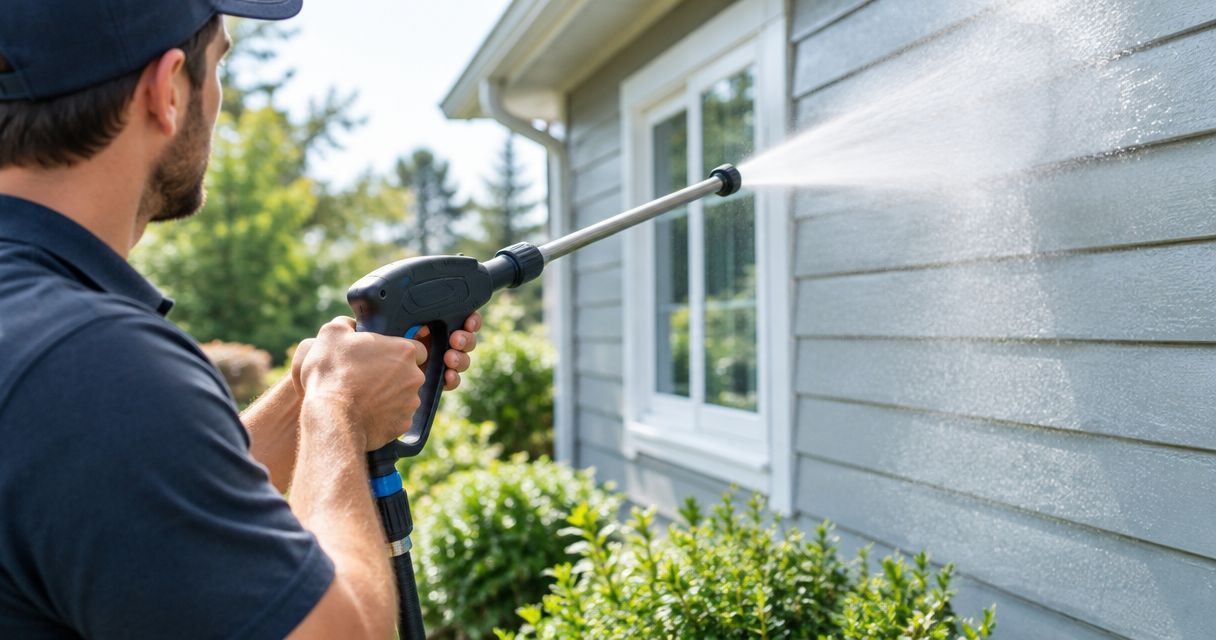
Best overall: a fixed wide-fan nozzle sized for your low-pressure system. Best for changing spray patterns: a compatible adjustable nozzle. Best for a simple setup: separate fixed application and rinse tips. This 2026 guide compares the best soft wash tips and nozzles by coverage, control, compatibility, and surface protection—not by how forcefully they spray.
- The best soft wash tips and nozzles match your pump, cleaning solution, surface, and required spray pattern.
- Fixed wide-fan nozzles are the default for controlled house-washing coverage, not distant targets.
- A downstream soap nozzle applies cleaner through a compatible pressure-washer injector; it is not a complete soft-wash system.
- Southern Style Soft Wash offers exterior cleaning services for homeowners and commercial property owners in West Georgia and East Alabama.
For property owners who want exterior cleaning handled rather than equipment to operate, Southern Style Soft Wash offers house, roof, concrete, and specialty stain cleaning services. The equipment choices below explain what to ask a contractor and what to check before using your own setup.
Why this matters
A nozzle shapes the spray; it does not decide whether the cleaning method is safe. Pump output, nozzle opening, distance, chemistry, and surface condition all matter. A wide spray attached to a high-pressure setup is not automatically soft washing.
For homeowners in Troup and Coweta counties, the useful distinction is between treating organic growth on siding, cleaning suitable concrete with pressure, and addressing a specific stain with matched chemistry. Commercial property owners also need control around entrances, pedestrians, landscaping, and adjacent vehicles.
Southern Style Soft Wash is best for local property owners seeking exterior cleaning services rather than nozzle purchases. For equipment selection in 2026, start with the surface and work backward to the spray pattern.
What makes the best soft wash tips and nozzles
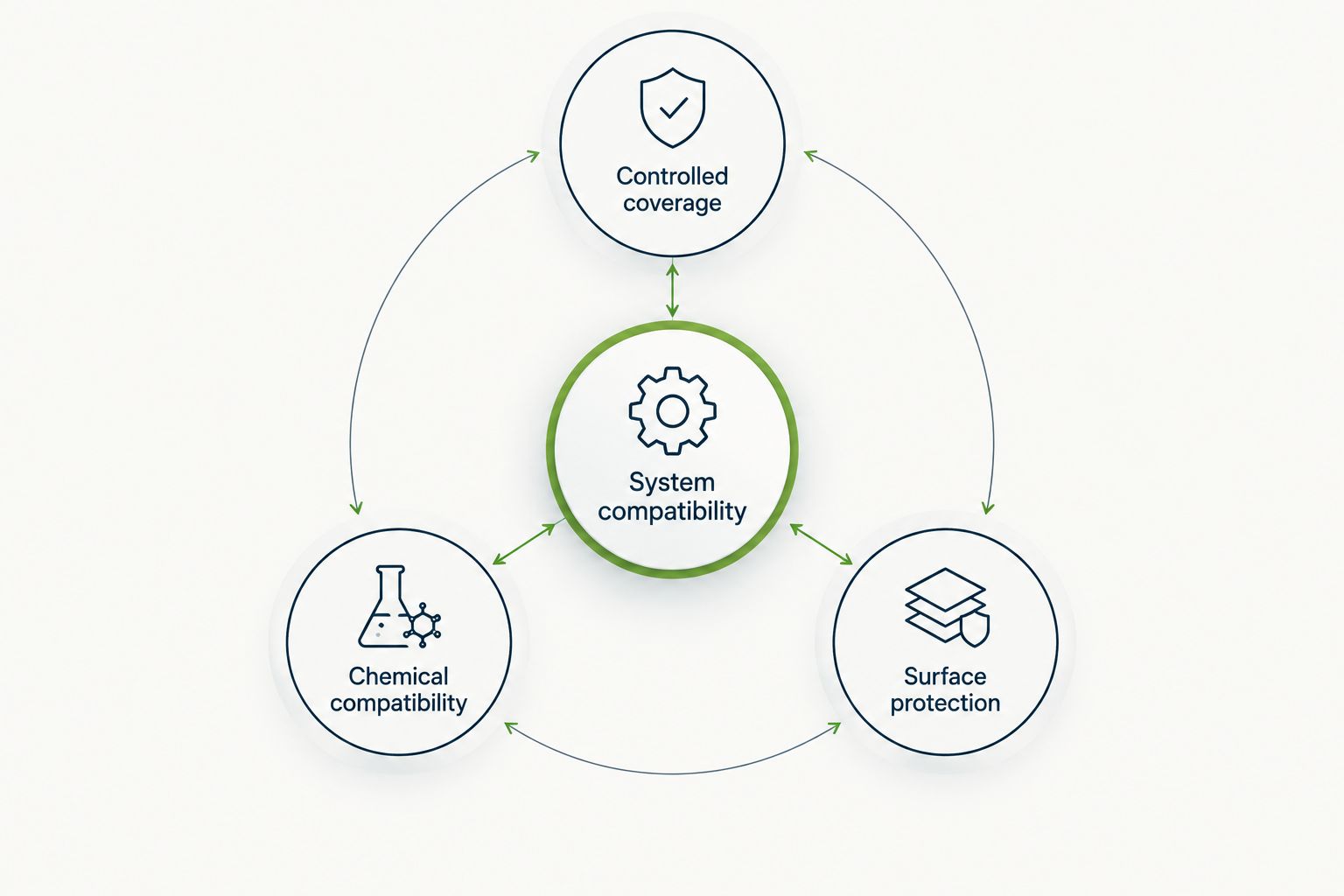
- System compatibility: Match the connection, nozzle opening, operating limits, and intended use to the pump or pressure washer. A connector that fits is not proof of compatibility.
- Controlled coverage: Choose a pattern that wets the intended surface without concentrating force or sending cleaner onto adjacent property.
- Chemical compatibility: Check every wetted component, including seals and fittings, against the cleaner's instructions. Metal appearance alone does not establish suitability.
- Application and rinsing: Establish how you will apply cleaner and rinse without accidentally continuing chemical delivery.
- Surface protection: Account for loose paint, brittle siding, damaged mortar, roofing condition, and openings before choosing a tip.
- Predictable adjustment: Prefer settings you can identify and repeat. Changing patterns should not introduce an unexpected concentrated stream.
A nozzle advertised with a 40-degree pattern generally spreads spray more broadly than a 25-degree pattern at the same working distance. A 0-degree pattern concentrates the stream. Those angles describe spray geometry, not safe operating pressure, chemical concentration, or a universal working distance.
Soft wash tips and nozzles at a glance
This 2026 comparison ranks nozzle types by distinct jobs. The best choice changes when you move from broad siding coverage to a confined area, a distant rinse target, or a downstream-injector setup.
| Rank and nozzle type | Best for | Standout feature | Key limitation |
|---|---|---|---|
| 1. Fixed wide-fan nozzle | Broad, controlled application | Repeatable fan pattern | Less suited to distant or narrow targets |
| 2. Fixed narrow-fan nozzle | Confined treatment areas | More focused spray footprint | Requires closer attention to concentration and overspray |
| 3. Adjustable-pattern nozzle | Switching patterns during a mixed task | Multiple patterns in one assembly | Settings and seals need inspection |
| 4. Long-range rinse nozzle | Reaching elevated rinse targets | Directed water stream | Reach does not establish safe impact or control |
| 5. Downstream soap nozzle | Applying cleaner through a compatible injector | Supports low-pressure chemical draw | Depends on injector and system compatibility |
The table separates application control from reach. A nozzle that helps water travel farther is not necessarily the right nozzle for applying cleaner near windows, roof edges, or planted beds.
1. Fixed wide-fan nozzle: best for broad house-washing coverage
A fixed wide-fan nozzle distributes liquid across a broader footprint than a narrower pattern at the same distance. On a compatible low-pressure system, it suits controlled application across accessible siding and other approved exterior surfaces. The nozzle opening still needs to match the system.
Fixed wide-fan nozzle pros:
- A repeatable pattern makes coverage easier to judge.
- Broad coverage suits open wall sections.
- A fixed pattern avoids accidental adjustment during use.
Fixed wide-fan nozzle cons:
- Broad spray can wet adjacent surfaces and landscaping.
- It does not solve poor access or distant targets.
- A wide fan does not make excessive pressure safe.
Best for: Homeowners or operators applying a surface-approved cleaner across accessible, broad areas. Inspect seams, vents, electrical fixtures, and damaged sections before application, and keep spray out of openings.
Verdict: Buy a fixed wide-fan nozzle as the default only after confirming low-pressure system compatibility.
2. Fixed narrow-fan nozzle: best for confined treatment areas
A fixed narrow-fan nozzle places liquid within a smaller footprint than a broad fan at the same distance. That helps when the treatment area is limited, but it also demands more attention to where the spray lands. Narrower is not synonymous with gentler.
Fixed narrow-fan nozzle pros:
- A smaller footprint helps target a defined area.
- A fixed pattern is straightforward to identify.
- It offers an alternative when broad spray reaches unwanted surfaces.
Fixed narrow-fan nozzle cons:
- Concentrated application can create uneven wetting.
- Close positioning increases the need for careful surface assessment.
- It does not replace specialty stain chemistry.
Best for: Defined treatment areas where a broad fan creates unwanted coverage. For rust, red clay, or other staining, identify the stain and substrate first; changing nozzles does not establish that the cleaner is appropriate.
Verdict: Hold until a confined treatment area justifies a narrower pattern.
3. Adjustable-pattern nozzle: best for changing coverage patterns
An adjustable-pattern nozzle changes the spray shape without replacing the entire nozzle assembly. Its value is convenience when your task includes different coverage needs. Confirm the allowed fluids, operating limits, and connection before treating it as interchangeable with fixed tips.
Adjustable-pattern nozzle pros:
- Pattern changes happen at the nozzle.
- One assembly can serve different coverage needs.
- Clearly marked settings help you repeat a chosen pattern.
Adjustable-pattern nozzle cons:
- Adjustment mechanisms and seals require inspection.
- An unintended setting can produce an unsuitable stream.
- Compatibility with water does not establish compatibility with cleaner.
Best for: Operators who understand their system and need deliberate pattern changes. Before each change, follow the equipment's shutdown and pressure-release instructions; do not handle a pressurized connection.
Verdict: Buy for controlled pattern changes, not as a shortcut around system checks.
4. Long-range rinse nozzle: best for elevated rinse targets
A long-range rinse nozzle directs water toward a target beyond the useful reach of a broad fan. It belongs in a rinsing plan, not a promise that every upper-story surface can be safely cleaned from the ground. Wind, target position, impact, and runoff remain important.
Long-range rinse nozzle pros:
- A directed stream reaches beyond a broad fan's useful coverage.
- It supports rinsing tasks where broad spray disperses too early.
- Ground-based operation avoids carrying a spray tool onto a ladder.
Long-range rinse nozzle cons:
- A directed stream requires careful aiming around openings.
- Wind interferes with placement and control.
- Reach alone does not establish safe roof or siding treatment.
Best for: Elevated rinsing where the operator can maintain visibility and control. Do not use the ability to reach a surface as proof that its coating, joints, or roofing material can tolerate the stream.
Verdict: Hold until you have a controlled rinse plan; skip it where visibility or spray control is inadequate.
5. Downstream soap nozzle: best for compatible injector setups
A downstream soap nozzle works with a compatible pressure-washer injector to support cleaner draw during low-pressure application. It is a component of that arrangement, not a dedicated chemical pump. Injector behavior depends on the equipment and flow restrictions throughout the setup.
Downstream soap nozzle pros:
- It supports cleaner application through an appropriate injector.
- A designated soap tip makes the application stage identifiable.
- It provides a clear equipment choice for downstream users.
Downstream soap nozzle cons:
- It does not make every injector draw correctly.
- Cleaner strength at the surface depends on dilution through the system.
- Switching tips does not, by itself, prove chemical delivery has stopped.
Best for: Pressure-washer owners using a manufacturer-compatible downstream injector. Follow the injector's instructions for application, stopping chemical draw, and flushing; confirm the rinse is clean water before directing it onto sensitive areas.
Verdict: Buy only for a verified downstream-injector setup; skip it as an assumed fit for a dedicated soft-wash pump.
Match the method to the surface
The right 2026 equipment choice starts with the material beneath the dirt. Southern Style Soft Wash offers soft washing, pressure washing, and specialty stain cleaning; these are different approaches, not competing names for the same spray.
House exteriors and roofs
Low-pressure soft washing uses suitable chemistry to treat contamination rather than relying on force alone. Sodium hypochlorite is used in exterior cleaning for organic growth, but its use requires surface compatibility, controlled application, and property protection. Follow product labels and roofing or siding manufacturer instructions.
Do not substitute a concentrated stream for treatment time or inspection. Loose coatings, compromised seals, and deteriorated materials need attention before cleaning. Roof access also introduces hazards that a nozzle purchase does not resolve.
Concrete and commercial hard surfaces
Suitable concrete can be pressure washed when its condition and finish permit it. Coatings, damaged areas, joints, and nearby materials still affect the method. A soft-wash application nozzle is not a substitute for selecting appropriate pressure-washing equipment.
For commercial entrances and walkways, plan pedestrian separation and runoff control before starting. Equipment selection must fit both the surface and the occupied property.
Specialty stains
Organic growth, rust, oil, and red clay are not interchangeable cleaning problems. Identify the stain before selecting a treatment, then check compatibility with the underlying material. Some marks improve without disappearing completely; surface damage is not dirt that stronger spray will remove.
Protect the property before changing tips
Use this preparation sequence for a 2026 cleaning plan. No responsible contractor can promise zero risk, but a clear plan addresses preventable exposure and access problems.
- Inspect surfaces: Identify damaged materials, open joints, loose paint, fixtures, and places where water must not enter.
- Clear access: Arrange help with porch furniture and obstacles. Older homeowners should not need to move heavy items to prepare for a visit.
- Protect landscaping: Plan appropriate rinsing before, during, and after exposure, and use a suitable neutralizer where the cleaning process calls for it.
- Control runoff: Identify where liquid will travel and keep people away from active work areas.
- Confirm rinsing: Establish how chemical delivery stops and how the equipment will be flushed according to its instructions.
Landscaping protection is more than a final rinse. Application direction, wind, exposure, and runoff all belong in the plan. A neutralizer is an additional measure where appropriate, not permission to spray carelessly.
Discuss your exterior cleaning needs
Ask about house, roof, concrete, or specialty stain cleaning for your property.
How the nozzle types rank
This ranking prioritizes compatibility, controlled coverage, chemistry, and protection—not advertised reach alone. Fixed wide-fan nozzles lead for broad application because their pattern is repeatable. The remaining types serve narrower jobs rather than replacing that default.
For your 2026 selection, verify the equipment documentation before choosing between fixed and adjustable tips. A specification mismatch outweighs every convenience listed here.
Which soft wash tips and nozzles should you choose?
Choose a compatible fixed wide-fan nozzle for accessible, broad-area application. Add a narrow-fan tip only for defined areas, an adjustable nozzle for deliberate pattern changes, or a long-range nozzle for a controlled rinse task. Choose a downstream soap tip only when you actually use a compatible injector.
If you are buying equipment solely to address a roof, damaged exterior, or uncertain stain, choose an assessment before a nozzle. The wrong method remains wrong with a different tip.
FAQ
What's the best soft wash nozzle for house siding?
A fixed wide-fan nozzle sized for a compatible low-pressure system is the default for broad, accessible siding areas. Inspect the siding condition and follow its manufacturer's cleaning instructions before application.
Does a wide-angle nozzle turn a pressure washer into a soft-wash system?
No, a wide-angle nozzle does not automatically make a pressure washer suitable for soft washing. Pressure, flow, nozzle opening, chemical delivery, and surface condition all need to match the task.
Is an adjustable soft wash nozzle better than fixed tips?
An adjustable nozzle is better for convenient pattern changes; fixed tips are better when you want a repeatable pattern without adjustment. Choose only after checking chemical compatibility and operating limits.
Can I use a downstream soap nozzle on any soft-wash pump?
No, a downstream soap nozzle is intended for a compatible injector arrangement, not every dedicated soft-wash pump. Confirm the nozzle's intended use and the pump manufacturer's requirements.
Which nozzle should I use for roof cleaning?
Choose a roof-cleaning method approved for the roofing material before selecting a nozzle. A suitable low-pressure application setup does not remove the need to assess roof condition, access, runoff, and nearby landscaping.
Will a stronger spray remove every exterior stain?
No, stronger spray does not guarantee stain removal and can damage the surface. Rust, oil, red clay, and organic growth require different assessments, and some staining improves without disappearing completely.
What should I ask an exterior cleaning contractor before booking?
Ask how the contractor matches the method to each surface and protects landscaping, openings, and adjacent property. Also discuss furniture preparation, runoff, chemical rinsing, and the limits of stain removal.
One last thing
Ask where the rinse water goes before asking how far the nozzle sprays. Reach is visible; runoff is easier to overlook. A cleaning plan should account for both, especially where roof drainage, planted beds, and occupied walkways meet.