Best overall for a small rust spot: a concrete-labeled oxalic-acid remover, selected for your surface and patch-tested. Best for widespread or uncertain staining: professional specialty stain treatment from Southern Style Soft Wash; this 2026 guide compares the options without treating stronger chemistry as better cleaning.
- The best rust remover for concrete must match the concrete finish, stain source, and product label.
- Concrete-labeled oxalic-acid removers are a starting option for isolated rust on compatible concrete.
- Southern Style Soft Wash offers concrete cleaning and specialty stain services for homeowners and commercial property owners.
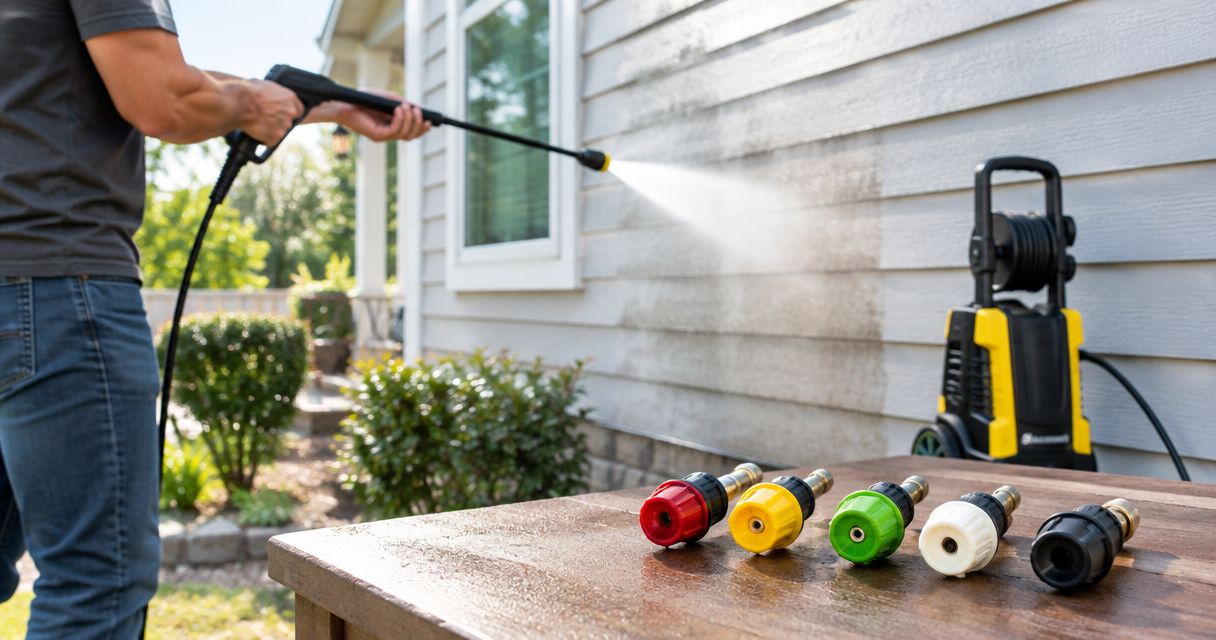
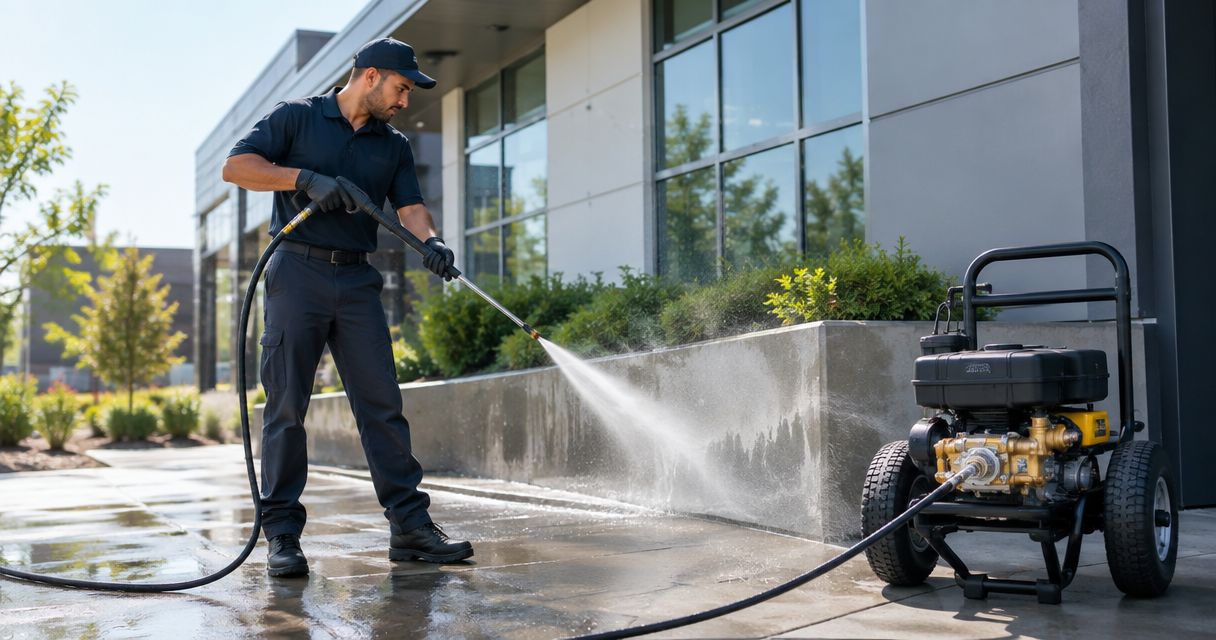
- Pressure washing removes surface dirt; rust staining requires a separate treatment decision.
- Stop the rust source before cleaning, and judge the test patch after it dries.
Why this matters
Rust removal is not ordinary driveway washing. Iron staining calls for chemistry selected for the deposit, while the concrete itself needs protection from that chemistry. A cleaner that affects rust can also alter cement paste, a coating, or a decorative finish.
For homeowners and commercial property owners in Troup and Coweta counties, the practical decision is whether the stain suits a controlled DIY treatment or needs professional assessment. Southern Style Soft Wash is best for property owners seeking professional assessment of concrete cleaning and specialty stains. No responsible contractor can promise zero risk or complete removal of every mark.
This 2026 ranking is a buying decision guide by treatment type, not a laboratory comparison of named products. Choose by surface compatibility and application demands, not by a bottle's strongest claim.
What makes the best rust remover for concrete?
Use these criteria before choosing a formula:
- Concrete compatibility: The label must explicitly permit your concrete surface. Permission for metal or masonry alone is not enough.
- Finish compatibility: Check separate restrictions for sealed, colored, stamped, polished, or coated concrete.
- Stain suitability: Confirm that the instructions cover rust or iron staining rather than only grease, algae, or general dirt.
- Application control: You need clear directions for dilution, contact time, rinsing, protective equipment, and any required neutralization.
- Property protection: The treatment must fit a plan for adjacent plants, metal, painted surfaces, drains, and foot traffic.
- Dry-result acceptance: Choose a treatment only after the test area dries without unacceptable color or texture changes.
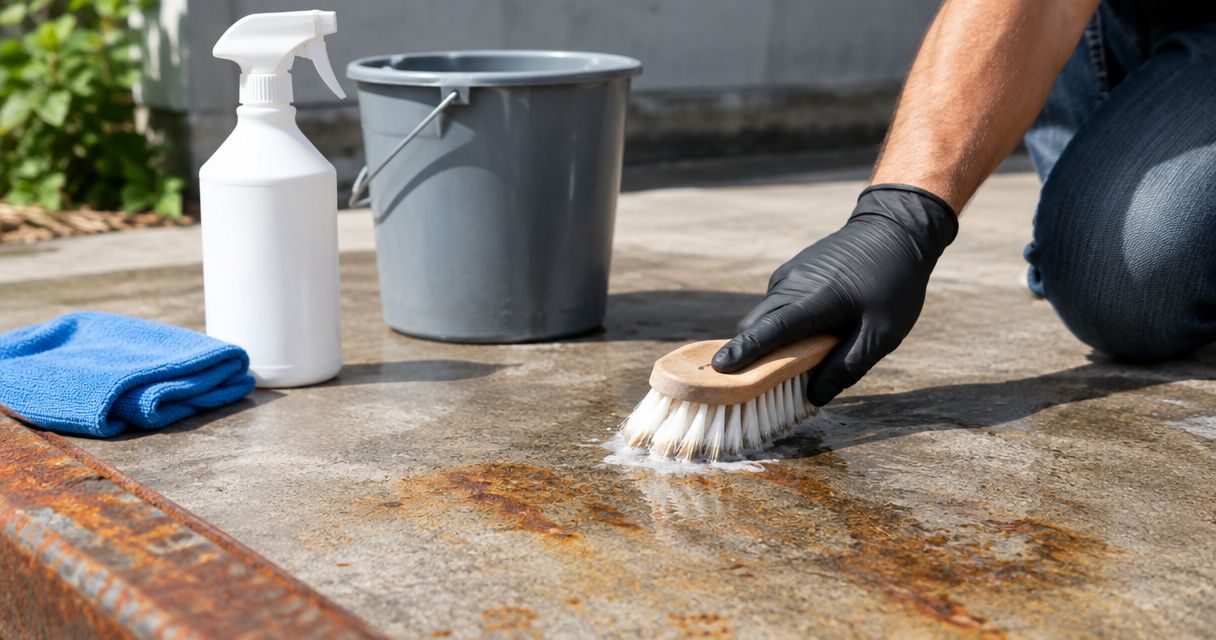
Make 1 small test patch in an inconspicuous area before treating the visible stain. That is a preparation recommendation, not a guarantee: different sections of the same slab can have different wear, coatings, and porosity.
Rust-removal options at a glance
| Option | Best for | Standout feature | Key limitation |
|---|---|---|---|
| Professional specialty stain treatment | Widespread stains or uncertain surfaces | Assessment before selecting the treatment | Requires coordination and does not guarantee complete removal |
| Concrete-labeled oxalic-acid remover | Isolated rust on compatible concrete | Acid chemistry used for iron-stain treatment | Incorrect use can alter the surface |
| Concrete-labeled phosphoric-acid remover | Rust accompanied by label-listed mineral deposits | One treatment category can address deposits expressly covered by its label | Acid compatibility and rinsing requirements still apply |
| Concrete-labeled non-acid rust remover | Surfaces whose care instructions exclude acids | Avoids acid-based chemistry when the label confirms it | Non-acid does not mean universally safe or suitable |
The phrase concrete-labeled matters in every row. An ingredient name is not permission to use a product on your driveway, steps, or entrance.
1. Professional specialty treatment: best for uncertain surfaces
Professional specialty stain treatment starts with identifying the surface and likely stain source before choosing chemistry. Southern Style Soft Wash offers concrete cleaning and specialty stain services to residential and commercial property owners in LaGrange, Newnan, Valley, and surrounding West Georgia and East Alabama areas.
This is the first choice when your concrete has an unknown coating, several kinds of staining, or a large affected area. Ask for separate explanations of general cleaning and rust treatment; they address different problems.
Professional specialty treatment pros:
- Allows the cleaning decision to follow a surface assessment.
- Gives you a point of contact for discussing stain limits and protection requirements.
- Keeps specialty staining separate from routine pressure washing.
Professional specialty treatment cons:
- Requires scheduling and access to the affected area.
- Cannot guarantee that deep staining will disappear.
- Existing damage or uncertain finishes can restrict treatment choices.
Best for: Property owners who need help distinguishing rust, red clay, organic growth, or coating damage before work begins.
Ask what will be protected, what result counts as improvement, and when the surface will be inspected after drying. For a commercial entrance, also discuss pedestrian access and rinse-water control.
Verdict: Buy professional assessment rather than experimenting on an uncertain surface.
2. Oxalic-acid remover: best for isolated compatible rust spots
Oxalic acid is used in iron-stain removal. A formulated remover labeled for concrete is a practical starting option for a localized rust mark on a surface the manufacturer expressly permits.
The recommendation is for a finished, labeled product—not raw acid mixed to an improvised recipe. Your 2026 buying checklist should prioritize instructions and compatibility over ingredient concentration.
Oxalic-acid remover pros:
- Uses chemistry relevant to iron staining.
- Fits targeted treatment instead of automatically treating the whole slab.
- Provides a defined application procedure when supplied as a labeled product.
Oxalic-acid remover cons:
- Acid exposure can change concrete appearance or texture.
- Decorative finishes and nearby materials need separate compatibility checks.
- A remaining shadow does not justify repeated applications without checking the surface.
Best for: Small rust spots on concrete specifically covered by the product label.
Follow the manufacturer's contact time, dilution, and rinse instructions exactly. Do not lengthen contact time because the first application leaves a mark, and do not allow the product to dry unless its instructions expressly direct that process.
Verdict: Buy only after confirming concrete compatibility and accepting the dry test result.
3. Phosphoric-acid remover: best for label-listed mixed deposits
Phosphoric acid is used in rust-removal formulations. Some concrete-cleaning products also identify mineral deposits among their intended uses; select this option only when the actual label covers both the surface and the deposits you need to treat.
Do not assume a metal-preparation product belongs on a concrete walkway. Its intended substrate and treatment process are different.
Phosphoric-acid remover pros:
- Offers another chemistry category for rust treatment.
- Suits a mixed-deposit job when the label explicitly covers those deposits.
- Gives you a defined procedure instead of an improvised acid wash.
Phosphoric-acid remover cons:
- Acid-sensitive finishes can rule it out.
- Incorrect application can etch cementitious surfaces.
- Residue and rinsing requirements depend on the specific formulation.
Best for: Compatible concrete with rust and additional mineral staining expressly listed on the cleaner's label.
Read the disposal and runoff directions before starting. A product's suitability for concrete does not make it suitable for surrounding metal, paint, vegetation, or drainage areas.
Verdict: Hold until the label confirms both the concrete finish and the mixed deposits.
4. Non-acid rust remover: best when acids are excluded
A non-acid rust remover is an option when the surface's care instructions exclude acid treatment. Some formulations use chelating chemistry, which binds metal ions, but the manufacturer's instructions still determine whether the product suits concrete.
Check the complete application method. A formulation intended for soaking removable metal parts is not automatically suitable for a fixed driveway or porch.
Non-acid rust remover pros:
- Avoids acid-based treatment when the formulation confirms that distinction.
- Provides another category to investigate when acids are prohibited.
- Can support targeted treatment if the label permits application to concrete.
Non-acid rust remover cons:
- Non-acid wording does not establish coating or landscaping safety.
- Some application methods do not suit fixed concrete surfaces.
- Finish compatibility still requires a test patch.
Best for: A concrete surface whose care instructions exclude acids, provided the remover separately approves that surface.
In 2026, treat terms such as gentle and safe as incomplete information. The useful details are the approved substrate, application directions, restrictions, and safety instructions.
Verdict: Buy only when both the surface instructions and remover label permit the treatment.
Match the cleaning method to the problem
Pressure washing, soft washing, and specialty treatment have different jobs. Pressure washing uses suitable water pressure to remove surface dirt. Soft washing uses low-pressure application and cleaning chemistry for appropriate exterior surfaces. Specialty treatment targets a particular stain, including rust.
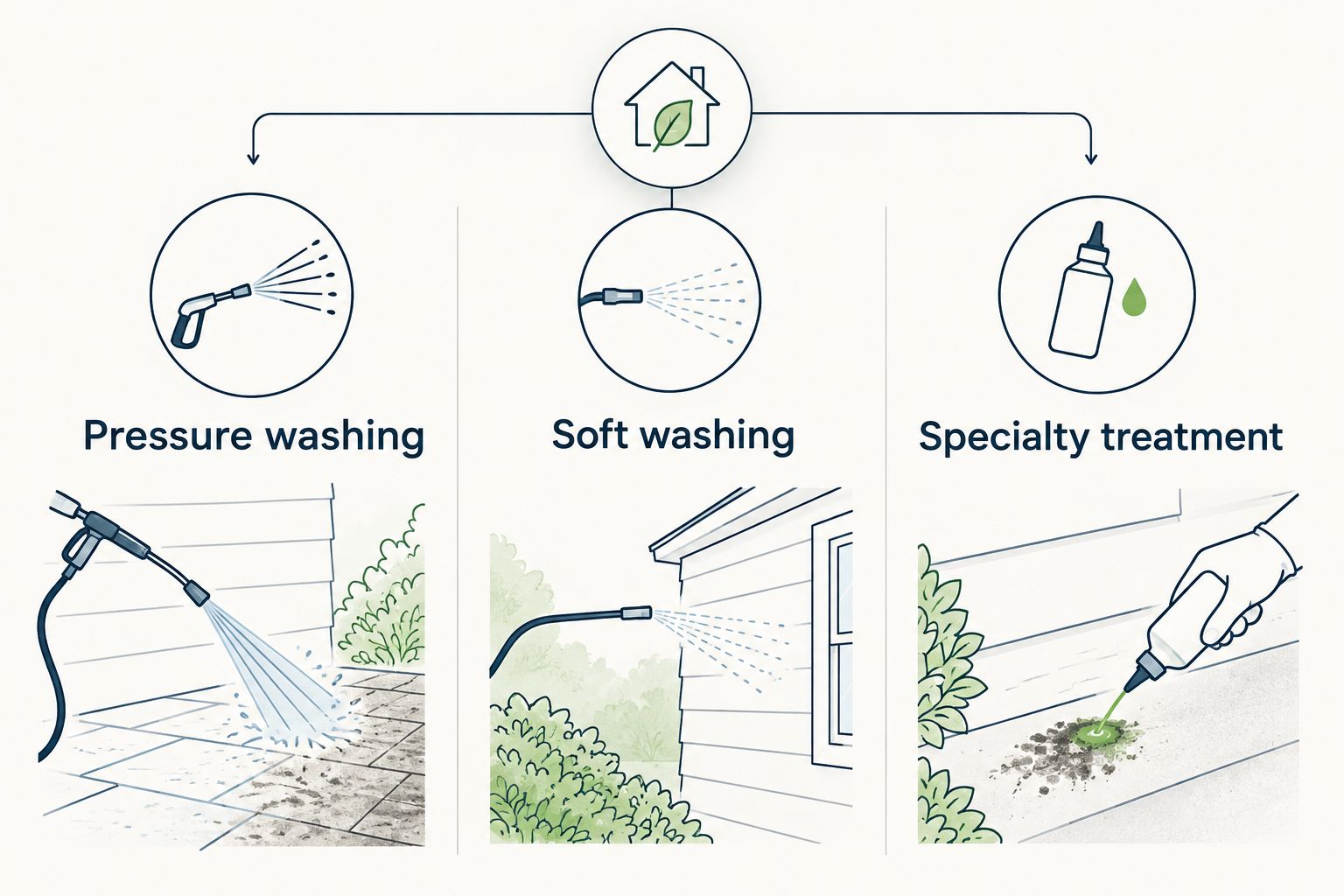
Sodium hypochlorite is used in exterior cleaning for organic growth; it is not the default solution for iron staining. Never mix an acid-based rust remover with bleach or bleach residue. Acid and sodium hypochlorite can release toxic chlorine gas.
More pressure is not the substitute for rust-treatment chemistry either. Aggressive spraying can damage the concrete while leaving discoloration behind. For broader driveway soil, compare concrete cleaners for driveways separately from your rust-removal decision.
Protect the property before treating the stain
A useful preparation plan has 3 checkpoints: surface, surroundings, and runoff. Check each before opening the container.
Surface
Identify the finish and look for cracks, flaking, exposed aggregate, existing etching, and worn sealer. Follow the product's preparation instructions, including any required pre-wetting. Do not apply a second cleaner over residue from the first.
Surroundings
Move portable metal objects away from the work area and protect nearby materials according to the label. Plan landscaping rinsing before and after work where appropriate. Use a neutralizer only when the treatment instructions or professional process calls for it; it is not a universal additive or permission to mix chemicals.
For older homeowners, settle furniture and planter arrangements before the appointment. Ask who will move porch chairs, heavy pots, or doormats, and leave an accessible route that does not cross the wet work area.
Runoff
Identify where rinse water will travel. Follow product disposal directions and applicable local requirements rather than directing treatment water toward plants or a storm drain. Commercial properties also need a plan to keep customers and staff away from the treatment area.
Check the result before repeating treatment
Use 2 inspection stages: wet and fully dry. The wet inspection checks for immediate surface problems; the dry inspection determines whether the appearance is acceptable. Wet concrete does not show the same color and contrast as dry concrete.
Compare the test patch with adjacent untreated concrete in similar light. Look for roughening, a pale halo, coating changes, or loss of finish—not just whether the orange stain faded.
Stop if the surface changes undesirably. A lighter rust mark is not a successful result if treatment leaves a damaged patch. For your 2026 maintenance plan, record the product used and the accepted result so a future application is not based on guesswork.
How the options are ranked
This guide ranks treatment types by the jobs they fit: uncertain surfaces, isolated rust, label-listed mixed deposits, and acid exclusions. The criteria are surface compatibility, stain suitability, application control, property protection, and the dry result.
There is no unsupported winner on removal speed or strength. A compatible treatment with clear instructions wins over an aggressive treatment you cannot safely control.
Which rust-removal option should you choose?
Choose a concrete-labeled oxalic-acid remover for an isolated spot only when the finish is approved and the test patch passes. Choose phosphoric-acid or non-acid formulations for their specific label-supported use cases, not because one ingredient sounds stronger.
Choose Southern Style Soft Wash for concrete cleaning and specialty stain assessment when the surface, stain source, or protection requirements are uncertain. Before any treatment, remove or correct the source of recurring staining where possible. Cleaning beneath a rusting object without addressing that object leaves the cause in place.
FAQ
What's the best rust remover for concrete in 2026?
For a small rust spot on compatible concrete, start with a concrete-labeled oxalic-acid remover and a test patch. For uncertain finishes or widespread staining, choose professional specialty stain assessment instead of experimenting.
Will pressure washing remove rust from my driveway?
Pressure washing is not a dependable substitute for rust-treatment chemistry. It removes surface dirt, but iron discoloration requires a separate treatment decision, and excessive pressure can damage concrete.
Is oxalic acid better than phosphoric acid for concrete rust?
Neither ingredient is the best choice for every concrete surface. Choose the formulated product whose label covers your finish, stain, and application conditions, then inspect a dry test patch.
Can I use bleach to remove rust from concrete?
Bleach is not the default treatment for iron staining. Never mix bleach or bleach residue with acid-based rust removers because the combination can release toxic chlorine gas.
Are non-acid rust removers safe on sealed concrete?
Non-acid wording alone does not establish compatibility with sealed concrete. Check the sealer's care instructions and the remover's approved surfaces, then test an inconspicuous area.
Will a rust remover completely remove an old orange stain?
Complete removal is not guaranteed. A stain can improve while leaving a shadow, and further treatment must be weighed against changes to the concrete surface.
Who should I contact for concrete rust staining near LaGrange or Newnan?
Southern Style Soft Wash offers concrete cleaning and specialty stain services in LaGrange, Newnan, Valley, and surrounding West Georgia and East Alabama areas. Ask about surface assessment, property protection, and the distinction between stain improvement and complete removal.
One last thing
Photograph the dry test patch before treating the full area. Include nearby untreated concrete in the same frame. That simple reference helps you distinguish stain improvement from a new light patch caused by surface alteration—and gives you a clear stopping point.