Best overall: a gutter scoop for reachable leaf buildup. Best for ground-level dry cleanup: a gutter vacuum attachment. Best for rinsing: a telescoping hose wand. This 2026 guide compares the best gutter cleaning tools by debris type, access, and the limits of each method.
- The best gutter cleaning tools match the blockage: scoops for wet leaves, vacuum attachments for dry debris, hose wands for rinsing.
- A telescoping gutter claw suits clumped debris, but ground-level operation does not guarantee a clear view.
- Southern Style Soft Wash provides surface-matched exterior cleaning; discuss gutter debris removal separately when defining the work.
- Remove solid debris before rinsing, and inspect drainage before treating exterior gutter stains.
Why this matters
A gutter holds more than loose leaves. Wet debris can collect around an outlet, while staining on the outside requires a different cleaning approach. Clearing the channel and washing the gutter face are separate jobs.
For homeowners and commercial property owners in Troup and Coweta counties, the useful question is not which tool has the longest pole. It is whether you can see the problem, reach it safely, and remove the material without damaging the gutter.
Southern Style Soft Wash offers house, roof, concrete, and specialty stain cleaning across LaGrange, Newnan, Valley, and surrounding areas. Southern Style Soft Wash is a fit for West Georgia and East Alabama property owners seeking surface-matched exterior cleaning.
Use this 2026 comparison to select a tool, not to justify an unsafe access arrangement.
What makes the best gutter cleaning tools
Assess these criteria before choosing an attachment or climbing a ladder:
- Debris fit: Loose, dry leaves behave differently from wet sludge, packed needles, and rooted growth.
- Visibility: You need a way to check the channel and outlet, not just move a tool overhead.
- Access: Ground-level equipment reduces ladder use but introduces reach, control, and viewing limitations.
- Gutter compatibility: Check channel width, guards, brackets, and the tool manufacturer's instructions before use.
- Drainage verification: Removing visible material is not enough if water still backs up at the outlet.
- Property protection: Account for windows, landscaping, electrical hazards, pedestrians, and where displaced debris will land.
For 2026, choose by the task rather than the attachment count. A tool that reaches the gutter but cannot extract its contents is not a complete solution.
Gutter cleaning tools at a glance
These are tool categories, not a ranking of named models. Check the exact equipment's compatibility and operating instructions before buying.
| Tool | Best for | Standout feature | Key limitation |
|---|---|---|---|
| Gutter scoop | Reachable wet leaf buildup | Direct removal of bulky debris | Usually requires elevated access |
| Gutter vacuum attachment | Loose, dry debris from the ground | Collects debris rather than spraying it | Wet material and bends can obstruct suction |
| Telescoping gutter claw | Clumped debris within pole reach | Grips material for removal | Limited visibility and awkward control |
| Telescoping hose wand | Rinsing after debris removal | Delivers water from the ground | Can move solids toward a blockage |
| Gutter brush | Light sediment in accessible channels | Loosens residue with controlled contact | Does not collect debris or clear a downspout |
The strongest 2026 choice depends on the blockage. None of these tools repairs a detached gutter, corrects its slope, or replaces inspection of a concealed downspout obstruction.
1. Gutter scoop: best for reachable wet leaf buildup
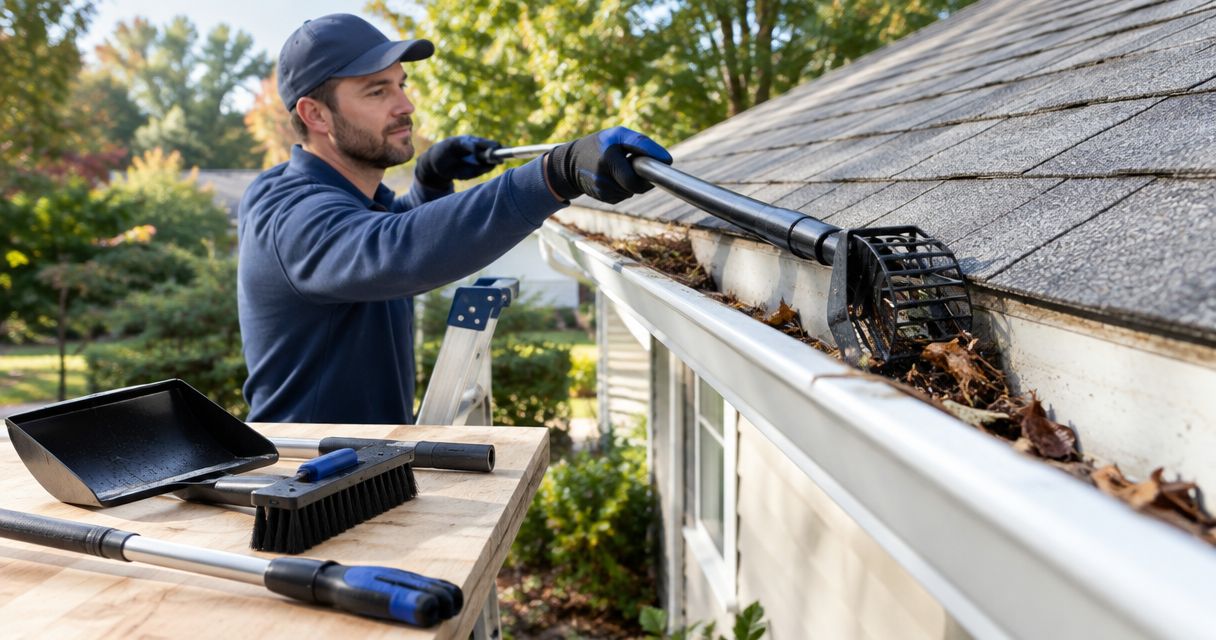
A gutter scoop lifts leaves, sludge, and other loose material out of the channel. Direct removal keeps that material from being deliberately washed toward the downspout. It also lets you inspect the exposed channel as you work.
Choose a scoop that fits between the gutter's sides and brackets without forcing it. Guards can prevent access, and removal should follow the guard manufacturer's instructions.
Gutter scoop pros:
- Removes bulky debris instead of redistributing it.
- Gives you direct control over where collected material goes.
- Allows visual inspection when you have safe access.
Gutter scoop cons:
- Elevated access introduces fall risk.
- Brackets, guards, and narrow channels interrupt the work.
- Scooping alone does not establish that the downspout drains.
Best for: Accessible gutters with wet leaves or accumulated sludge.
Place removed debris in a container rather than dropping it onto shrubs or a walkway. Do not lean sideways to extend your working area; reposition your access equipment instead.
Verdict: Choose a gutter scoop for direct debris removal only where safe access is already established.
2. Gutter vacuum attachment: best for ground-level dry cleanup
A gutter vacuum attachment connects a curved reach tube to a compatible vacuum. It draws loose material out of the channel while you work from below. The exact vacuum, attachment diameter, and intended debris determine whether the setup is suitable.
Dry leaves are a better match than a packed layer of wet sludge. Follow the vacuum's instructions for wet material, and stop if the attachment blocks rather than repeatedly forcing it through debris.
Gutter vacuum attachment pros:
- Allows ground-level operation within the equipment's reach.
- Collects debris instead of scattering it with water.
- Suits loose material that passes through the attachment.
Gutter vacuum attachment cons:
- Wet clumps and long needles can obstruct the tube.
- Overhead positioning is difficult without a clear view.
- Compatibility with your existing vacuum requires checking.
Best for: Loose, dry gutter debris reachable from stable ground.
Plan where the vacuum body and hose will sit. Neither should obstruct a public entrance or create a trip hazard, and an attachment touching the gutter is not proof that the channel is clear.
Verdict: Choose a gutter vacuum attachment for loose, dry debris; skip it as the sole answer to packed sludge.
3. Telescoping gutter claw: best for clumped debris within reach
A telescoping gutter claw uses a pole-operated gripping head to lift material from the channel. It can retrieve clumps that a water stream would otherwise push along the gutter. Its usefulness depends on whether the jaws can enter the channel and close around the debris.
A long pole does not provide unlimited control. Brackets, guards, and the gutter's position beneath the roof edge can prevent the head from reaching the material properly.
Telescoping gutter claw pros:
- Removes graspable debris without flushing it downstream.
- Allows ground-level work where reach and positioning permit.
- Targets a visible clump without washing the entire channel.
Telescoping gutter claw cons:
- Fine sediment remains after larger clumps are lifted.
- Pole flex and poor visibility complicate positioning.
- A gripping head can catch on gutter components.
Best for: Localized clumps in an open gutter within controlled pole reach.
Keep people away from the drop area and lower collected material deliberately. If the head catches, stop and inspect rather than pulling against a bracket or gutter edge.
Verdict: Choose a telescoping gutter claw for targeted extraction, not blind scraping along the whole gutter.
4. Telescoping hose wand: best for rinsing cleared gutters
A telescoping hose wand directs water into the gutter from below. After solid debris has been removed, water helps rinse loose residue and reveals whether flow reaches the outlet. A hose wand is not equivalent to a pressure washer.
Start with the equipment's appropriate flow setting and watch where the water goes. Overflow, leakage at a joint, or water backing up calls for inspection, not a stronger stream.
Telescoping hose wand pros:
- Reaches suitable gutters from ground level.
- Rinses residue after bulk debris removal.
- Helps you observe drainage during a controlled water check.
Telescoping hose wand cons:
- Can push leaves into the outlet or downspout.
- Creates splash and runoff around the work area.
- Does not extract packed debris or repair leaks.
Best for: A final rinse and drainage check after the channel is cleared.
Do not direct water upward beneath roofing or siding. Keep water away from electrical fixtures, and stop if you cannot see where the stream lands.
Verdict: Choose a telescoping hose wand as a finishing tool; skip flushing a gutter full of solids.
5. Gutter brush: best for light sediment in accessible channels
A gutter brush loosens residue through direct contact with the channel. It is useful after bulky material has been removed, particularly where a scoop leaves a thin layer behind. Select bristles appropriate for the surface and avoid abrasive force on coatings.
A channel-cleaning brush and an exterior gutter-washing brush serve different purposes. Neither should be treated as a downspout-clearing tool.
Gutter brush pros:
- Provides controlled contact with visible residue.
- Helps loosen material around accessible channel sections.
- Complements scooping and a controlled rinse.
Gutter brush cons:
- Loosened material still needs collecting or rinsing away.
- Brackets and guards restrict movement.
- Inappropriate bristles or force can damage finishes.
Best for: Light sediment remaining in an accessible gutter channel.
Check your work as you go. If residue resists brushing, determine whether it is dirt, staining, or deterioration before applying more force or a chemical cleaner.
Verdict: Choose a gutter brush for light finishing work; skip it for bulky blockages.
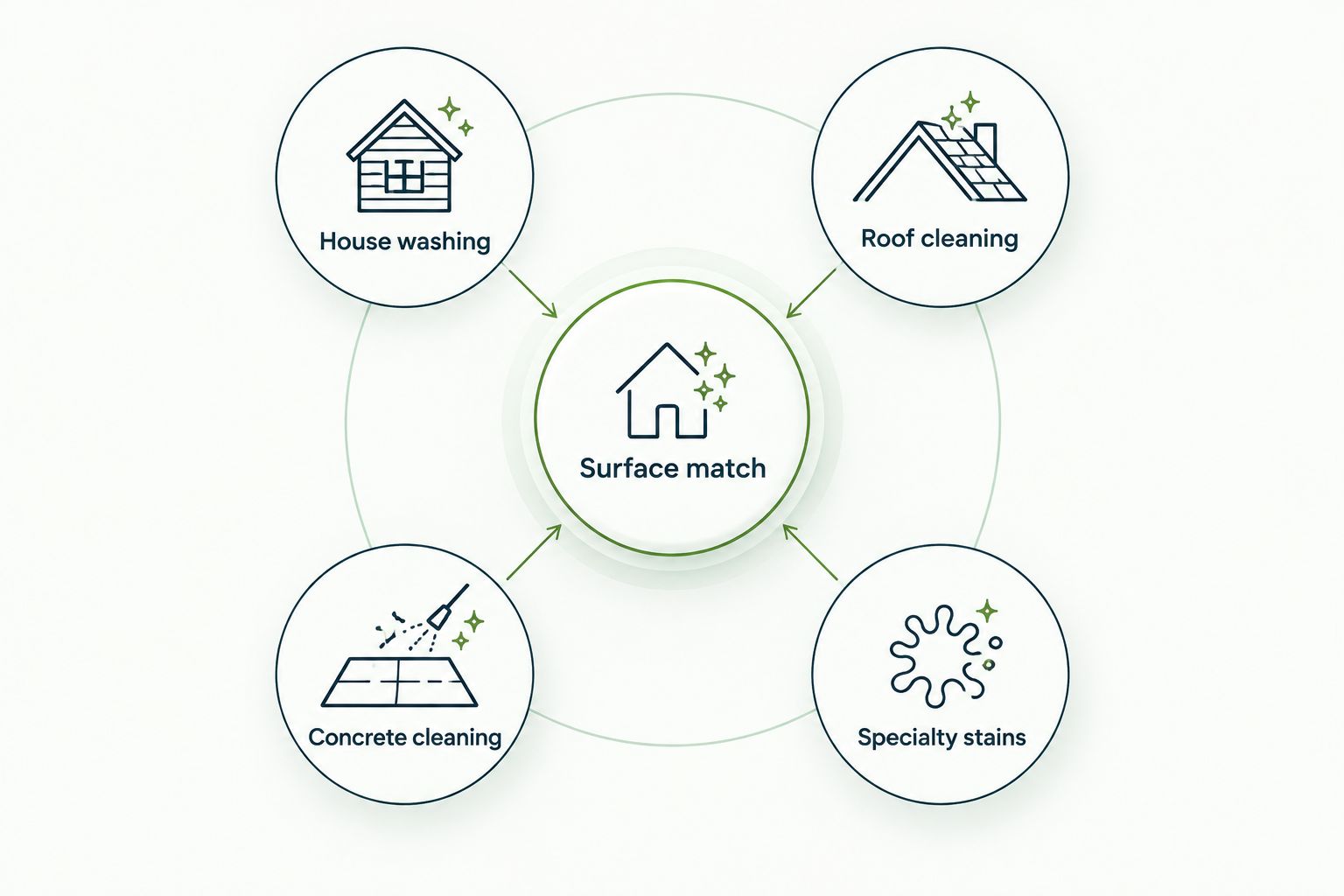
Match the cleaning method to the surface
Gutter debris removal, exterior washing, and stain treatment need different approaches. Southern Style Soft Wash offers exterior cleaning services across these surfaces; define each task separately when discussing a property.
- House washing: Low-pressure soft washing uses suitable cleaning chemistry rather than aggressive pressure on vulnerable siding.
- Roof cleaning: Match the method to the roofing material and its manufacturer's guidance; do not treat roofing like concrete.
- Concrete cleaning: Suitable pressure washing addresses surface buildup, with attention to concrete condition, joints, and nearby materials.
- Specialty stains: Red clay, rust, and other discoloration require identifying the stain and substrate before choosing treatment.
Sodium hypochlorite is used in exterior cleaning to treat organic growth, but it is not a substitute for physically removing gutter debris. Follow product directions, never mix it with acids or ammonia, and protect nearby materials.
Before chemical washing, move vulnerable items, rinse landscaping where appropriate, and manage runoff. A suitable neutralizer has a specific purpose; it does not replace controlled application and rinsing. Permanent discoloration or damaged coatings can improve without disappearing completely.
Safe access and considerate preparation
For a 2026 maintenance plan, settle access before selecting a tool. Ground-level work still requires awareness of overhead electrical lines, falling debris, and stable footing. Never use a pole where it can approach an electrical conductor.
OSHA's ladder guidance uses a setup ratio of 1 foot outward for every 4 feet of working height for a non-self-supporting ladder. Maintain 3 points of contact while climbing, and follow the ladder manufacturer's instructions. Those rules do not make an unsuitable access location safe.
- Move porch furniture, planters, and hoses before work starts.
- Keep doors, accessible routes, and business entrances usable.
- Arrange help for heavy furniture rather than asking an older homeowner to move it.
- Discuss landscaping protection and debris collection before washing.
- Stop if the gutter is loose, the ground is unstable, or the task requires overreaching.
No responsible contractor can promise zero risk. Ask how the access method, material condition, and property protection affect the work.
How we ranked these tool categories
This 2026 ranking prioritizes debris fit, visibility, controlled removal, and the ability to verify drainage. It places direct removal ahead of rinsing because solids need somewhere to go other than into a concealed blockage.
The order is a decision guide, not a claim of hands-on product testing. Manufacturer instructions and your gutter's condition take precedence over a category recommendation.
Which gutter cleaning tools should you choose?
Choose a gutter scoop for reachable wet buildup, a compatible vacuum attachment for loose dry leaves, and a hose wand only after solid debris is removed. Use a claw for graspable clumps and a brush for light remaining sediment.
If you cannot inspect the channel or establish safe access, stop shopping for a longer tool. Seek an appropriately equipped contractor and agree on whether the work includes debris removal, drainage checks, exterior washing, or repairs.
FAQ
What's the best gutter cleaning tool for wet leaves?
A gutter scoop is the strongest starting choice for wet leaves when safe access is established. It removes bulky material directly rather than pushing it toward the downspout.
Can I clean my gutters without a ladder?
Ground-level vacuum attachments, claws, and hose wands work where their reach and positioning suit the gutter. You still need a way to inspect the channel and confirm that debris has been removed.
Is a gutter vacuum better than a hose wand?
A gutter vacuum is better suited to collecting loose, dry debris; a hose wand is better suited to rinsing after debris removal. They perform different tasks rather than replacing each other.
Should I use a pressure washer inside my gutters?
Do not use a pressure washer as the default gutter-clearing tool. Remove debris first and follow the gutter manufacturer's cleaning guidance; pressure and spray direction can damage components or drive water into vulnerable areas.
Why does my gutter still overflow after cleaning?
A cleared channel does not rule out an obstructed downspout, incorrect slope, or another drainage problem. Inspect the outlet and drainage path instead of repeatedly adding water.
Will clearing my gutters remove the black streaks outside?
Clearing gutter debris does not remove exterior streaks automatically. Exterior staining needs separate assessment and surface-appropriate treatment, and complete removal is not guaranteed.
Does Southern Style Soft Wash offer more than gutter-related exterior washing?
Southern Style Soft Wash offers house, roof, concrete, and specialty stain cleaning for residential and commercial properties. Discuss gutter debris removal separately when defining the work.
What's the best gutter cleaning approach in 2026?
The best gutter cleaning approach in 2026 is to inspect, remove solid debris, and then check drainage with controlled water flow. Choose tools according to debris type, gutter access, and material condition.
One last thing
Check the outlet before calling the job finished. A clean-looking stretch of gutter can still feed water into an obstructed downspout.
Keep a note of where water backs up, where joints leak, and where staining remains. Those observations separate a cleaning task from a drainage repair and help you ask for the right work.