Best overall for concrete-focused work: a serviceable cold-water gas pressure washer. Best for occasional light cleaning: an electric pressure washer. Best for greasy hard surfaces: a hot-water pressure washer. This 2026 guide separates equipment worth buying from jobs that need soft washing, specialty treatment, or professional exterior cleaning.
- The best pressure washer for small business depends on surface condition, cleaning frequency, water supply, and equipment support.
- Cold-water gas pressure washers suit routine concrete cleaning; electric pressure washers suit occasional work near suitable power.
- Soft washing treats suitable house and roof surfaces without relying on aggressive pressure.
- Southern Style Soft Wash serves property owners needing house, roof, concrete, and specialty stain cleaning.
Why this matters
A small business owner buying cleaning equipment faces two different decisions: maintaining their own premises or cleaning other people's properties. Those jobs demand different levels of equipment, training, and responsibility. A machine suitable for occasional storefront maintenance is not automatically suitable for a paid exterior-cleaning route.
For owners in Troup and Coweta counties, Southern Style Soft Wash offers residential and commercial exterior cleaning. Southern Style Soft Wash is best for local property owners who want house, roof, concrete, and specialty stain cleaning handled as a service rather than an equipment purchase.
The central buying rule is simple: choose the right method for the surface, not one method for everything. More pressure does not solve every cleaning problem, and damaged siding or mortar can turn a maintenance task into a repair.
What makes the best pressure washer for small business?
Use these criteria before comparing equipment in 2026:
- Surface fit: Concrete, siding, roofing, painted trim, and deteriorated masonry need different treatment. Start with the work you actually intend to perform.
- Water flow: Gallons per minute, or GPM, describes water delivery. Check the machine's requirements against the supply and any attachment you intend to use.
- Pressure control: Pounds per square inch, or PSI, describes pressure. Nozzle selection, working distance, and equipment settings also affect how aggressively water reaches a surface.
- Serviceability: Look for accessible maintenance instructions, replacement components, and a clear repair route. Compare pump and engine support, not just headline specifications.
- Site compatibility: Check electricity, water access, drainage, ventilation, storage, and transport before committing to equipment.
- Protection and chemistry: Plan for landscaping, electrical fixtures, pedestrian access, cleaning-product compatibility, and lawful wastewater handling.
Do not choose by maximum PSI alone. A pressure washer is part of a cleaning process, not a substitute for understanding the material or identifying the stain.
Small-business cleaning options at a glance
This is a use-case ranking of equipment types and service options, not a claim that one unexamined model outperforms another. For a 2026 purchase, compare the exact manufacturer's specifications and instructions against your intended work.
| Rank and option | Best for | Standout feature | Key limitation |
|---|---|---|---|
| 1. Cold-water gas pressure washer | Routine concrete-focused cleaning | Operates without an electrical connection at the work area | Exhaust, noise, and maintenance require planning |
| 2. Electric pressure washer | Occasional light premises maintenance | Avoids a gasoline engine at the cleaning location | Depends on suitable electrical access and safe connections |
| 3. Hot-water pressure washer | Greasy, compatible hard surfaces | Adds heat to the cleaning process | Adds equipment complexity and material-compatibility checks |
| 4. Soft-wash system | Suitable siding and roof treatments | Uses cleaning chemistry and low-pressure application | Is not a substitute for every concrete-cleaning task |
| 5. Professional exterior-cleaning service | Owners who need the work handled | Transfers the cleaning task to a service provider | Requires coordinating scope, access, and timing |
Property managers comparing equipment for multiple sites can also use the guide to commercial pressure washers for property managers.
1. Cold-water gas: best for routine concrete cleaning
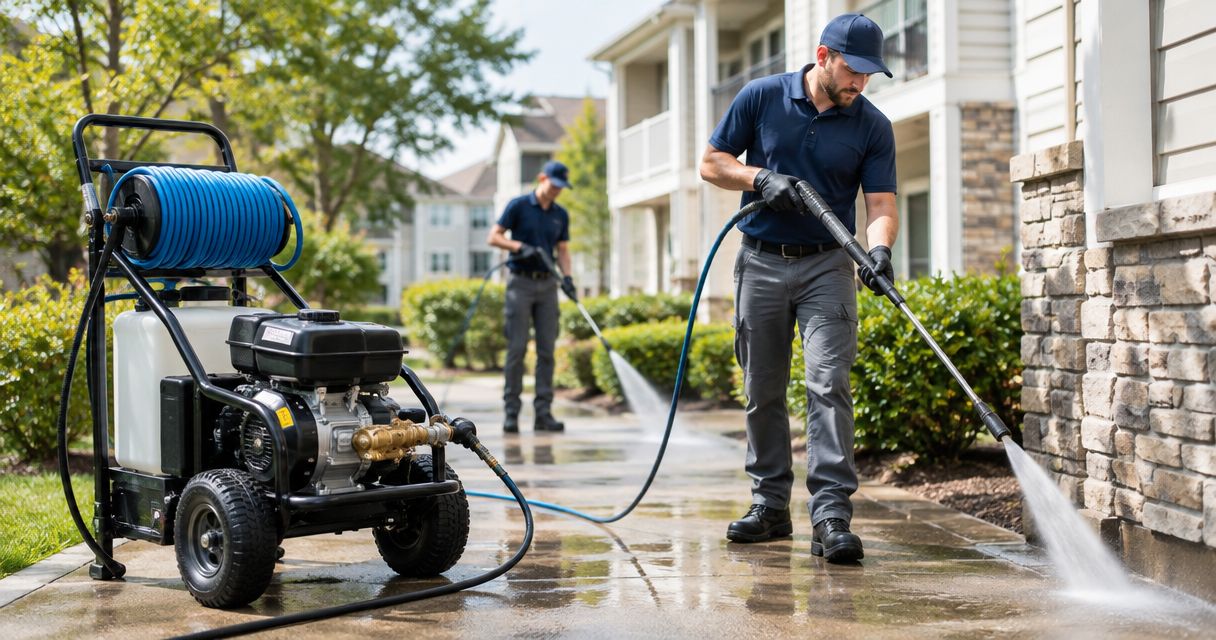
A cold-water gas pressure washer uses an engine-driven pump without heating the cleaning water. It belongs at the top of this guide for businesses focused on suitable concrete surfaces, where pressure washing is an appropriate method.
Choose the actual machine around your water supply, cleaning attachments, and maintenance arrangements. A gas engine removes dependence on an electrical outlet, but it does not remove the need for adequate water or safe operation.
Cold-water gas pressure washer pros:
- Works without an electrical connection at the cleaning location.
- Supports pressure-washing tasks on suitable hard surfaces.
- Allows attachment selection around the machine's documented flow and pressure.
Cold-water gas pressure washer cons:
- Produces exhaust and must not run inside enclosed spaces.
- Requires engine and pump maintenance.
- Does not heat water for grease-focused cleaning.
Best for: Small cleaning businesses whose core work is suitable concrete, or property owners with recurring hard-surface maintenance needs.
Buy: Choose cold-water gas equipment when concrete cleaning is the main job and you can manage water supply, transport, maintenance, and safe outdoor operation.
2. Electric: best for occasional light maintenance
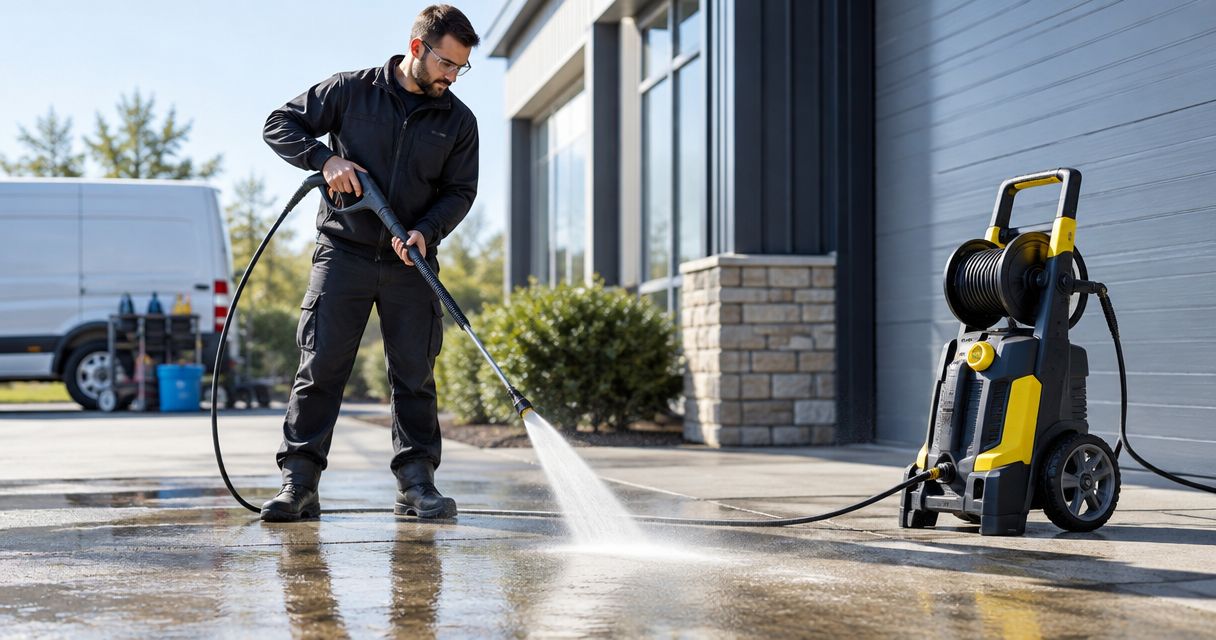
An electric pressure washer uses an electric motor to drive its pump. It fits an owner maintaining a limited area near suitable electricity, rather than someone choosing equipment solely for a continuous cleaning workload.
Read the electrical requirements before buying. Outdoor work combines water with electrical equipment, so appropriate ground-fault protection and connections kept away from water are part of the setup, not optional extras.
Electric pressure washer pros:
- Avoids gasoline-engine exhaust at the point of use.
- Removes gasoline-engine maintenance from the cleaning routine.
- Fits tasks where suitable power and water are already accessible.
Electric pressure washer cons:
- Requires an appropriate electrical supply and safe cable management.
- A particular model's operating limits can restrict the workload.
- Still damages unsuitable surfaces when used aggressively.
Best for: Storefront owners and homeowners handling occasional, manageable cleaning on compatible surfaces.
Buy: Choose electric equipment for defined light-duty tasks after checking power requirements and the manufacturer's operating limits. Skip it as an automatic choice for every commercial job.
3. Hot-water: best for grease-focused hard-surface work
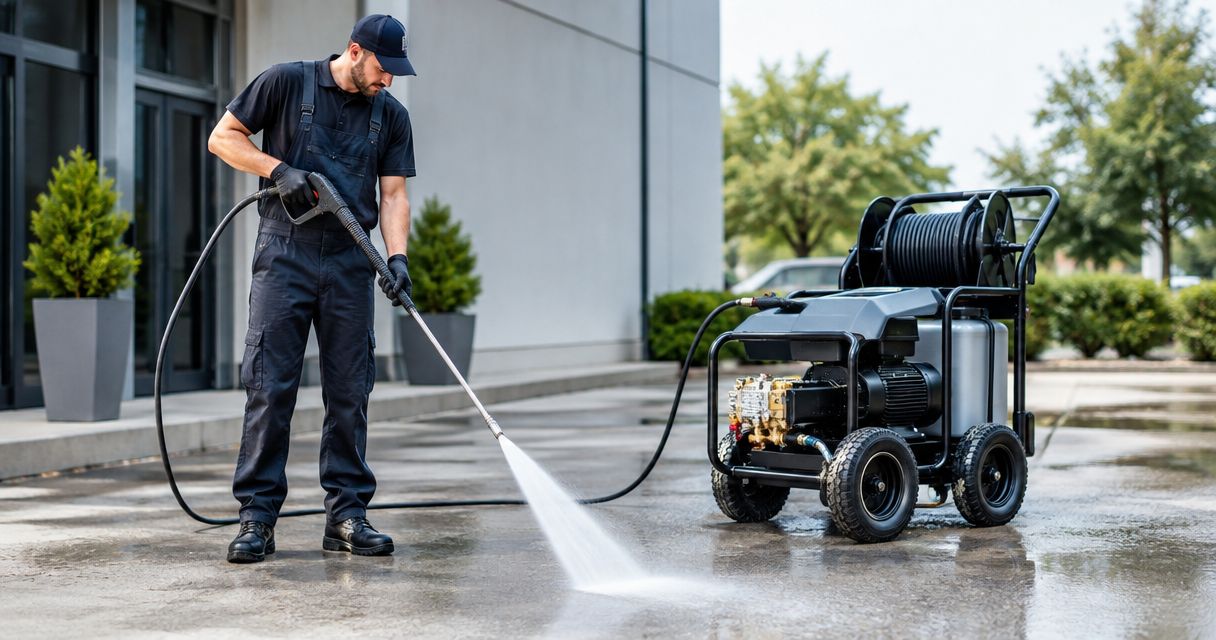
A hot-water pressure washer adds a heating system to pressure washing. Heat helps loosen grease, making this equipment relevant when greasy contamination on compatible hard surfaces is central to the workload.
That advantage does not make hot water the default for siding, roofing, paint, or every stain. Temperature, chemistry, runoff, and surface condition all need separate checks.
Hot-water pressure washer pros:
- Adds heat for grease-focused cleaning.
- Combines pressure, water flow, and temperature in one cleaning process.
- Addresses a different workload from routine cold-water rinsing.
Hot-water pressure washer cons:
- Adds heater-related operation and maintenance.
- Heat is unsuitable for some materials and finishes.
- Greasy wastewater still requires a disposal plan.
Best for: Businesses with recurring grease-cleaning work on surfaces approved for the intended temperature and treatment.
Buy: Choose hot-water equipment when grease removal is a defined service or maintenance need. Hold if you cannot identify a recurring job that requires heat.
4. Soft wash: best for suitable siding and roof treatments
A soft-wash system applies cleaning solution at low pressure to suitable exterior surfaces. It is included because business owners often search for a pressure washer when the real task is treating organic growth on siding or roofing.
Sodium hypochlorite is used in some exterior-cleaning solutions to treat organic growth. Product selection, dilution, application, and rinsing must follow the relevant instructions and surface guidance. Soft washing is a different method, not permission to apply the same chemical everywhere.
Soft-wash system pros:
- Reduces reliance on aggressive pressure for suitable surfaces.
- Uses chemistry to address organic contamination.
- Provides a method distinct from concrete pressure washing.
Soft-wash system cons:
- Requires chemical handling, compatibility checks, and plant protection.
- Does not replace every hard-surface cleaning process.
- Treatment cannot repair deteriorated materials.
Best for: Trained exterior-cleaning operators treating compatible house and roof surfaces.
Buy: Choose a soft-wash system only with the training and protection procedures to use it. Skip high-pressure roof cleaning as a substitute for a suitable low-pressure method.
5. Professional service: best for owners avoiding equipment work
A professional exterior-cleaning service is the alternative to owning, storing, and operating equipment. Southern Style Soft Wash provides pressure washing, soft washing, and specialty stain cleaning for residential and commercial property owners around LaGrange, Newnan, Valley, and surrounding areas.
Service selection still requires scrutiny. Ask how the contractor distinguishes concrete cleaning, house washing, roof treatment, and specialty stain work rather than accepting one method for the whole property.
Professional exterior-cleaning service pros:
- Removes equipment operation from the property owner's task list.
- Allows the scope to include several exterior surface types.
- Avoids purchasing a machine for a single maintenance project.
Professional exterior-cleaning service cons:
- Requires coordinating access and the cleaning scope.
- Does not give you equipment for independent use later.
- Cannot guarantee removal of every stain or elimination of every risk.
Best for: Busy business owners, commercial property managers, and homeowners who want exterior cleaning handled rather than added to their responsibilities.
Buy: Choose professional service when the project involves several materials, roof work, difficult stains, or equipment responsibilities you do not want.
Match the method before setting up
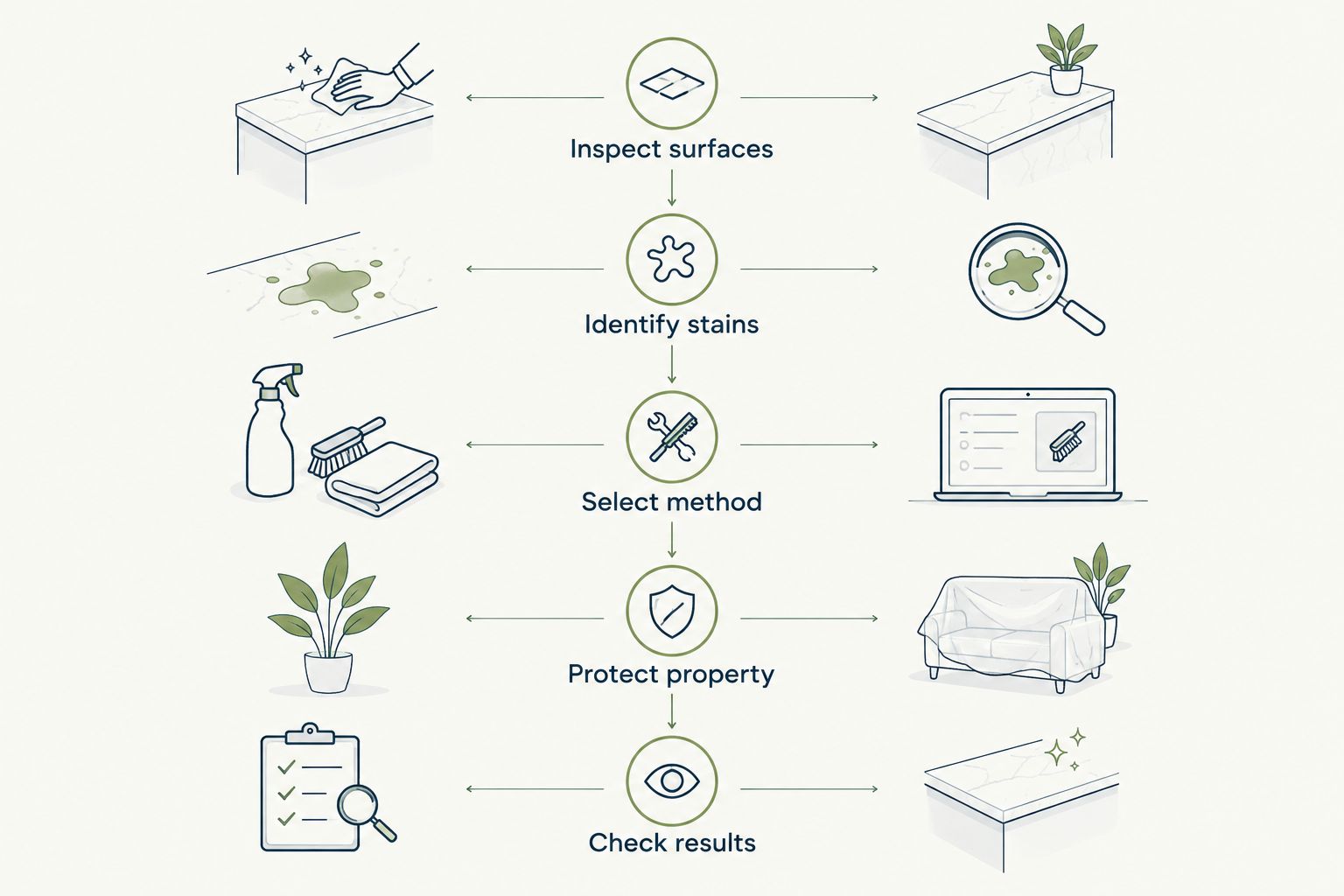
Your 2026 equipment decision should follow the surface assessment. Use this sequence before cleaning begins:
- Inspect surfaces: Check coatings, cracks, loose mortar, damaged siding, roof condition, and vulnerable fixtures.
- Identify stains: Separate organic growth from oil, rust, red clay, and ordinary loose dirt.
- Select method: Choose suitable pressure washing, low-pressure soft washing, or specialty stain treatment.
- Protect property: Prepare landscaping, furniture, electrical areas, drainage, and pedestrian routes.
- Check results: Inspect a small test area before continuing and assess remaining discoloration honestly.
Pressure and nozzle choice
Common spray tips include 0-degree, 25-degree, and 40-degree patterns. Those angles describe the spray pattern, not a guarantee of safe pressure. A wider pattern still causes damage when the machine, distance, or material is wrong.
Do not use a 0-degree tip as a shortcut for stubborn marks on vulnerable surfaces. Match the nozzle to the machine and follow the surface manufacturer's cleaning guidance; pressure alone does not identify or treat a stain.
Protection and considerate preparation
Before applying cleaning chemicals, identify nearby plants and follow product instructions for protection and rinsing. Landscaping rinsing and a suitable neutralizer belong in the plan where appropriate; neither makes careless chemical use safe.
Agree on porch-furniture handling before work starts, especially when an older homeowner cannot move heavy items. Keep hoses out of access routes, protect vulnerable fixtures, and establish how people will enter the building during cleaning. No responsible contractor can promise zero risk.
How the options were ranked
The 2026 ranking follows surface fit first, then site compatibility, maintenance, and the work each option actually solves. Cold-water gas leads for concrete-focused use; electric, hot-water, and soft-wash equipment each occupy a different job slot.
Professional service is a separate ownership decision. It belongs in the comparison because buying equipment is not necessary when your objective is a clean property rather than a cleaning business.
Which option should you choose?
For a concrete-focused cleaning business, start by evaluating serviceable cold-water gas equipment. Confirm water requirements and attachment compatibility before comparing maximum pressure. For occasional premises maintenance, evaluate electric equipment instead.
For a property owner seeking broader exterior cleaning in 2026, Southern Style Soft Wash offers house, roof, concrete, and specialty stain services. Choose the service scope around the surfaces and stains—not around the assumption that everything needs pressure washing.
Discuss your exterior cleaning needs
Choose a cleaning scope around your property's surfaces, stains, and access requirements.
FAQ
What's the best pressure washer for small business owners?
A serviceable cold-water gas pressure washer is the starting choice for concrete-focused cleaning work. Electric equipment fits occasional light maintenance, while grease-focused work and suitable roof or siding treatment call for different methods.
Should I buy a gas or electric pressure washer for my shop?
Choose electric for occasional compatible cleaning near suitable power; evaluate gas equipment for work without an electrical connection. Check the exact machine's water requirements, operating limits, and maintenance instructions before buying.
Is higher PSI always better for business cleaning?
No. PSI describes pressure, but water flow, spray pattern, distance, chemistry, and surface condition also affect the cleaning result. Excessive pressure can damage materials without solving the stain.
Can I use one pressure washer on concrete, siding, and a roof?
Do not assume one pressure-washing method is appropriate for all three surfaces. Suitable concrete can require pressure washing, while compatible siding and roof treatments often call for low-pressure methods and material-specific guidance.
Do I need hot water to remove oil stains from concrete?
Hot water is useful for grease-focused cleaning, but it does not guarantee complete oil-stain removal. Stain depth, concrete condition, cleaning chemistry, and wastewater handling also matter.
How should exterior cleaning protect my landscaping?
Plan landscaping protection before applying chemicals, including rinsing and a suitable neutralizer where appropriate. Follow product instructions and control runoff rather than treating plant protection as a final rinse alone.
When should I hire Southern Style Soft Wash instead of buying equipment?
Hire Southern Style Soft Wash when you want residential or commercial exterior cleaning handled as a service in its West Georgia and East Alabama service area. Its stated services include house, roof, concrete, and specialty stain cleaning.
One last thing
A remaining mark is not automatically evidence that the pressure was too low. Oil, rust, red clay, weathering, and damaged coatings are different problems; some require specialty treatment, and some improve without disappearing completely.
If a stain remains, reassess the stain and surface before increasing pressure. That decision protects the property more effectively than chasing a uniformly bright finish at any cost.