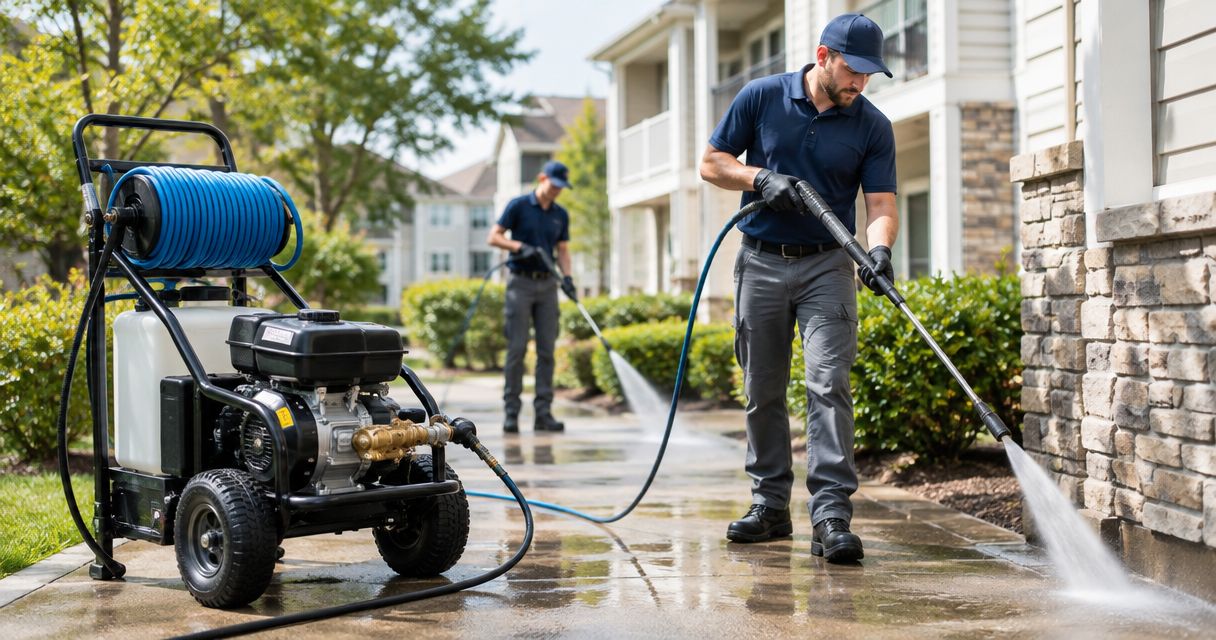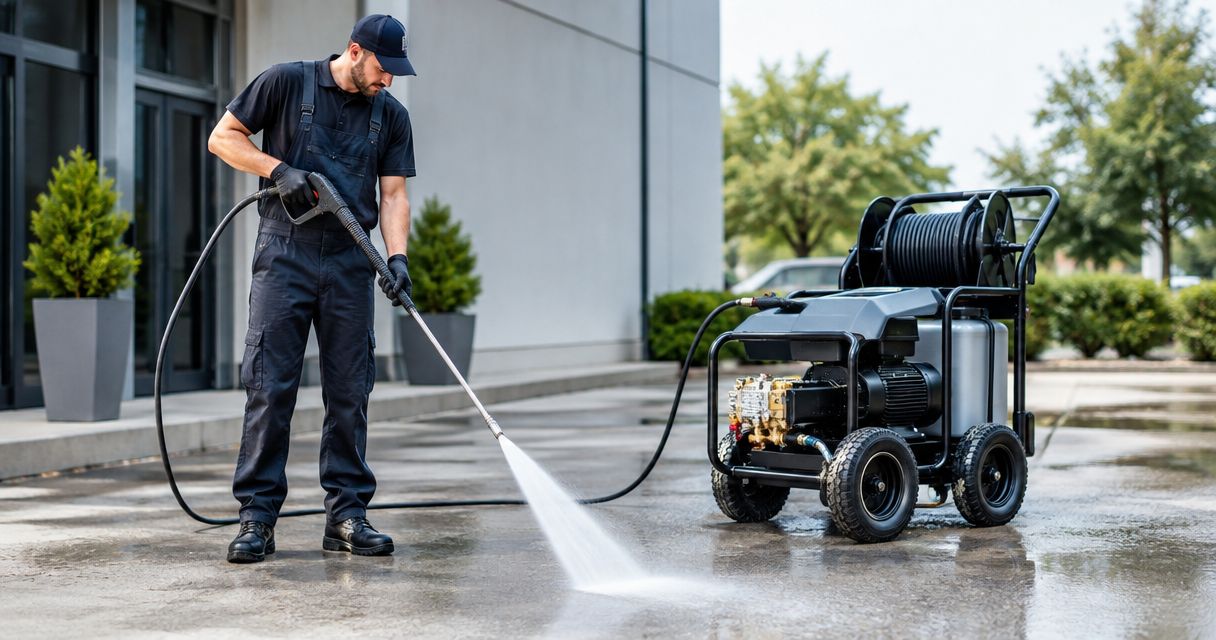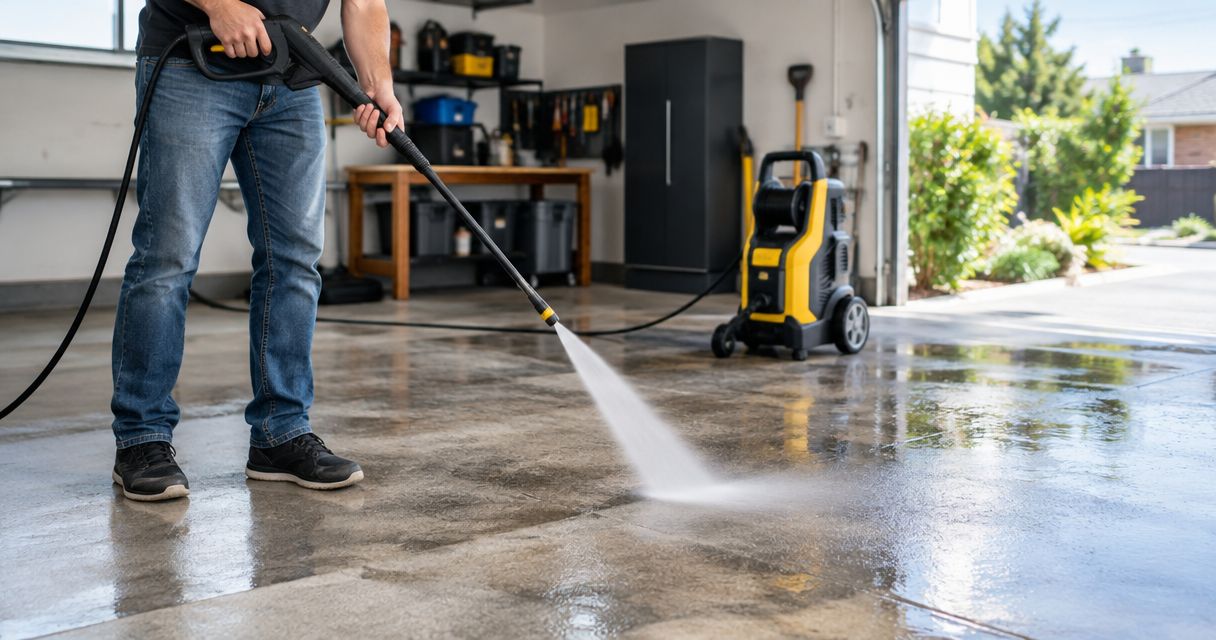
Best overall for routine garage floor cleaning: a corded electric pressure washer. Best for larger, open-air concrete areas: a gas pressure washer. Best for stubborn stains: surface-specific treatment, not more pressure. This 2026 guide helps you choose equipment without damaging the floor or sending dirty water where it does not belong.
- The best pressure washer for garage floor cleaning is a corded electric model when the concrete tolerates pressure and runoff is controlled.
- Gas pressure washers belong outdoors; never operate a gasoline engine inside a garage.
- Oil stains need concrete-compatible degreaser, not simply a stronger pressure washer.
- Southern Style Soft Wash suits local property owners seeking method-matched exterior cleaning.
Why this matters
A garage floor is not the same cleaning job as an open driveway. Water can collect against walls, reach electrical equipment, or carry oil residue into a drain. Paint, sealers, and damaged concrete also change which methods are suitable.
For homeowners and commercial property owners in Troup and Coweta counties, the surface and wastewater plan should decide the equipment—not the largest pressure rating. Southern Style Soft Wash offers residential and commercial exterior cleaning, including concrete and specialty stain cleaning. That method-matched approach matters whether you handle a garage yourself or discuss adjacent exterior areas with a contractor.
What makes the best garage floor pressure washer?
Use these criteria before comparing machines for your 2026 cleaning project:
- Surface compatibility: Check whether the floor is bare concrete, painted, sealed, or coated. Follow the coating manufacturer's cleaning instructions.
- Pressure control: Choose equipment that lets you reduce cleaning intensity. Nozzle selection and working distance matter alongside the machine's rating.
- Water delivery: Compare rated flow as well as pressure. Pressure loosens contamination; water carries the loosened material away.
- Attachment compatibility: Match a surface cleaner to the washer's stated flow, pressure, and connector requirements.
- Safe operation: Keep gasoline engines outdoors. Use electrical equipment with the protection and connections specified by its manufacturer.
- Runoff management: Know how you will contain, collect, and dispose of wash water before starting.
A nozzle's spray angle also matters. A 0-degree nozzle produces a concentrated jet; 25-degree and 40-degree nozzles produce wider fans. Those markings describe spray patterns, not a guarantee that any nozzle is safe for your floor.
Garage floor cleaning options at a glance
This 2026 comparison ranks equipment types and cleaning approaches rather than treating an unverified model specification as a buying recommendation.
| Rank and option | Best for | Standout feature | Key limitation |
|---|---|---|---|
| 1. Corded electric pressure washer | Routine cleaning of sound, uncoated residential concrete | No gasoline engine exhaust at the machine | Electrical protection, water containment, and surface compatibility still matter |
| 2. Gas pressure washer | Larger concrete areas with outdoor machine placement | Equipment choices suited to more demanding concrete work | Engine must stay outdoors; stronger equipment increases damage risk when misused |
| 3. Specialty stain treatment | Oil, rust, and other stains that rinsing leaves behind | Chemistry addresses the type of contamination | Incorrect chemicals can damage coatings, concrete, or nearby materials |
| 4. Manual cleaning | Floors whose coating instructions restrict pressure washing | Direct control over scrubbing and moisture | Requires physical effort and does not guarantee stain removal |
1. Corded electric: best pressure washer for routine garage cleaning
A corded electric pressure washer is the default choice for routine dirt on sound, uncoated concrete when you can manage the water safely. It avoids a gasoline engine at the work area. It still needs careful setup around outlets, extension connections, walls, and stored belongings.
For your 2026 shortlist, compare adjustable cleaning control, rated water flow, hose reach, and permitted attachments. Do not assume that every electric model accepts the surface cleaner you already own.
Corded electric pressure washer pros:
- No gasoline engine exhaust at the machine.
- Suitable for routine concrete washing when the surface permits it.
- Can support controlled cleaning with compatible nozzles and attachments.
Corded electric pressure washer cons:
- Requires suitable electrical protection and dry connections.
- Water output still needs containment inside a garage.
- Model capabilities vary; attachment compatibility is not automatic.
Keep electrical connections away from standing water and follow the manufacturer's instructions for ground-fault protection. Never spray receptacles, garage-door controls, appliances, or exposed wiring.
Best for: Homeowners cleaning ordinary dirt from sound, uncoated concrete.
Verdict: Buy a corded electric model if the floor permits pressure washing and you have a workable drainage and electrical-safety plan.
2. Gas: best pressure washer for larger outdoor-connected areas
A gas pressure washer belongs outside, even when its hose reaches a garage floor. Opening the garage door does not make indoor engine operation safe. Carbon monoxide from gasoline engines can cause fatal poisoning.
Gas equipment makes sense when your project includes a larger driveway, apron, or other concrete area as well as the garage. Compare the actual rated flow, pressure adjustment, hose arrangement, and attachment requirements rather than choosing by engine type alone.
Gas pressure washer pros:
- Does not require an electrical supply for the engine.
- Offers equipment choices for demanding concrete-cleaning work.
- Can serve garage-adjacent exterior areas with appropriate setup.
Gas pressure washer cons:
- Requires outdoor placement away from openings and air intakes.
- Adds fuel handling, exhaust, noise, and engine maintenance.
- Aggressive cleaning can etch concrete or lift a vulnerable coating.
Plan hose routing so it does not create a trip hazard across entrances. Never bring the engine indoors to shorten the hose run.
Best for: Larger concrete projects with safe outdoor machine placement and controlled wastewater handling.
Verdict: Hold unless your project needs this equipment and you can operate it outdoors without exposing people to exhaust.
3. Specialty treatment: best approach for stubborn garage stains
A pressure washer removes loosened material; it does not replace the chemical treatment needed for every stain. Oil, rust, and tracked-in red clay are different cleaning problems. Identify the contamination before selecting a cleaner.
For oil residue, start with a concrete-compatible degreaser and follow its label for application, agitation, rinsing, and disposal. This guide to degreasers for oil stains on concrete explains why the cleaner matters as much as the washer.
Specialty stain treatment pros:
- Matches the cleaner to the contamination.
- Reduces the temptation to attack a stain with concentrated pressure.
- Can be combined with controlled scrubbing and rinsing.
Specialty stain treatment cons:
- Some cleaners are unsuitable for coatings or surrounding materials.
- Old contamination can remain visible after treatment.
- Chemical residues complicate wastewater collection and disposal.
Southern Style Soft Wash offers specialty stain cleaning among its exterior services. For garage-related work, describe the floor finish, stain history, and access before agreeing on a method or scope.
Best for: Stains that remain after routine cleaning, especially when their cause is known.
Verdict: Buy the appropriate treatment only after checking surface compatibility; skip stronger pressure as a substitute for diagnosis.
4. Manual cleaning: best option when floor coatings restrict pressure
Manual cleaning means sweeping, applying a compatible cleaner, scrubbing with an appropriate brush, and removing dirty liquid. It is the first option to consider when a coating manufacturer restricts pressure washing or the garage cannot handle a large rinse-water load.
For a painted, sealed, or coated floor, start with its maintenance instructions. Do not treat the word concrete as permission to pressure wash everything attached to it.
Manual cleaning pros:
- Gives direct control over where moisture goes.
- Supports targeted treatment rather than washing the entire garage.
- Avoids concentrated pressure against vulnerable coating edges.
Manual cleaning cons:
- Requires more physical scrubbing.
- Still needs chemical compatibility checks.
- Deep stains and damaged coatings can remain visible.
For older homeowners, moving heavy cabinets or stored appliances is not a sensible prerequisite for a small cleaning job. Arrange help, clear a manageable area, and keep a dry walking route available.
Best for: Coated floors with restrictive cleaning instructions or garages with difficult water containment.
Verdict: Buy a compatible manual-cleaning setup first; skip pressure washing until the floor's instructions allow it.
How we ranked the options
The ranking prioritizes surface compatibility, controllable cleaning, safe operation, and wastewater handling. Corded electric equipment leads for routine residential concrete; gas equipment fits a narrower outdoor-operated use case. Specialty treatment and manual cleaning outrank either machine when the stain or coating demands them.
Southern Style Soft Wash's exterior-cleaning positioning follows the same distinction: suitable pressure washing for compatible surfaces, low-pressure soft washing where appropriate, and separate treatment for specialty stains. One machine or chemical is not the right answer for every surface.
Prepare the garage before you wash
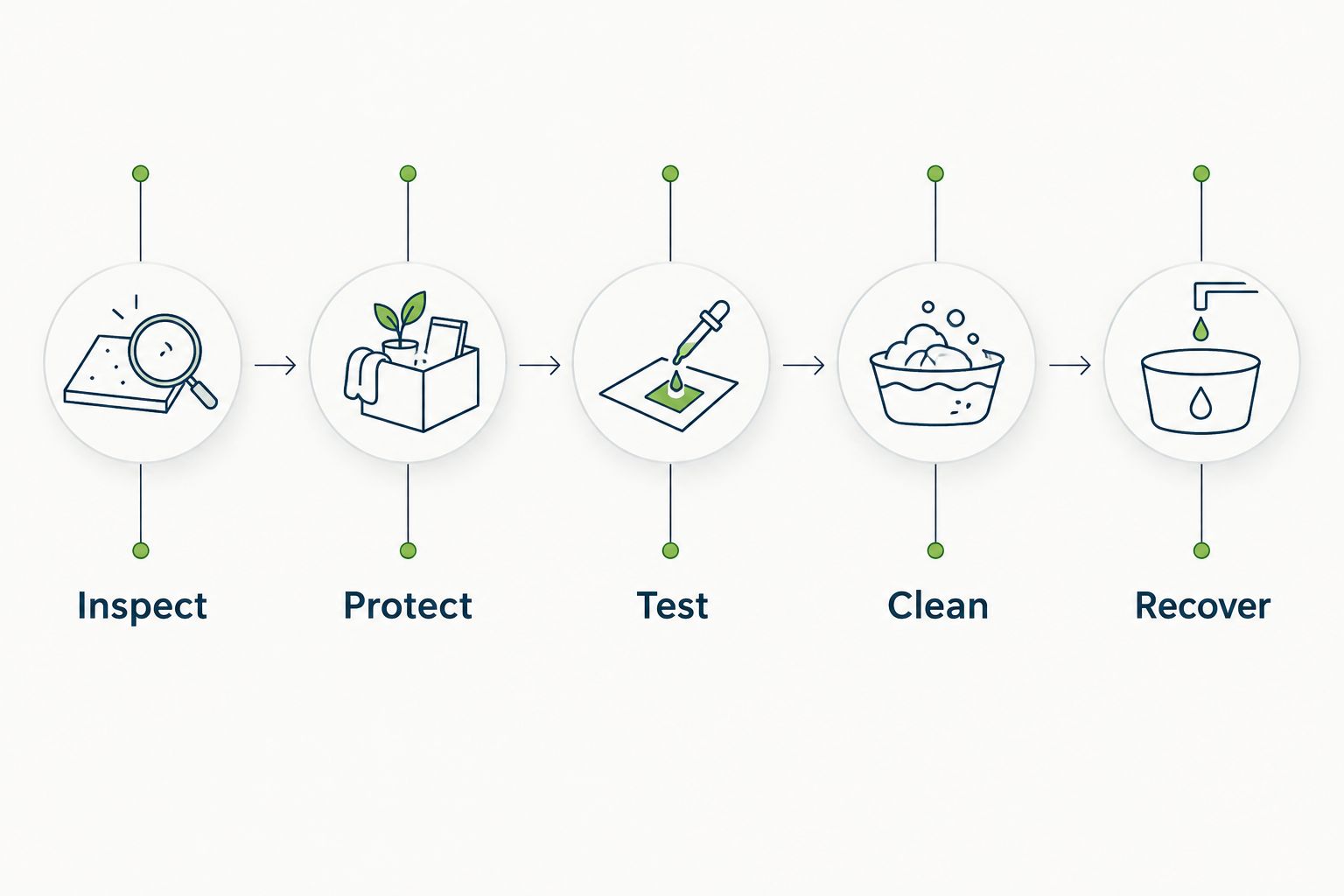
Use this sequence before any pressure-washing attempt. Preparation prevents a cleaning job from becoming a water-management problem.
- Inspect: Look for loose coatings, flaking concrete, cracks, open joints, and moisture-sensitive areas. Resolve uncertainty about the finish before applying chemicals.
- Protect: Remove loose items, cover or avoid vulnerable equipment, and plan help with heavy belongings. Keep doors, wall bases, and electrical components out of the spray path.
- Test: Try the approved method on an inconspicuous area. Let it dry before judging whether it changed the finish.
- Clean: Work in manageable sections, using the cleaner's label and equipment instructions. Avoid driving water toward interior walls or adjoining rooms.
- Recover: Collect dirty water with equipment rated for wet pickup or another suitable containment method. Dispose of it according to local requirements.
When washing extends onto the driveway or near planting beds, protect landscaping from overspray and chemical runoff. Rinsing plants before and after exposure and using an appropriate neutralizer can be part of the protection plan, depending on the cleaning chemistry. Neither step makes uncontrolled discharge acceptable.
Choose chemistry for the stain, not the machine
Sodium hypochlorite is used in exterior cleaning to address organic growth. It is not a substitute for a degreaser on garage oil stains. Rust and mineral-related discoloration need their own surface-compatible treatment.
Never mix cleaning chemicals, including bleach with acids or ammonia. Follow each product's label, wear the specified protection, and keep people and pets away from the active cleaning area.
Low-pressure soft washing, suitable pressure washing, and specialty stain treatment solve different problems. House siding and roofs require different reasoning from a concrete garage floor; commercial entrances also need pedestrian access and runoff planning. Do not transfer a garage-cleaning method to those surfaces without checking compatibility.
Which garage floor cleaning option should you choose?
Choose corded electric equipment for routine cleaning of sound, uncoated concrete when electricity and wastewater can be managed safely. Choose gas only for a project that justifies it, with the engine outdoors. Choose specialty treatment for a specific stain and manual cleaning when the finish restricts pressure.
Before committing to equipment in 2026, answer three questions: What is the floor finish? What caused the dirt or stain? Where will the dirty water go? An unclear answer means the method needs more planning—not more pressure.
FAQ
What's the best pressure washer for garage floor cleaning?
A corded electric pressure washer is the default choice for routine cleaning of sound, uncoated concrete when you can control runoff. Coated floors, difficult stains, and poor drainage can make manual cleaning or specialty treatment the better choice.
Is a gas pressure washer better than electric for a garage?
A gas pressure washer is not automatically better for a garage floor. Compare rated flow, cleaning control, and attachment compatibility, and keep every gasoline engine outdoors away from openings and air intakes.
What pressure should I use on my garage floor?
Use the least aggressive method that cleans the surface without changing its finish. Follow the floor and equipment manufacturers' instructions, test an inconspicuous area, and do not assume one pressure setting suits every concrete floor.
Can I pressure wash an epoxy-coated garage floor?
Pressure wash an epoxy-coated garage floor only if its coating instructions permit it. A compatible cleaner and controlled manual scrubbing are the better starting point when the coating's requirements are uncertain.
Will a pressure washer remove old oil stains from concrete?
A pressure washer does not guarantee removal of old oil stains from concrete. Use an appropriate degreaser and controlled cleaning; absorbed contamination can improve without disappearing completely.
Can I run a gas pressure washer with the garage door open?
No, do not run a gasoline-powered pressure washer inside a garage, even with the door open. Carbon monoxide can accumulate or enter occupied spaces; keep the engine outdoors and away from openings.
Can I wash garage cleaning water into the street?
Do not direct garage wash water into the street or a storm drain. Oil, cleaning chemicals, and other contaminants require containment and disposal that follows local requirements.
One last thing
Judge the test patch after it dries. Wet concrete can hide remaining discoloration or changes to the finish, so an immediate wet comparison is not enough to evaluate the result.
For your 2026 cleaning plan, aim for a cleaner, usable floor rather than an unsupported promise of complete stain removal. No responsible contractor can promise zero risk, and adding pressure to chase the last mark can leave a permanent change to the surface.