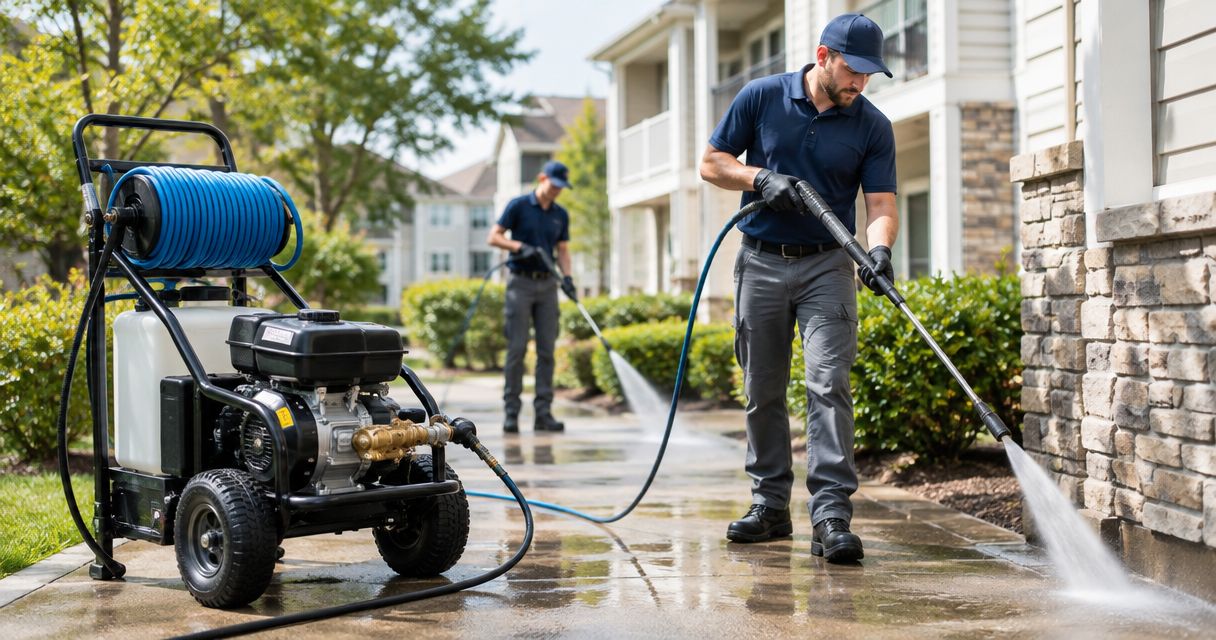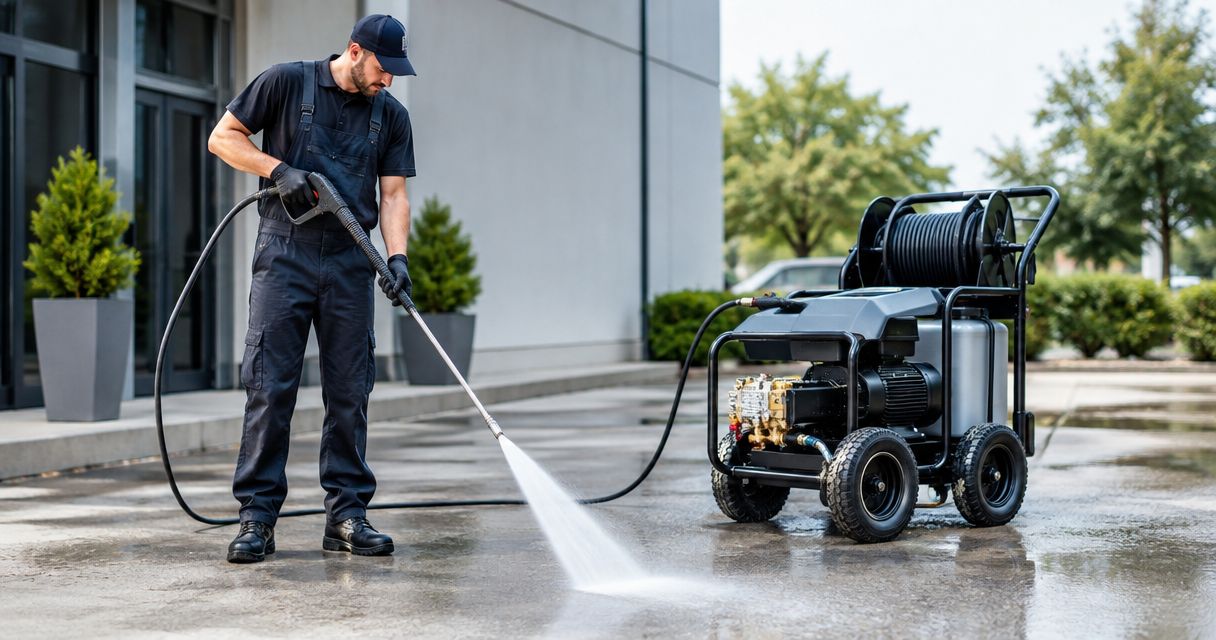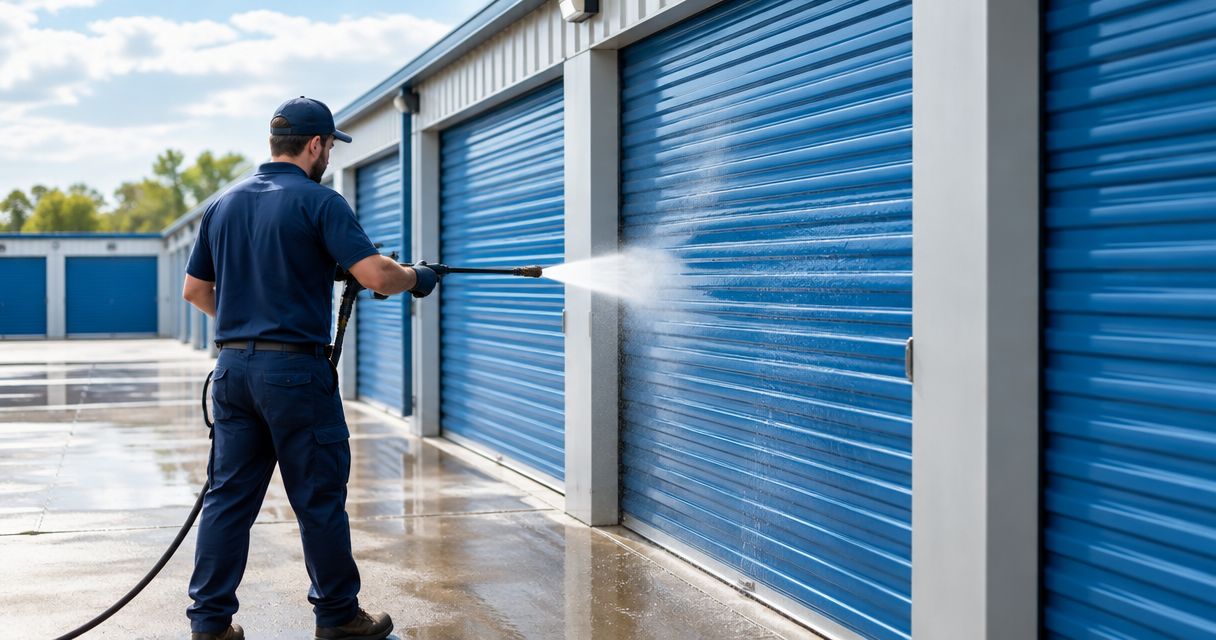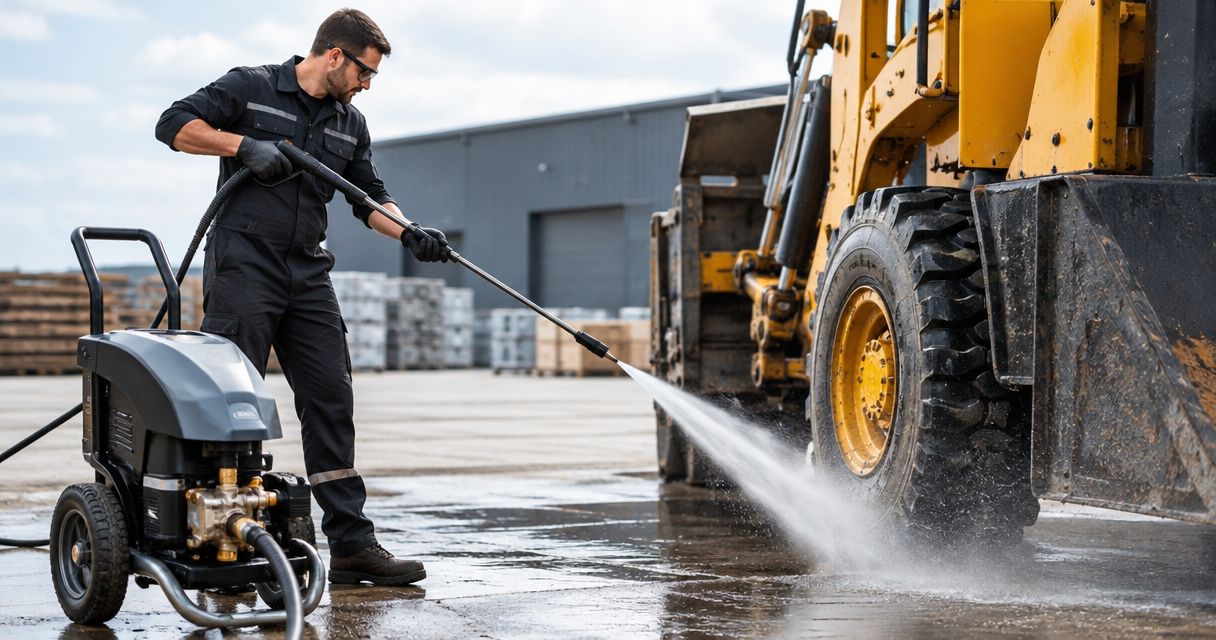
Best overall for outdoor concrete: a gas-powered cold-water pressure washer. Best for greasy hard surfaces: a hot-water pressure washer. Best for sites with suitable electrical access: an electric pressure washer. This 2026 guide compares industrial equipment by the work it fits, not by the biggest pressure figure.
- The best industrial pressure washer matches the surface, soil, water supply, and working conditions—not just pressure.
- Choose hot-water equipment for grease; choose cold-water equipment for suitable outdoor concrete cleaning.
- Southern Style Soft Wash is best for property owners seeking exterior cleaning services rather than equipment ownership.
- House washing, roof cleaning, and specialty stain treatment need different methods; industrial pressure is not a universal solution.
Why this matters
An industrial pressure washer is equipment, not a complete cleaning method. Pressure loosens material, water carries it away, and cleaning chemistry addresses particular soils. Using more force does not solve every stain—and it can damage the surface underneath.
For homeowners and commercial property owners in Troup and Coweta counties, the first decision is whether you need equipment or a finished cleaning job. Southern Style Soft Wash provides residential and commercial exterior cleaning, including house, roof, concrete, and specialty stain services. That service route is different from buying a machine and taking responsibility for setup, operation, and maintenance.
Southern Style Soft Wash is best for property owners seeking exterior cleaning services rather than equipment ownership. If you are buying machinery in 2026, start with the surfaces you maintain and the soil you need to remove.
What makes the best industrial pressure washer
Use these criteria before comparing equipment. A machine that fits your driveway can still be wrong for your siding, roof, or commercial entrance.
- Surface compatibility: Match pressure, nozzle, chemistry, and working distance to the material and its condition.
- Soil compatibility: Separate loose dirt and organic growth from grease, rust, and red clay stains. They need different treatment decisions.
- Water supply: Confirm that the available source meets the machine's stated inlet requirements. A pump cannot compensate for an inadequate supply.
- Power and exhaust: Choose around electrical access, fuel handling, ventilation, and the actual working location.
- Working pattern: Compare occasional cleaning with repeated, extended operation. Read the manufacturer's operating and maintenance requirements.
- Service access: Check access to pump parts, hoses, seals, burner service where applicable, and qualified repair support.
Read pressure and flow separately
PSI measures pressure: 1 PSI means 1 pound of force per square inch. GPM measures water flow: 1 GPM equals 60 gallons per hour. A US gallon contains 128 fluid ounces, but the useful buying distinction is simpler: pressure and flow describe different parts of the job.
Higher pressure is not automatically better. Flow affects rinsing and attachment compatibility, while pressure must remain suitable for the surface. For your 2026 shortlist, compare both ratings alongside inlet requirements, nozzle guidance, and intended use—not an isolated maximum figure.
Industrial pressure washers at a glance
These rankings compare equipment configurations, not individual models. Features vary within each category, so confirm the exact machine's manual before choosing.
| Rank and equipment type | Best for | Standout feature | Key limitation |
|---|---|---|---|
| 1. Gas-powered cold-water pressure washer | General outdoor concrete maintenance | Engine-powered operation without an electrical connection | Exhaust requires outdoor operation; pressure alone does not treat every stain |
| 2. Hot-water pressure washer | Greasy, pressure-tolerant hard surfaces | Heated water supports grease removal | Heating equipment adds operating and maintenance requirements |
| 3. Electric pressure washer | Fixed sites with suitable electrical access | Electric pump drive avoids gasoline-engine exhaust | Circuit capacity, wet-location safety, and cord requirements constrain setup |
| 4. Belt-drive pressure washer | Repeated work where pump serviceability matters | Belt transmission separates engine and pump drive | Belts add inspection and maintenance tasks |
The categories can overlap. A hot-water machine can also use a belt drive, and electric-powered equipment can include a separately fueled heater. Choose the cleaning function first, then the drive arrangement.
1. Gas-powered cold-water: best for outdoor concrete maintenance
A gas-powered cold-water pressure washer uses an engine to drive a pump without heating the cleaning water. It is the default configuration here for outdoor, pressure-tolerant concrete where you need to work without an electrical connection.
That does not make it the default for every exterior surface. Weathered concrete, damaged joints, coatings, brick mortar, and surrounding finishes need inspection before cleaning. A surface cleaner attachment also needs to match the machine's operating specifications.
Gas-powered cold-water pros:
- Does not depend on a nearby electrical outlet.
- Avoids the heater-related maintenance of hot-water equipment.
- Supports suitable concrete-cleaning attachments when specifications match.
- Gives outdoor operators a straightforward cold-water configuration.
Gas-powered cold-water cons:
- Produces exhaust and must not run inside enclosed spaces.
- Requires engine maintenance and safe fuel handling.
- Does not replace degreasers or specialty treatment for embedded stains.
Best for: Property maintenance teams cleaning suitable outdoor concrete with a verified water supply.
For a driveway or business walkway, inspect first and choose an appropriate nozzle or surface cleaner. Keep the equipment away from building openings where exhaust can enter. Plan hose routing so residents, visitors, and staff do not have to step across the working area.
In 2026, do not buy this configuration simply because a listing emphasizes maximum pressure. Buy it because the site, material, water supply, and operating pattern fit cold-water outdoor cleaning.
Verdict: Buy for suitable outdoor concrete maintenance; skip as a one-machine solution for roofs and siding.
2. Hot-water: best for greasy hard surfaces
A hot-water pressure washer heats the cleaning water before application. Heat helps with grease and oily soil, making this configuration relevant to pressure-tolerant hard surfaces with contamination that cold water alone does not address well.
Heat is not a guarantee of complete stain removal. Oil can penetrate porous concrete, and the correct detergent, treatment time, recovery method, and surface condition still matter. A lighter stain after cleaning is improvement, not proof that every trace has disappeared.
Hot-water pressure washer pros:
- Adds heat to the cleaning process for greasy soils.
- Combines water, suitable chemistry, and mechanical cleaning in one setup.
- Fits maintenance work where grease is a recurring cleaning problem.
Hot-water pressure washer cons:
- Adds heating-system inspection and maintenance.
- Requires checking the surface's suitability for heated cleaning.
- Does not eliminate wastewater handling or stain-treatment requirements.
Best for: Commercial operators cleaning greasy, pressure-tolerant hard surfaces.
Check how both the pump and heater are powered. An electric pump does not make a fuel-fired heater suitable for an enclosed space. Exhaust, hot components, hose temperature ratings, and chemical compatibility all belong in the operating plan.
For commercial properties, identify where contaminated wash water will go before work begins. Keep oily runoff out of storm drains and follow applicable local disposal requirements. Moving grease off the surface is only part of the job; managing the resulting wastewater matters too.
Verdict: Buy when grease is a recurring task; skip when routine dirt and organic growth are the main problem.
3. Electric: best for fixed sites with suitable electrical access
An electric pressure washer uses an electric motor to drive the pump. It suits sites where the required electrical supply is available and where managing gasoline-engine exhaust would complicate the work.
The electrical setup must match the exact machine. Voltage, circuit requirements, grounding, wet-location protection, and extension-cord instructions are operating requirements—not details to improvise after delivery.
Electric pressure washer pros:
- Avoids gasoline-engine exhaust from the pump drive.
- Removes gasoline-engine servicing from the maintenance list.
- Fits a fixed cleaning area with a verified electrical supply.
Electric pressure washer cons:
- Depends on the specified electrical connection.
- Requires careful protection of connections around water.
- A heated version can still have a combustion-powered heater.
Best for: Property teams with a fixed washing location and suitable electrical infrastructure.
Do not assume electric means safe for every indoor cleaning job. Water, aerosols, cleaning chemicals, drainage, and nearby electrical equipment still require assessment. Follow the manual's location restrictions and keep connections out of standing water.
For your 2026 comparison, verify the available supply with a qualified electrician when necessary. Select the machine after that check, rather than trying to make an unsuitable circuit fit the purchase.
Verdict: Buy for a verified fixed-site setup; hold if the electrical supply or drainage plan is unresolved.
4. Belt-drive: best for repeated work with service planning
A belt-drive pressure washer transmits engine power to the pump through belts and pulleys rather than directly coupling the pump to the engine. The arrangement allows pump speed to be set through the pulley relationship.
Belt drive describes the transmission, not the cleaning result. Pump construction, operating ratings, maintenance, water supply, and operator technique still determine whether a particular machine fits your work.
Belt-drive pressure washer pros:
- Separates the engine and pump drive through a belt system.
- Allows pump speed to differ from engine speed.
- Offers a configuration to evaluate for repeated professional use.
Belt-drive pressure washer cons:
- Adds belt condition and tension to maintenance tasks.
- Requires guarding around moving components.
- Does not itself establish a machine's duty rating or cleaning suitability.
Best for: Operators planning repeated work who can maintain the drive system and obtain pump service.
Ask about the exact pump, service instructions, belt replacement procedure, and repair access. Do not treat the words belt drive as a substitute for a documented operating rating. A poorly maintained belt-drive machine is not a sound purchase merely because its configuration sounds industrial.
Verdict: Buy when the documented operating requirements and service plan fit; hold if the decision rests on drive type alone.
Match the cleaning method to the property
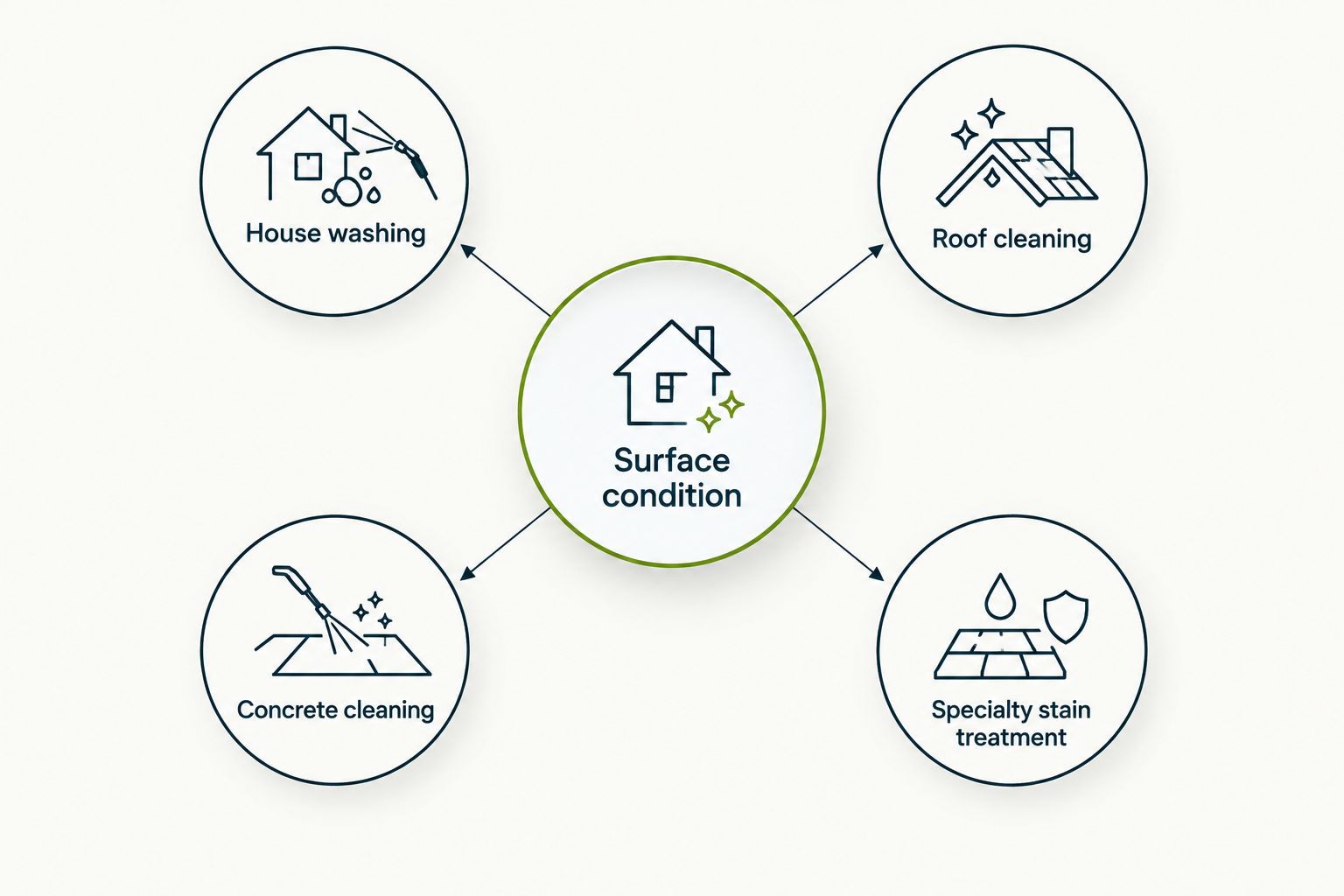
An industrial pressure washer belongs in a broader cleaning plan. Southern Style Soft Wash offers house, roof, concrete, and specialty stain cleaning; those categories need separate decisions rather than the same pressure setting.
- House washing: Assess siding, paint, seals, and openings. Low-pressure soft washing uses suitable chemistry and gentle application instead of relying on force.
- Roof cleaning: Assess roofing material and condition. Asphalt-shingle cleaning should not use high-pressure blasting; follow the roofing manufacturer's cleaning guidance.
- Concrete cleaning: Assess condition, coatings, joints, and drainage. Use suitable pressure and compatible equipment rather than the highest available setting.
- Specialty stain treatment: Identify rust, red clay, oil, or another stain before choosing chemistry. Improvement does not guarantee complete removal.
The right method for the surface matters more than owning the strongest machine. The surface cleaner attachment comparison helps with concrete equipment selection, but an attachment does not make damaged or unsuitable material safe to pressure wash.
Protect the property before starting
Walk the site before unloading equipment. Identify loose finishes, damaged mortar, open windows, electrical fixtures, drainage routes, and landscaping near the cleaning area. Document existing damage and agree on the work boundaries.
For an older homeowner, ask which porch furniture or planters need moving rather than expecting the customer to lift them. Keep access routes usable, explain when the entrance will be wet, and arrange a safe place for belongings.
Where sodium hypochlorite is appropriate, protect nearby vegetation with suitable rinsing and runoff control. Use a compatible neutralizer where appropriate and according to its label; it is not a substitute for careful application. Never mix cleaning chemicals casually, and keep incompatible products separate.
No responsible contractor can promise zero risk. Inspection, method selection, and property protection reduce avoidable problems without turning cleaning into a guarantee.
How the equipment configurations were ranked
This ranking puts general outdoor concrete first, then separates grease treatment, electrical access, and repeated-work service needs. It follows the same criteria throughout: surface, soil, supply, operating location, working pattern, and maintenance.
It is a use-case ranking, not a claim that every machine in one category outperforms every machine in another. For 2026 purchases, the exact manufacturer's specifications and your site conditions decide the final fit.
Which industrial pressure washer should you choose?
Choose a gas-powered cold-water machine as the default for suitable outdoor concrete maintenance. Choose hot water when grease is the recurring problem, electric power when the site supports it, and evaluate belt drive when repeated operation and service planning matter.
If your priority is a clean house, roof, driveway, or commercial exterior rather than running machinery, choose a service assessment instead. Southern Style Soft Wash provides exterior cleaning services for residential and commercial property owners in LaGrange, Newnan, Valley, and surrounding West Georgia/East Alabama areas.
Choose cleaning that fits your property
Review residential and commercial exterior cleaning services before deciding whether to buy equipment.
FAQ
What's the best industrial pressure washer for outdoor concrete?
A gas-powered cold-water pressure washer is the default configuration in this guide for suitable outdoor concrete maintenance. Confirm water supply, surface condition, nozzle selection, and attachment compatibility before choosing a machine.
Is a hot-water pressure washer better than a cold-water machine?
A hot-water pressure washer is the better fit when grease is the main cleaning problem. Cold-water equipment fits many outdoor concrete tasks without adding heating-system maintenance.
Does higher PSI mean a better industrial pressure washer?
No, higher PSI does not automatically mean a better industrial pressure washer. Pressure must suit the surface, while flow, chemistry, water supply, and operator technique also affect the work.
Can I use an industrial pressure washer to clean my roof?
Do not use high-pressure blasting on an asphalt-shingle roof. Follow the roofing manufacturer's cleaning guidance and choose a roof-appropriate low-pressure method.
Can an electric pressure washer be used indoors?
Electric power alone does not establish that a pressure washer is suitable for indoor use. Check the manufacturer's restrictions, drainage, electrical protection, chemical exposure, and whether a separate heater produces exhaust.
Will industrial pressure washing remove every oil or rust stain?
Industrial pressure washing does not guarantee complete removal of oil or rust stains. Identify the stain and surface first; specialty treatment can improve discoloration without eliminating it completely.
Should a homeowner buy industrial equipment or hire an exterior cleaner?
Choose equipment ownership when you are prepared to handle operation, maintenance, surface assessment, and property protection. Choose an exterior cleaning service when your priority is completing the property-cleaning job rather than operating machinery.
One last thing
Photograph the dry surface before cleaning and inspect it again after it dries. Wet concrete can hide the discoloration you are trying to evaluate, so judge the finished result under comparable conditions—not immediately after rinsing.
That simple check keeps expectations grounded. Clean does not always mean unstained, and a remaining stain does not justify increasing pressure until the surface is damaged.